By now, everyone with the Edge of the Earth player cards has encountered at least a few killer guardian upgrades that, tragically, Daniela cannot take. This was especially maddening when Guard Dog (2) dropped in the Scarlet Keys, a card so tailor-made to Daniela that it genuinely feels like the developers forgot her deck-building restrictions during play-testing.
To recap: it provokes attacks, triggering Daniela’s ability (like her wrench). It returns damage, mimicking her ability. It even has willpower and combat icons! If there was a Daniela Reyes ally asset, it would probably have the exact same text. Maybe with a combat boost.
There are others, too. For instance: Shield of Faith (2), which cancels up to five attacks. And yes, this can be run beside Daniela (it applies to investigators at the controller’s location), but would be so much better under her control, moving around the board with her. Alas
The difference between Guard Dog (2) and Shield of Faith (2) is, well, one of them is an ally asset; the other is a spell asset. This is especially relevant when applied to a sneaky-good Daniela card from way back in the Dunwich Legacy Deluxe Expansion: Teamwork!
Artwork: 8/10. This is great. The angle rocks, the characters are so very guardian and rogue coded, and the expression on the guardian’s face is perfect because, what, you’re giving your .45 Automatic to a rogue? In a class with better weapons and better resource generation? I’d look apprehensive too.
For those who forget, Teamwork lets two investigators at the same location swap any number of item assets, ally assets, or resources. It sees pretty minimal play, though, because it requires significant planning and synergy between multiple decks, something that’s tricky to pull off at the best of times.
What other high-level guardian assets does Daniela want?
A real weapon. Daniela lacks the same firepower as other guardians because she can’t upgrade out of her basic level-0 knives and guns. The best fit is probably Survival Knife (2), from Return to the Forgotten Age, which lets Daniela fight for two free points of damage during the enemy phase. That’s not to say she doesn’t like Flamethrower (5) or Cyclopean Hammer (5). But either way: she can’t take them.
A way to extreme-tank. There are basic, good options like Handcuffs (2), a great upgrade to an already-good card. But the saddest non-Daniela card is probably Martyr’s Vambrace, which gives you unlimited uses of “I’ll Handle This!” (just, with a +1 skill boost instead of a +2). With a 2/2 soak, it would allow Daniela to tank enemies and willpower treacheries off the encounter deck, something she’d rather do anyway.
Herself as an ally asset, Guard Dog (3). There are other good guardian allies, but this is the best one for Daniela by a country mile.
Let’s go with those three: Survival Knife (2), Martyr’s Vambrace (3), and Guard Dog (2). With them, Daniela becomes an unstoppable mythos tank, dealing ridiculous off-turn damage and eating every bad treachery in the game.
In other words, this requires a second guardian (or off-class guardian, for cowards who don’t want to shoot the moon with the Vambrace). Carolyn would be an obvious choice in 2P here, as someone who can protect our sanity pool and clue on the side, but she can’t get us access to higher level guardian weaponry. Remember: the other guardian doesn’t need to fight anything or deal with any mythos cards, if they don’t want to. So who’s pretty ho-hum at everything and can actually lean into guardian clue getting?
The answer here is pretty obvious: Roland, Wilson, or (extremely speculatively) Marion. Roland is probably the best option, given his access to seeker, but there’s a case for all three. Let’s take a look.
The Case for Roland: he’s a 3-intellect guardian with a seeker subclass, which gives him access to clue acceleration and myriad intellect buffs. For Teamwork to go off, he’ll need to float enough cash to support his clue-finding build, which actually isn’t that hard; even two one-resource magnifying glasses get him to a respectable 5-intellect, good enough for basic investigate tests. He can also take some minor shroud-reduction tech, like Map the Area, which will help (this will become clear in a moment).
Can Daniela give him anything in return? Yes, actually; unlike Wilson, whose survivor clue-finding assets are mostly tools, Roland gets new access to Mariner’s Compass (2), Old Keyring (3), and Nautical Charts. And while he can’t use most of them as well as Wilson, that doesn’t necessarily matter in shroud-reduction scenarios, which makes Matchbox a pretty sweet combo piece. It’ll probably help if Daniela can reduce a shroud or two for him, too.
Cards Daniela should take to support Roland: Old Keyring (3), Matchbox, Breach the Door
The Case for Wilson: he’s a 3-intellect guardian with access to tools, and a stat buff when using them. The issue here is mostly resource-generation; for Wilson to play all three of those Daniela-friendly pieces, he’ll need seven resources in addition to whatever tools he needs. Those are expensive! That said, things like Lockpicks (1), Nautical Charts (with card draw), and Fingerprint Kit (with resource generation) get him enough tempo to pull his weight.
Can Daniela take anything that Wilson wants? Yes: Crafty. The perfect Wilson-enabling card, giving him a discount to all tool cards and a buff when playing them what do you *mean* it’s not transferable with Teamwork ugh. Honestly, this is the biggest knock against a Wilson play: he only really wants tool assets, and he can already access tools. That said, Breach the Door remains relevant. Let’s add Schoffner’s Catalogue, too, to thank Wilson for his time.
Cards Daniela should take to support Richard: Breach the Door, Schoffner’s Catalogue
The Case for Marion: she’s a 3-intellect guardian with access to level-0 survivor cards like Look What I Found, Shed a Light, Matchbox, and Old Keyring, which makes the shroud-reduction thing a real option. She’s also an event-based investigator, so (in theory) she won’t lose as much tempo as Roland or Wilson while doing her thing. Take Lesson Learned (2), for instance, which nets her two clues after taking damage, and as long as it’s on her turn, nets her a card and an additional event play.
Can Daniela take anything that Marion wants? Only to ease pressure off her limited splash, really; Marion can play most of the level-0 survivor cards Daniela would otherwise be able to lend her. That said, any shroud reduction will go pretty hard, and Marion can’t get Old Keyring (3) without Teamwork.
Cards Daniela should take to support Marion: Old Keyring (3), Matchbox,Breach the Door
And then, there’s the real key to the Mecha-Daniela support play: with access to level-5 guardian, Roland and Marion both get access to Michael Leigh (5), an ally with some awkward guardian synergy: it’s only when you investigate successfully that you get to add bonus damage. That doesn’t include “discover clues,” so Roland’s ability doesn’t even trigger him . . . but now that we’re turning these two into investigating machines, they’ll actually be able to use Michael’s ability. Neat!
All that to say: the best possible partner for Mecha-Daniela is probably Roland, with Marion as a clear second-best, and Wilson for vibes (the mechanic and the handyman would be a pretty cool team-up).
Only a few months after the core set came out, FFG dropped the Dunwich Legacy deluxe expansion—an additional that, with the rest of the Dunwich cycle, was really meant to round out the base set (which might be a problem in the “current” format, unless the Arkham Horror development team thinks the Starter Decks serve a similar function . . . which, yeah, they mostly do).
As for the Deluxe Expansion, most of the cards are meant to support the Dunwich investigators out of the gate. Whether this alone moves the needle on any of them is pretty unclear, but after a thorough dive: . . . probably not.
GUARDIAN
Blackjack (Dunwich Legacy, #16) Brief: a cheap weapon that solves a problem that doesn’t really existArtwork: 5/10. It’s a blackjack. Tempted to raise this from a 4 to a 5 for the background, which is unnecessarily spooky. Ah heck, let’s do it. Changed.
Blackjack makes some sense in theory: it’s a cheap, off-hand weapon that adds a minimal boost and chip damage, in a class that struggles for resources. What’s super weird is that it came out alongside Taunt and Taunt (2), events that engage enemies for free . . . which is something Zoey, the Dunwich guardian, wants to do. Is there an investigator who wants an off-hand weapon and benefits from negating the accidental point of damage?
Best in-class fits: Roland, Mary
The best-case scenario for Blackjack is probably in a hard flex investigator with decent combat, someone unlikely to do much fighting in a three-person team but able to chip some damage here and there. The only reason to take it, and not Knife, is for that second ability. Roland fits weirdly well? Fighting at a combat 5 is far from certain, and he might be building into his seeker sub-class (this is far from optional, mind). Mary might be playing pure support; it’s not great in her, but probably safer than alternative fighting options.
Best out-class fits: Skids, Jim, Diana
Is this a Jim card? It puts him at a combat of 4, he’s probably playing support or flex in parties of three or more players, and testing at even because of his power. He’s a much better call than the other two, who are mainly here for their ability to flex; as spell-casters, he and Diana don’t care as much about hand slots, either.
Taunt (Dunwich Legacy #17) Brief: some limited action compression in a class that could use itArtwork: 5/10. Cool concept, but there’s something regretfully ho-hum about a dude in a trench coat with a flare and, like, some stage effects? Feels like a cool idea with a bunch of mailed-in details. The angle doesn’t help, either. Oh well.
A limited extra action, kind of, which will probably go off at some point. It’s worth mentioning that action compression is often more valuable in enemy handlers, who often benefit from killing things fast (most obviously by preventing damage and horror, but often other effects as well). This is especially true for aloof enemies, which are more common than expected. In other words: enough applications to make sense in anyone expected to be killing enemies, especially in larger player counts, but not the flashiest card.
Best in-class fits: Zoey, Tommy, Marion
Zoey likes engaging things because, well, she’s a guardian with some resource generation, and that’s pretty sick. Mind, this probably isn’t much better for her than, say, for Roland, even though it was clearly printed with her in mind. Tommy and Daniela like this in larger player counts because they don’t mind tanking an entire team’s worth of enemies. It’s probably better in Tommy; Daniela gets a version of this power with her signature.
But really, Marion is the answer here, right? It’s a cheap and fast event that procs Marion’s power, turning any other event into a fast event and drawing her a card. Unreal action compression.
Best out-class fits: Tony
Tony doesn’t hate this. He doesn’t love it, either; it’s slight action compression for an investigator who has lots of routes for the same thing (Quick Thinking costs nothing, for instance, and gives a limitless action on success). But frankly, the investigators that want to tank a bunch of damage and horror are mostly in survivor, and none of the good options have access. Shame.
Teamwork (Dunwich Legacy #18) Brief: a cool concept that is actually super complicated to pull off effectivelyArtwork: 8/10. This is great. The angle rocks, the characters are so very guardian and rogue coded, and the expression on the guardian’s face is perfect because, what, you’re giving your .45 Automatic to a rogue? In a class with better weapons and better resource generation? I’d look apprehensive too.
This card rocks in theory. Guardians have cool stats, but are hamstrung by significant resource generation and occasionally, cards that would otherwise go really well with a fighter but ugh Mauser C96 is in rogue, and listen there’s a Mark deck that fights enemies one location away and it really needs Cat Burglar, what about that isn’t clear? The thing holding Teamwork back is, well, it’s already tough to build a deck with cards that combo with each other in an effective way. Building multiple decks that combo together is daunting at best, and for what? Teamwork?
Best in-class fits: Carolyn, Carson, Marion
Oh man. Is the move to use this as a support guardian? Honestly, in a vacuum, that’s probably the answer—hence, Carolyn and Carson. Carolyn has resource generation but a limited card pool; that said, she could totally support a Hank or Silas. Both would love access to guardian cards. Carson can get them higher-level guardian weapons, too, but he’ll be a little harder-pressed to lean into clue-getting and should probably be reserved for higher player counts. For two-player, Teamwork Carolyn (ha) is probably the play.
But the actual play is Marion, with anyone who can sauce her resources to play for all of her cool events, right?
Best out-class fits: Skids, Joe, Diana
Who is missing something cool with their card p—oh hell there’s an obvious answer isn’t there.
Best upgraded guardian cards Daniela can “take” with Teamwork: Guard Dog (2), Martyr’s Vambrace (3), Shield of Faith (2), Hunter’s Armor (with Hallowed and Armor of Thorns)
These all seem built for Daniela, maybe excepting Martyr’s Vambrace, which would simply go hard in a mythos-breaking Daniela build where she takes literally every card from the encounter deck and deals with it. The rest are obvious: Guard Dog (2) procs Daniela’s ability and returns damage; Shield of Faith cancels up to five enemy attacks, but not return damage; and Hunter’s Armor gives Daniela sanity soak and additional shots of return damage.
You know who can take most of these cards? And get clues? Let’s go with all the second-class guardian except Yorick, whose role and card pool overlap a little too much with Daniela.
Taunt (2) (Dunwich Legacy #19) Brief: more power, but the XP cost (and significantly better level-3 option) limit its useArtwork: 5/10. Again, neat in theory, undercooked in practice.
This adds card draw for each enemy you engage, which can be powerful. For Zoey especially, it’s a card and a resource, which really starts to sound good . . . until you discover there’s a level three version that also deals free damage to every enemy, which is just way better. That one also comes with some niche play flexibility, so tragically, the level-2 version is best reserved for investigators who want to tank, but only get guardian cards 0-2. That’s pretty much no one.
It does work with Down the Rabbit Hole and Stick to the Plan, however. Those are both relevant, especially the first, which means you can effectively upgrade this to its level-3 version over two scenarios for only 1XP. That’s not terrible.
Best in-class fits: Zoey, Tommy, Marion
Who struggles with card draw? No one with access to rogue or seeker, really; both have high-value card-draw engines, even at lower levels. Even survivor has decent card-draw options. The best bet here is probably guardian or mystic, so let’s go with . . . Sister Mary? Running Shield of Faith?
Ugh, no, it’s probably just these three again. A special shout to Nathaniel, too, who gets a fair bit of mileage out of that bonus card draw.
Best out-class fits: Diana, Lily
Okay, that’s slightly more interesting. Both like card draw, both can take Down the Rabbit Hole, and Lily can even run this in Stick to the Plan. The drawback of “engage everything” is typically the damage and horror that comes from . . . engaging everything . . . but if you can kill them first, with some combination of multiple-fight effects (Butterfly Swords, One-Two Punch, Flurry of Blows, or Discipline: Balance of Body), that concern becomes trivial.
That probably makes Lily the ideal target for Taunt (2), but Diana certainly doesn’t mind the card draw as a largely event-based mystic, and can always Ethereal Form her way out of trouble as needed.
SEEKER
Laboratory Assistant (Dunwich Legacy #20) Brief: a shocking mainstay for her effect in big-hand decks, with a surprisingly potent effectArtwork: 6/10. That’s definitely a lab, but that assistant should not be there. Not without some kind of protective gear. The only thing reading “1920s” to me is the old-school chalkboard, so let’s dock points for general laziness and pretend like most lab assistants do, actually, look like this one.
There are a few seeker-ally-event cards, but none empower an archetype as well as Laboratory Assistant, who somehow has three relevant effects that all play well together. If the goal is to keep 8-10 cards in hand, this not only draws up, but also increases the hand limit, and also provides soak for deck cycling. She also plays into the Miskatonic Army playstyle, which is a bit weirder and less potent, but worth mentioning.
Best in-class fits: Minh, Mandy, Harvey
Not a surprise. Card draw is generically good, but these three get added benefit due to their ability to run the big hand archetype. Harvey might actually be the worst of the three, or at least, the most stressful due to his weakness (which isn’t prevented by this). That’s not to say Lab Assistant is bad in other seekers, but she does get a lot less potent.
Best out-class fits: Luke
There isn’t a big-hand Jack build that includes this and Forbidden Tome (Secrets Revealed), right? Is there? The card draw is at least slightly appealing to Luke, but the soak isn’t. Maybe this isn’t that good for him, either, when he could just run Preposterous Sketches and be done with it.
Strange Solution (Unidentified) (Dunwich Legacy #21) Brief: a relatively easy research card with some totally fine upgrade optionsArtwork: 7/10. Again, a bit of disbelief suspension at the hottest laboratory this side of Massachusetts, but there’s something interesting going on here, at least. It does seem like Strange Solution should take a hand slot, though.
Compare this to Cryptic Grimoire, which requires the team to stack the chaos bag with ten curses. Or Forbidden Tome, which requires 10 or more cards in hand and six actions (five, which draw one card apiece), without secret-moving shenanigans. This one is two actions, one resource, zero slots, and nets two cards in the process. All the investigator needs to do is pass a basic little 4-intellect test. A quick look at the upgrades:
Acidic Ichor: (3 supplies). For an action, attack with a combat-6, for three damage (tabooed to two).
Empowering Elixir: (3 supplies). For an action, turn each supply into two cards and a resource for an investigator at your location.
Freezing Variant: (4 supplies). For an action, evade with an agility-6.
Restorative Concoction (4 supplies). For an action, heal two damage from an investigator at your location.
There will be time to get into each of these cards in detail as they come up, so instead, a quick breakdown: there is zero balance here. The Ichor has always been the strongest, allowing seekers to match early guardian firepower. It’s a totally valid target for Emergency Cache (3), which adds four supply tokens to any card; with both, seekers can fight with a base-6 combat, seven times, dealing a maximum of 21 damage. Remember how Amanda can take Vicious Blow?
The rest are mostly support, but are slightly too limited to be considered for most decks. They especially look bad beside Easy Mark, which nets a (slightly worse) single card and two resources, but only costs a third of an XP; and Alchemical Distillation, which at baseline draws two cards, and at 4XP, can come into play with 5 supplies (Refined), include the damage healing (Mending Distillate), and allows two options out of cards, resources, or healing on over-success (Perfected).
That’s not to say Strange Solution is bad. It’s relatively easy to upgrade, after all, is dirt cheap, and doesn’t take up a slot. But at this point it’s not exactly a build-around, and do you really want to spend 8XP for that?
As a final note, it is one of the best targets for Shrewd Analysis, because none of the upgrades are strictly unplayable, and they all feel much better for 2XP.
Shortcut (Dunwich Legacy #22) Brief: a free, zero-resource action with a high floor and a somewhat low ceilingArtwork: 8/10. The art itself is tremendous; great angle, lots of good, implicit storytelling. The issue is less the art itself and more the connection to the card mechanic, which, I don’t think you’re saving *that* much time by traveling through the sewer system.
Simply a good card for action compression. The nuance comes from a few tiny details: it allows any investigator at the same location to move, it doesn’t provoke attacks of opportunity, and it has the tactic trait. That makes this shockingly versatile, especially for AOE card effects that damage other investigators (Dynamite Blast, Storm of Spirits). All that to say: Shortcut is a legitimately potent seeker support card. Or just a free action.
Bestin-class Most interesting fits: Mark, Luke, Trish
The obvious answers would be “Ursula and Monty” because movement gets their investigator abilities online, but these three simply have more interesting use cases. Mark, or really, any guardian with seeker access, can take this as a clever way to proc Safeguard, moving a different investigator away from your location and then doubling up their movement. It’s a neat little combo that feels nice to pull off, and can be done very easily.
What Mark doesn’t get is access to Double Double, which doubles the range of Shortcut—something Trish can do. But the reason she takes this is to drag enemies to locations with clues for general Trish shenanigans, without provoking an attack of opportunity. There are other ways to get a similar result, but none that cost so little. And then there’s Luke, who can use this to give anyone at connecting locations a free bit of off-turn movement, something that comes in handy more often than expected.
Seeking Answers (Dunwich Legacy #23) Brief: a surprisingly versatile card that doesn’t get the credit it deservesArtwork: 8/10. We’ll dock marks for Rex’s omission from the artwork, but it’s a pretty interesting piece. The firefighters in the back really pull the storytelling together.
There isn’t often a lot of love for Seeking Answers, a card with ho-hum icons and zero obvious tempo. That said: for a level 0 card, it solves a lot of problems. The most obvious for basic investigators are:
one location has a high shroud value, but the one beside it is much easier to investigate;
a location can’t be investigated, but the location beside it can; and
there’s a good reason to leave a VP location, but there’s still a clue there
If those situations sound familiar, that’s because some version of them happens in pretty much every scenario. And while there are surely other ways to deal with those problems, Seeking Answers has a sneaky bonus: no one expects it, and everyone is impressed when it goes off in a satisfying way. And then there are the baller edge cases, such as:
Best in-class fits: Rex, Ursula, Amanda
This card was made for Rex, and it’s a shame he’s not on the art . . . but that’s fine. This enables solo Rex in such a huge way, allowing him to scoop clues from two one-shroud locations on an over-success. It also allows a Deduction play in higher player counts, where Rex gets three clues; two from a connecting location, and one from his. Amanda likes it for similar reasons; on Deduction-enabled, Clue-ver turns, this lets Amanda spread her investigations over multiple locations without moving (Shortcut makes this even better).
Ursula, meanwhile, has the most and lease obvious use cases. Most: it allows her to move away from a location before all the clues there are gathered, making it easier to proc her ability. Least: it gives her permission to use her Elder Sign ability, which triggers so frequently on locations that still have clues. She can even use Seeking Answers as her free investigate action.
Best out-class fits: Monterey, Trish, Luke
Monterey maybe likes this for the same reason as Ursula, but there are simply better options for his limited level 0 seeker splash. Instead, let’s go with Trish—who can double up on adjacent clues, or turn off a hunter enemy for a round—and Luke, who can use this to get clues from anywhere on the map, basically (and investigate at a shroud of 1, if inside Gate Box. Pretty sweet).
ROGUE
Liquid Courage (Dunwich Legacy #24) Brief: a slot-less rogue asset that oozes flavour, but maybe, is best taken out of classArtwork: 5/10. Better than a disembodied hand holding the thing, but like, am I supposed to believe that typically agile rogues would knock over their flask? Or leave it on an end table? Confusing!
How many rogues can pass a willpower test of 2? Sefina? Does she count? There’s an argument that losing a card from hand isn’t a big deal, but it’s probably more optimal to run a smoking pipe and trade horror for damage . . . so ideally, this requires an investigator that at least usually gets into that 4-5 willpower range, where most of the bag heals two horror. Oh, and they probably want to be in need of horror healing themselves, or at least, adjacent to someone who is.
Best in-class fits: Jenny, Alessandra
As much as “rogues = bad willpower” is a thing, there are quite a few that have a base of 3: not terrible, not good. Just, average. There’s even a level-0 rogue ally (Dario El-Amin) who gives a willpower boost at 10+ resources. That makes this at least plausible for Jenny and Alessandra, investigators who can run (and make use of) both cards, and both skill boosts. And while Jenny can pull off the resource threshold a little easier, Alessandra can really benefit from that intellect boost, which puts her firmly into seeker territory (Jenny needs a little more help *cough* Well Connected *cough* to be a dedicated investigator).
The most obvious call, though, is probably still Sefina, who starts at a base-4 willpower and doesn’t mind the horror healing, depending on the spells she’s running.
Best out-class fits: Zoey, Carolyn, Dexter
So many investigators can plausibly get value out of this. Wendy and Pete start at an base-4 willpower and have an only-okay sanity pool, but both suffer more than usual from being card-poor. Jim and Dexter don’t mind the horror healing, but start at eight apiece. That said, Dexter likes cheap, disposable assets, so let’s give him a slight nod (this would also cut into Jim’s splash).
The other two spots are more obvious. Carolyn needs something else to boost her willpower (if she wants the bonus healing), but she usually has options for that, and Liquid Courage allows her to actively proc her ability. Taking this in Zoey, meanwhile, adds a neat thematic spin on the character and gives her a way to protect her small-ish sanity pool with her good (4) base willpower.
Think on Your Feet (Dunwich Legacy #25) Brief: a reaction ability that sounds better in theory than practiceArtwork: 6/10. I’m less hot on this one. There are some pretty lacklustre details—the tentacles and brickwork, for starters, and are those . . . trees?—but the real problem is, well, she isn’t getting away from anything by taking off her jacket. If anything, this should be the art for “Failed Lucky” in which you spend a resource to continue not passing a test.
This has much the same reputation as the seeker event Seeking Answers, but its use cases are far more limited: you’re not equipped to handle enemies, an enemy spawns at your location, and for one round (at least) you don’t have to deal with them. There’s a best-case scenario, too, where this also pushes you in the direction you would be going anyway . . . but it’s limited enough to most often stay in-hand, waiting multiple rounds for a viable play.
There’s also a genuine issue with this in rogue (when it’s so obviously a survivor card): most rogues have excellent agility, and rewards for evading enemies, which limits this even more. That said, there are use-cases.
Best in-class fits: Skids, Jenny, Preston
So, all the rogues who can’t (or usually don’t) want to deal with enemies via fighting (Tony, Michael), evasion (Skids, Sefina, Finn, Trish, Monty, Kymani) or dastardly manipulation (Alessandra). That’s everyone, right? Skids at least gets a mention for his access to guardian, which gives him a few tools for fighting at range. Would he ever take Fox Mask (which replenishes via Think on Your Feet) over Wolf Mask? Maybe Skids is the group investigator. Who can say.
This is probably better in Jenny and Preston, who might be leaning into investigation and don’t care about the whole evade-and-profit cycle. For Preston, especially, this solves a problem and bakes in some minor tempo. Let’s end there.
Best out-class fits: Rex, Jim, Mandy
These are also . . . underwhelming. For Rex, at least, it’s pretty thematic and prevents his deck from leaning too hard into agility, when he really prefers the intellect-for-days approach. It does eat into his splash, however. With a low agility, meanwhile, Jim can absolutely be shut down by an unlucky mythos draw. And yet, it eats into his splash too. Basically, when printed, this was a much more valid option.
And then there’s Mandy: someone with so much (potential) card draw, a more generous splash, and just as few ways of dealing with an enemy in the mythos phase. And she’s usually running rogue off-class, too. Not the worst idea, bringing one of these for the road.
Double or Nothing (Dunwich Legacy #26) Brief: a genuinely game-breaking card that remains pretty fun in normal playArtwork: 2/10. So many dumb decisions here. Let’s start with a 5/10, because the storytelling somewhat matches the mechanic (the investigator chooses a less-risky to risky bet, and then rolls for it). That’s fine. But there are . . . three cockroach-like insects, evenly spaced around the wheel? Why? Why do they look like they’re the ones betting? Why are the chips stacked like that? Why are there two balls in rotation? Double-ball roulette exists now, but almost certainly didn’t in the first half of the 1900s. Are we at a 2/10 yet?
Oh man. They really tried to throw rogue a bone with this one, but even as early as its release, this was crazy powerful. In fact, the developers probably realized that issue immediately and slapped a little asterisk on Rex (no Fortune cards)to prevent him from hoovering six clues in one action, with this and Deduction. Unfortunately, Double or Nothing really limited the design space of the game, so it had to be effectively removed from rotation . . . but at the time, it finally gave early rogue players a powerful payoff for succeed-by-two that wasn’t, like, “the weapon actually works now!”
That is to say: there’s a sad irony that Skids and Jenny have some of the worst stat-lines in the game, so their ability to play this remains a bit sketchy compared to pretty much anyone else. To be honest, it might be best to leave the game breaking “creativity” of Double or Nothing to the comment section on Reddit, and just consider how the phrase “double or nothing” is fully misused in the context of the card mechanic.
Hired Muscle (1) (Dunwich Legacy #27) Brief: a cool concept for a card, and decent soak, but no obvious synergyArtwork: 7/10. It’s okay. The artist really nails the “uncommitted mook” vibe, though, which earns it a few points. This guy is even a bit annoyed, but if you have cash, he’ll keep an eye on things. Kinda.
Hired Muscle isn’t Leo de Luca, so that’s already a problem. And he costs XP. But the biggest issue is, well, that effect just doesn’t go away, so unless you’re prepping buddy for a quick void (. . . phrasing?) there’s no reason to play him over, say, Beat Cop, which might actually cost less long-term.
The concept makes sense: Jenny, for instance, can swap her power for a permanent stat boost. But like, what does a base (4) combat get you? Fail by slightly less, bump you into Rabbit’s Foot territory? At time of printing, this dude didn’t make much sense. He makes slightly more now, thankfully.
Best in-class fits: Jenny*
*Does Jenny really like Hired Muscle? She can grab Lonnie Ritter for a one-shot cost, which is probably better value and calls back to her novella (or Robert Castaigne, but there’s zero synergy or full novella tie-in there). Jenny likes the static combat boost; it allows her to fight at a super respectable base-6 with her Twin .45s, which lets her use, say, Well Connected (and other skill-boosting card effects) more selectively. But she can almost as easily take Delilah O’Rourke (3), which buffs her agility too, and gives her the ability to pot-shot enemies without even engaging them.
Best out class-fits: Leo, Dexter
The better fit is probably Leo, who might be running disposable allies and can throw this guy into combat while in combat, without taking an attack of opportunity. At that point, he becomes free cannon fodder. That’s probably the admittedly underwhelming play.
Is there a Dexter play here, though? He also gets a free discount and play action, but it’s a slightly awkward fit; either Dex is playing Hired Muscle for the combat boost, which maybe pairs with, uh, Spirit Athame? . . . but the soak doesn’t really work with Dexter’s wacky asset mill, because the ideal play is to have this guy around to discard him for something better. Not ideal.
MYSTIC
Rite of Seeking (Dunwich Legacy #28) Brief: a crucial piece of mystic clue tech, with a brutal weakness worth playing aroundArtwork: 8/10. Pretty sure I went over this in the (revised) core, but in brief: it’s a uniquely well-done extreme closeup that shows just enough to be compelling without overdoing it. A super simple concept, executed to perfection.
It’s a little baffling that Rite (0) wasn’t in the core, because it’s such a vital part of the clue mystic toolbox. It’s still a bit tricky to pull off—it’s just a stat swap, there are only three charges, and a bad-things symbol ends your turn—but it’s enough to stay relevant, even ten cycles into the game.
Interestingly, the extremely similar Fingerprint Kit doesn’t feel nearly as good to play. Both cost a bunch of cash, take a crowded slot, and offer somewhat limited tempo, with three uses apiece (four actions for six clues is hardly breaking a scenario) . . . and Fingerprint Kit has a stat boost, and no bad-stuff downside! All this to say: that stat swap really, really matters, and seekers get enough clue tempo in less-expensive ways.
Best in-class fits: Akachi, Dexter, Jacqueline
Any 5-willpower mystic interesting in clue-gathering is going to consider Rite. There are more options in a full card pool, including the nearly identical Clairvoyance suite (which came with Jacqueline and is probably a little better, honestly), but these three get an added benefit: Akachi ups the charges to four, Dexter gets action and resource bonuses from his asset mill, and Jacqueline can play around the bad stuff tokens with her power.
Is this ever better than Clairvoyance? . . . probably not, right?
Best out-class fits: Pete, Sefina, Patrice
The out-of-class investigators who get a boost of at least +2 for swapping intellect for willpower: Zoey, Mary, Sefina, Pete, Patrice. Of them, Zoey and Patrice feel the worst; it’s too expensive for Zoey to off-hand, or for Patrice to drop during the one turn it’s in her hand. Mary, at least, is probably playing support and can build into it; Sefina can afford it, too, even if it’s not optimal.
There’s an argument that Rite is best off-class in Pete, though, who can use Duke to bridge the non-Rite turns, and then combo the two. He’ll need another willpower buff to make it matter, but that isn’t too difficult in survivor.
Ritual Candles (Dunwich Legacy #29) Brief: a sneaky good card that probably had a home even before curse decks became a thingArtwork: 4/10. Been a while since we’ve done a “thing is a thing” post, but yeah, these are certainly candles. What makes them ritual candles? Feels like a missed opportunity here.
Listen, there aren’t many investigators who like bad-thing tokens, so at face value, Ritual Candles makes the bag slightly better for worst-case pulls. Which even for its pretty meagre cost, doesn’t feel great. But there’s one detail that really pushes this into value-add territory: it doesn’t exhaust on use, which means multiple bad-stuff pulls in a single test net multiple +1 boosts . . . or +2 boosts, for those running two.
And then curse decks happened, and now a pair of these can just fully negate the negative effects of every curse token drawn, giving mystics access to disgusting card powers for practically zero drawback. Well, for them. The rest of the team will have to deal.
Best in-class fits: Jim, Dexter, Jacqueline
Jacqueline’s ability makes it pretty easy to play around curses, and Ritual Candles did get a reprint in her set, so let’s slot her here. Dexter (who came out in Innsmouth; this makes sense) is probably a little more fun, and his ability makes it trivial to get these into play, but it does shut down the asset mill. While on the topic of curses: does Kohaku really like this? His Book of Living Myths takes a hand slot, but there is an argument to be made for him over Jacqueline, at least.
And then there’s Jim, for whom this card was originally printed. There’s this absolutely sick play with him, where every skull becomes a +2; it requires some decent token fishing and card draw, but is fun enough to build into. Let’s leave him here for old-time’s sake.
Best out-class fits: Pete, Mary, Zoey
This probably isn’t the best play, to be fair, but this does turn bless tokens into a +3. In a blurse team, that’s something; otherwise, well, testing that far down is straight folly. Let’s stick with the assumption the team is going full blurse, in which case, these three don’t mind the bonus.
Clarity of Mind (Dunwich #30) Brief: a support card balanced around early-design healing, which didn’t hold up long termArtwork: 6/10. I’m just not fully sold on this one. It’s an older piece, and doesn’t necessarily fit the vibe of “clearing the mind” of someone in the team. Could easily be used on cards named “Enhance Will” or “Telekinesis” or “Forehead Shimmer,” for instance. They didn’t overthink it. Maybe they should have.
In smaller player counts, where every action matters a great deal more, Clarity of Mind is a non-starter. It’s just too action-intensive, effectively costing two resources and more than a full turn to negate a single bad Rotting Remains test. Bleh. In higher player counts, though—and in specific investigators—Clarity gets some value beyond “click to remove horror.” It’s especially important when an investigator is on the brink, where a single bad encounter card can simply kill them. Like Rotting Remains!
Best in-class fits: Jim, Dexter, Amina
Yeah, this is a weird group. Jim’s here as pure support, possibly in low-sanity teams that might rely on him for his trumpet. Which, for flavour? Go off. Dexter gets this out for free (and a single resource), which maybe makes it worthwhile for him?
And yet, there’s maybe a better case for Amina, who can play this for free in an emergency, doesn’t care as much about the arcane slot, and can kill it with any of the many “discard an asset” card abilities that she somewhat requires to function. Again, in a purely support role, a one-of in Amina wouldn’t be absurd.
Best out-class fits: Carolyn
This one is pretty obvious: Carolyn also adds a resource to the mix, is often playing support, doesn’t mind the arcane slot, and can use this to proc Hypnotic Therapy, which turns every charge into two points of horror healing. At that point, this is genuinely good.
Bind Monster (Dunwich Legacy, #31) Brief: the non-Elite clause makes the XP, and resource cost, difficult to justifyArtwork: 9/10. It’s so weird, and unlike almost anything else in the Arkham Horror files. Whoever have Christina Davis permission to go wild with the design, well done. A minor quibble: as bound as that monster looks, the debris outside the force field seems like it could still do some major damage.
Someone missed the memo that mystics are resource-starved, and accidentally green-lit Bind Monster and Hypnotic Gaze. The good: Bind Monster locks down (sort of) an annoying, non-Elite enemy. The bad: this effectively requires a non-Elite hunter enemy, or some kind of marvelous team synergy, to make any amount of sense. And a mystic with a willpower of at least five, because three resources and 2XP are not worth a single stat-swapped evade.
So, who wants to keep enemies around?
Use-case one: Luke and Trish
This isn’t terrible. It’s a bit awkward for non-Luke investigators, because it requires both characters to be at the same location, but if Luke is able to get his willpower a bit higher, he can effectively lock down an enemy at range for Trish . . . who can engage said enemy, and start dragging them around the map a la Handcuffs.
Which, Handcuffs (one extra action, no ongoing test) is just better, right? But Luke and Trish don’t have access to that, so for 2XP, here’s a more expensive and less reliable option. Cool.
Use-case two: Jacqueline and Alessandra
Just, don’t play this on Zamacona, who still accrues doom (unlike Handcuffs. God, Handcuffs is a really bad look for Bind Monster stans, eh). But other enemies? Alessandra usually needs them around to trigger her free action, and Jacqueline has the easiest time at baseline keeping them in check.
Alternate use-case: max testing decks
A sneaky bonus of Bind Monster: it triggers a test every turn, and while that isn’t ideal in most situations, there are card effects that trigger on token reveals. Jim’s trumpet is an obvious one (heal a horror on skull tokens); another is Nephthys, who, for those unfamiliar, boosts willpower and seals bless tokens on use, in order to deal test-less damage. Sister Mary can take both?
SURVIVOR
Fire Axe (Dunwich Legacy #32) Brief: an archetype-enabling weapon that, even outside that archetype, goes pretty hardArtwork: 3/10. It’s definitely a fire axe, sure, but I’m not sure it could be any more bland. Stephen Somers has some cracking pieces in the Arkham Files collection; this is simply fine. Shame it’s attached to such a cool concept, too.
Survivor cards are so thematically fun. This one turns a regular investigator into an axe murderer, as long as they’re out of resources . . . and therefore, pretty desperate. It obvious pairs pretty clearly with Dark Horse (no resources = +1 to all stats) and Madame Labranche (no resources = 1 resource), allowing most investigators to turn this into repeated +2 combat, +1 damage attacks. Other cards that tap for resources include Forbidden Knowledge and David Renfield, making mystics with survivor off-class a totally valid play.
Best in-class fits: Calvin, Patrice, Silas
A lot of survivors don’t mind Fire Axe, honestly, but these three have interesting interactions. Silas, for instance, runs skill-heavy, so he doesn’t need the resources and can therefore float a pretty painless Dark Horse build, turning his combat into an effective 7 at least once a turn. Patrice is a bit weirder, starting at a base-2 combat, but she gets mystic access for those other resource boosters and can use her violin for an extra stat boost. It also helps her deal with her weakness, as a fun bonus.
Fightin’ Calvin is just a fun pick, with enough survivor shenanigans on top of his already silly investigator ability. Rise to the Occasion and a single resource puts base-Calvin at a combat 5, for instance. Do with that what you will.
Best out-class fits: Agnes, Zoey, Preston
Again, so many good options here (there’s a Dark Horse Minh build out there that takes this). In general, though: Forbidden Knowledge and Agnes super-charge this, allowing her to kill 3-health enemies with combat for a single point of sanity damage. Zoey is thematic, but also good, because her resource-generating ability effectively keeps her around a combat-6 (with this), for all intents and purposes.
I’ve seen this in Preston, too, which cleverly makes use of his Inheritance not actually putting resources in his pool, allowing him to swing for two damage with whatever boost makes sense, without actually slowing his resource play. Heck, it’s pretty thematic there, too.
Pete Sylvestre (Dunwich Legacy #33) Brief: a long-time staple for a half-dozen reasons, and still pretty darned goodArtwork: 5/10. It’s okay. I have a hard time believing that the Miskatonic U shelled out for those state-of-the-art floodlights in the 1920s, though, a full thirty years before more widespread use.
For a long while, survivor had a pretty limited selection of allies. Anyone running Dark Horse grabbed Madame Labranche; for everyone else, there was the Big Man on Campus, an unlimited horror soak that boosted agility, which was actually pretty big for early survivors. Like, there’s a real argument that survivor’s best pre-Dream Eaters ally outside Peter was Guiding Spirit (1).
Even as survivor moved away from agility tech, Pete remained pretty relevant—and it’s a bit strange to think of a card pool without him (for those opting for current, in the new environment). Is it actually a mistake? Dunwich was developed alongside the core, where most survivor cards are agility-oriented. Stray Car renaissance, maybe?
Best in-class fits: Calvin, Rita, Silas
As good as that agility boost is, BMOC’s value comes from his literally unlimited horror soak. Every round you take horror, he’ll negate one. Calvin especially likes that when he’s running a clue-focused build, because he can pretty reliably hang out at 5 horror with Peter in play. For Rita, this is somewhat win-more—but it turns pretty much all evasion-based skill cards into automatic triggers, and keeps her relatively fragile sanity pool stable.
Silas is interesting. He’d probably rather be killing enemies, and doesn’t especially need the stat boost . . . but there’s an argument that any 2-willpower, 5-sanity investigator who can take the Big Man probably should.
Best out-class fits: Agnes, Carolyn, Finn
This really comes down to ally options because, well, there are a lot of good ones in other classes (and way fewer reasons to soak sanity). Even the typical guardian tanks, Daniela and Tommy, have good reasons not to take Peter (he eats into Daniela’s soak, and Tommy would probably prefer disposable allies).
These three do, though. Agnes doesn’t get to proc her damage ability when horror is placed on Peter, but she does get some much-needed insurance once her sanity is depleted (this also gives her an evasion of 4, which is, like, totally fine in a pinch). Carolyn gets a resource every time Peter heals himself, which turns him into a bizarro Milan. And Finn doesn’t have many other ways to get an agility boost on a level-0 ally, so while this does cut into his splash, it’s probably worth it (the sanity healing on a 1-willpower investigator doesn’t hurt, either).
Bait and Switch (Dunwich #34) Brief: a neat tech card that probably deserves more play than it seemsArtwork: 9/10. Goofy in so many ways, every one of them endearing. Why does that eldritch beast look like it’s trying to tickle the prop? Horrifying, ridiculous, and exactly what the card says.
It’s early days, so we’re still getting a steady stream of evasion events in survivor. This one even has a pretty unique ability; it shuts down an enemy for two turns, effectively, exhausting them and shunting them to a connecting location (instead of the usual “the investigator gets a free move” effect). The issue might be that survivors weren’t very good at clue-finding for a long while, and this is optimal for investigators that want to clear a location of clues, but don’t necessarily have the time or space to do so.
Best in-class fits: Wendy, Rita, Stella
This is also lacking any sort of skill boost, so the ideal Bait and Switch investigator has some innate or skill-pumping way to hit the test—and as mentioned, a reason to stay put. Wendy has an easier time passing the test because it’s Wendy, she just passes tests, but she probably gets less out of the effect than the other two . . . who might actually be leaning into a clue-gathering play style, with cards like Belly of the Beast, Old Keyring, Matchbox, and Shed a Light.
Best out-class fits: Minh
Oh god, is there a Bait-and-Switch, Barricade play out there? There is, isn’t there? If so, it probably involves Minh spiking her agility with something like Inquiring Mind; there are other toolbox items for her too, like Seeking Answers and In The Know, if she wants to stay planted on a central location.
The really wild thing is, well, there isn’t another off-class investigator who can hope to reliably pass that evasion test, except Finn . . . who frankly, has better ways to use his splash. But this does count as a free evasion action.
Peter Sylvestre (2) (Dunwich Legacy #34) Brief: a wildly good upgrade to an already great cardArtwork: 5/10. Hard to put this too low, because I’ve been conditioned to get excited when I see Peter in my opening hand, but I stick with the original assessment.
Why the upgraded Big Man (2) costs 2XP when virtually all double-stat-boost allies cost 3XP is unclear. What is clear: when an investigator takes this dude, the mythos deck gets a lot more chill. Horror becomes even more trivial. Bost defensive stats get a boost. An investigator can focus on what they do, and let Peter hold down the back end.
Best in-class fits: Pete, Rita, Hank
At this point, it’d be safe to list almost every survivor and call it a day. These three are more archetypical for the reasons to take Peter: Ashcan can actually lean into his willpower for mystic stuff, Rita gets exceptional horror protection, and Hank gets to tank endlessly for the team. On the subject of Hank: a paltry 9 XP allows for Charisma (3), two copies of BMOC (2), and two copies of Jessica Hyde (1). Damage and horror has never mattered less.
Best out-class fits: Agnes, Carolyn, Daniela
We can swap Finn for Daniela here, who loves the horror healing and can use this to effectively lean into her willpower. The others are obvious; Agnes even gets a boost to her willpower, which must have been why the developers kept Peter at 2XP. Thank goodness they didn’t gate any other obvious investigator synergy cards behind 2XP (pour one out for the Daisy-Book of Shadows (3) decks we never got).
NEUTRAL
Kukri (Dunwich Legacy #36) Brief: an effect that makes more sense on paper than in gameplayArtwork: 8/10. There’s a lot going on here, but I really appreciate that it’s not just a still life painting of the weapon. This guy looks like he’s just getting into Arkham, and slotted Kukri into his deck by accident. Why he’s near so many snowy mountains is beyond me.
Neutral weapons should be below the curve. This one even reads okay; it’s mid-expensive, has a small stat boost, and is probably best for a flex investigator. The tempo loss is palpable, though; enemies almost always have 2+ health, so getting some kind of damage acceleration online is really important. This, and any combat skill card worth its salt, near-guarantees two damage for two actions, which just isn’t fast enough for anyone investing in combat assets.
What if there was an optimal situation for Kukri?
Optimal use-case #1: damage-boosting skill cards
Two actions for three damage is a lot closer to being effective. How many damage-boosting skill cards are out there? Vicious Blow is the obvious one, but Yorick (for instance) could run two copies of Strong-Armed (1), Brute Force (1), and Long Shot. Whether Yorick wants to run so many skills is debatable.
What about Mark? He gets access to half as many options, but gets a near-guaranteed three-damage shot with The Home Front. If Mark wants to use his second hand slot for an ammo-using weapon, this could actually make sense from time to time.
Optimal use-case #2: . . . enchanted Kukri?
How about this: once a turn, imbue Kukri with the ability to swing for two damage, with an optional bonus third point (as needed). If Zoey is running Enchant Weapon twice, there’s a genuine play where she attaches the second to her off-hand, which could be the relatively affordable Kukri. This is mostly about Enchant Weapon being incredible, but it’s still pretty incredible on Kukri.
Optimal use case #3: infinite-action rogues
Some investigators care more about their actions. Rogues have access to more, in general, making this a somewhat viable off-hand option for a Tony or Michael, who would sometimes prefer not wasting ammo from their main weapon. It’s also relatively cheap Crypt Chill fodder, or really, fodder for any asset-canceling encounter tech.
So, it turns out that the guy printed for the big hand archetype—Harvey—is low-key not great at the whole big hand archetype. Well, not nearly as good at Minh Thi Phan, the actual GOAT of the big hand archetype. The key: Dream Diary. Let’s get into it.
Dreams of Competence: 3XP
Okay, so the base version of this deck requires a fighter, because you sure as hell aren’t dealing with enemies. Well, you’re Minh. You’ll be fine. You can evade at 6 agility with Inquiring Presence. Don’t even worry about it. Anyway, here’s the point of the deck: Dream Diary.
2/30: Dream Diary Dream Diary: Untranslated x2
Here’s the vision: with Dreams of a Child in play, we’ll be able to commit Essence of the Dream once a turn for a +5 to any stat. This is going to enable absolutely everything we do. But for the first scenario, we’re going to have to burn a couple of actions and a couple of resources to interpret the dream. Trust me. It’s worth it (skip ahead to the 19XP version, see what I mean).
The sneaky benefit to the upgraded Dream Diary (we’ll get to this more in a moment) is that it artificially raises your hand size. So frankly, a hand size of 10 is fine. We get that with a single Laboratory Assistant; the second waits in our hand so the first can soak horror from our deck cycling. Arcane Enlightenment helps us negate the hand slot drawback of the King in Yellow, which again, has practically zero power in this deck. And with two matching skill icons, Arcane Enlightenment also lets Minh juice her willpower to a 7. It makes the cut.
These cards are insurance against slow starts, and come fully online once we get Farsight. Thorough Inquiry might actually be better because of its icons. Remember that Analytical Mind gets us a card once a turn, too.
You always commit these, no questions asked. We’re trying to cycle our deck as much as possible.
4/30: Econ Cryptic Writings x2 Burning the Midnight Oil x2
I have a love/hate relationship with Crypic Writings, which always seems to linger in my deck until upkeep, but we get some synergy with Farsight once it’s online. Same with Burning the Midnight Oil. This should keep us solvent, especially once we’re cycling them (Drawing Thin helps too).
Okay. 19/30 cards get us cycling our deck (with Analytical Mind, 13 include draw) and keeping up with resources. The big question is whether it’s worth adding a singleton Drawing Thin (3XP taboo version) or Grisly Totem (3) with that In the Thick of It XP, but the former requires the upgraded Diary to really pop off, and the latter is just slightly too slow and expensive. Don’t worry. They’re both coming.
With all the setup required, we’ll need to apologize to our team and start hoovering clues at some point. The singleton Fingerprint Kit is not a priority until you’re flush with resources; if you do mulligan into it, save it for the King. Speaking of . . .
6/30: Make the King Cry A Glimmer of Hope x3 Inquiring Mind x2 Persistence (1) x1
A Glimmer of Hope helps with two things: it lets us draw three cards for an action (hitting our optimal hand size), and it hangs out until the King in Yellow shows up. And then, well, Promise of Power is considered one of the best mystic skills in the game, and we’re playing Minh, so . . . we have Promise of Power at home?
We’re also adding a single copy of Persistence, which gets used immediately and then lingers in wait for the King to come.
Underwhelmed? Fair. This is the engine to a deck that doesn’t really have too much payoff. Your goal in scenario one is to survive, use your five tempo cards to keep your team moving, and interpret that dream.
The Dream Gets Teeth: 9XP
This is where it gets a bit weird: we’re only upgrading the one Diary because frankly, our draw power is going to find it for us. That’s the beauty of this deck, really: you only need one of each key asset. Let’s use the other 3XP on our first copy of Drawing Thin (taboo), which gives us more draw power and more econ.
At this point, the goal is to get to a hand size of eight cards, then use Drawing Thin each time we commit Essence of the Dream (which gets an additional wild pip. Thanks, Minh). That effectively turns the ability of Essence into “when you have at least eight cards in hand, Essence of the Dream gains two wild icons . . . or gain 2 resources . . . or draw 1 card.” It’s great, you get that every turn, and it’s something Harvey dreams he could do.
We’ll drop the second copy of Dream Diary to make room for Drawing Thin. Again, with our draw power, we’ll be fine.
Deep Sleep: 19XP
There are two routes we can go here. We’re already fully unaffected by our weakness and can pass virtually any test, so let’s prioritize tempo and get back to breaking things in a moment. The last pieces are Farsight (4) and Extensive Research (1), so let’s add them here.
We’ll add two copies of Extensive Research (1) for the two copies of Inquiring Mind, which have been outpaced significantly (yes, with Minh, a card that only gives four wild icons can get outclassed. Welcome). We’ll also finally add Grisly Totem (3) for that last Preposterous Sketches, and swap one Glimmer of Hope for a second copy of Perseverance (1).
Get all that? I sure didn’t. Here’s the current asset loadout, and it’s pretty potent.
2/30: Hand Assets Dream Diary x1 Fingerprint Kit x1
2/30: Other Assets Drawing Thin x1 Grisly Totem x1 Analytical Mind x1 (doesn’t count toward deck size)
This setup, with a full hand, lets us commit Essence of the Dream for six wild icons every turn . . . but really, we’ll be subtracting two for the Drawing Thin card draw. That lets us investigate at a base intellect of 10 (or 11 with Fingerprint Kit), and nets us three cards. Then you factor in these events:
4/10: Econ and Card Draw Events Burning the Midnight Oil x2 Cryptic Writings x2 Thorough Inquiry x2
Hopefully we never have to spend an action on the first two. The last seems anti-synergistic (Farsight needs a full hand to come online) but allows you to supercharge your team, or simply get great icons. This is the weakest part of our deck, but each have a place.
Remember how we’re starting each turn with a 10-intellect investigation test, and drawing three cards off it? Well, then we’re playing Extensive Research with Farsight and getting two free clues without spending an action . . . then throwing Sharp Vision into a third test, with a Eureka and a Perception, investigating again at a 10, but this time for two clues and two cards. We still have an action, we’ve hoovered five clues, and cycled through four cards (while drawing five). That’s a totally normal turn with this deck.
Oh, and remember our buddy, the King in Yellow? We still have two copies of Glimmer of Hope and two copies of Perseverance (1), which sit in our hand or discard pile for the moment the book shows up. The thing is, we’ll have at least two tests a turn where we’ll easily be committing six matching icons. These just get us to the card requirement.
That’s the main deck. The rest is gravy.
Dreams Within Dreams: 29XP to 39XP
This is where we add a couple copies of Studious to ratchet our starting hand to seven cards. Doesn’t seem like a lot, but it means we can hard mulligan through nearly half our deck for the Dream Diary. We’ll also lose one Glimmer of Hope for a second copy of Drawing Thin, and a second for At a Crossroads.
The double copies of Studious work pretty well with The World XXI (3). I considered adding it. It tops us up and draws through our deck faster for the things we need . . . but in the end, in this deck, I think it’s just a little too redundant. If we need resources, we can always use the resource ability on Drawing Thin instead of the card draw.
Another option: add Deciphered Reality (5), which for us just says “Fast. Draw a token. Unless it’s the auto-fail, discover one clue from every revealed location.” Granted, we’ll need some extra cash for that (we’ll be able to play it a few times every game), so one copy of Thorough Inquiry gets dropped to make room, and both copies of Cryptic Writings get upgraded.
Technically that’s only 38XP, so let’s drop the singleton Fingerprint Kit for a second At A Crossroads. I hope we’re comfortable running effectively six play-based events in a Farsight deck:
two copies of At A Crossroad (1) (doesn’t take an action)
two copies of Cryptic Writings (2) (shouldn’t take an action)
two copies of Burning the Midnight Oil
two copies of Extensive Research (1)
one copy of Deciphered Reality (5)
one copy of Thorough Inquiry
Of our 22 event and skill cards:
nine provide card draw acceleration
seven provide clue acceleration
six either provide econ or tank the King in Yellow
And here’s our final board, which costs 14 resources to fully implement. With five starting resources, four from Burning the Midnight Oil, and six to eight from the two copies of Cryptic Writings, this should be entirely online by the first time our deck cycles:
The only asset not here is the second Laboratory Assistant. Listen, we’re flying through our deck at break-neck speed and there’s very little soak for that sanity. But there is just enough, thanks to those two. So, let’s do the math here:
8/30 cards on the board
10/30 cards in hand
12/30 cards in deck/discard
Ten of those non-board cards, including Lab Assistant, draw us a combined 19 cards each time the deck cycles. Our assets passively draw us four cards a turn. Hope that basic weakness isn’t too rough?
A final note: the reason this is so much better in Minh than Harvey is pretty straight-forward: deck cycling means you’re likely to encounter your weakness pretty often. Harvey has some ways to deal with infinite damage, but it’s clearly going to be a significant consideration. Minh can just fully ignore her signature weakness, which basically just costs her a draw. That’s it.
I don’t think Vault of Knowledge moves the needle at all. In fact, Minh’s signature is probably better: it allows her to buff teammates and cycle her deck with and endless supply of Eureka, Perception, and Guts. The only cards that get worse with a smaller hand size limit are Celaeno Fragments, the Forbidden Tome suite, and Feed the Mind (3) . . . but Minh gets access to survivor 0-2, which (hot take incoming) is laughably better.
As always, any ideas or suggestions can be left in the comments.
Shotgun is cool. Shotgun costs 8XP. Cyclopean Hammer is, too. It costs 10XP. You know what costs zero XP? And can shred enemies from scenario one?
Here’s the concept: we deck out Dragon Pole to be firing unlimited +2, two-damage swings by turn two. That takes some luck in scenario one, but past that, it’s close to guaranteed. Here’s the setup.
So, You Bought Yourself a Dragon Pole: 3XP
Our goal here: find a Dragon Pole and as many batteries (cheap arcane slot filler) as possible. But really, the goal is actually to play as many assets as possible turn one, even if they aren’t very good. For that reason, we’re using our mulligan on everything except Ever Vigilant and the Dragon Pole itself.
4/30: The Dragon Poles Dragon Pole x2 Prepared for the Worst x2
Prepared for the Worst acts like Dragon Poles three and four. There’s a nightmare scenario where we don’t get either of these in our mulligan, but honestly, that’s okay—we’ll be drawing into them soon enough.
8/30: The Batteries Mists of R’lyeh x2 Scrying x2 Clarity of Mind x2 Alchemical Transmutation x1 Brand of Cthugha x1
Dragon Pole gets a +1 combat boost for every filled arcane slot, and we’re not taking Prescience of Fate any time soon, so we’re stacking the deck with no fewer than eight cheap arcane slot fillers. We’re taking In The Think of It and will have a spare point of experience, so the weakest here (Alchemical Transmutation) is swapped with a Brand of Cthugha. The rest get two spaces apiece.
4/30: Finding and Playing the Batteries Arcane Initiate x2 Ever Vigilant x2 In the Thick of It x1
Setting up a fully functional Dragon Pole requires a lot of money and actions. Or just Ever Vigilant. We’ll use In the Think of It to get two of those, and add a few Arcane Initiates to grab batteries for us.
The first 16/30 cards—more than half the deck—gets us online. Because there’s so much redundancy, we can hard mulligan for Ever Vigilant, which is by far the most important tempo boost in the early game. There’s a reason:
Yup: we’re rolling with Quiescence of Thought. Don’t worry, we’re not touching Lily’s intellect. This has exactly one purpose: after a (hopefully successful) mulligan for Ever Vigilant, we’re playing four cards for a single action, and then drawing back up to five. Here’s the best-case scenario opening turn:
Action: Play Ever Vigilant, drop three assets, including Arcane Initiate.
Action: Trigger Quiescence of Thought, draw up to five cards.
Fast: Exhaust Arcane Initiate, get a sixth card.
Action: Play a fourth asset.
This is remarkably consistent, and highlights a clear first upgrade: Stick to the Plan, which guarantees the most inconsistent part of a perfect Dragon Pole Lily open. But that’s jumping ahead. How do we make the most of our new-found power?
4/30 (10 slots remain): Cards That Somehow Now Rock? Torrent of Power x2 Meditative Trace x2
You know what’s pretty cool? Having two cards that leverage your copious unused charges. Enter: Torrent of Power, which lets us protect ourselves and our buddies from the mythos. We’ll also splash some healing with Meditative Trance, which should be healing us 2-3 points of health and damage by the time we need it (or right away, thanks to In the Thick of It).
5/30 (5 slots remain): Events That Always Rocked Ward of Protection x2 Delve Too Deep x2 Toe to Toe x1
There’s nothing wrong with adding a super powerful card we can tutor with Arcane Initiate, especially if it helps us kill Initiate before the doom becomes an issue. We’ll add another one of the best mystic cards to the fire: Delve Too Deep, which should guarantee Stick to the Plan by scenario two. And while it won’t be as helpful right away, Toe to Toe will eventually go on Stick to the Plan as our third tactic/supply card.
Oh right, we haven’t added Vicious Blow. To be clear, we don’t need Vicious Blow, but there’s absolutely action compression there. The Overpower will shrink our deck, and give us an occasional boost; Guts will help us leverage our willpower for when we actually want to use our spells.
By now you’re probably balking at how brutally asset-heavy this deck is. And you wouldn’t be wrong; it’s nearly half the deck! There are some other weird bits: very little economy, and very few skills (a classic combination, I know). Who needs econ when you have but a single card worth more than two resources? Who needs skills when you have a battery-powered Dragon Pole? Anyway, here are some cool things we can do in scenario one:
use spare actions on Scrying. Turns out stacking the encounter deck in your spare time is pretty sick.
use spare actions on Clarity of Mind. Less useful, but possibly necessary for team healing.
use spare actions on Alchemical Transmutation. Don’t do this. This is a joke. Alchemical Transmutation is in there because it’s dirt cheap arcane slot filler. Using it as intended is never a good idea. If you need a resource, just click for one. Seriously, never, ever use this as Lily.
Basic Training: 9XP
Because we can already kill things with impunity, our first 6XP goes to Stick to the Plan. Hopefully we get that by the end of scenario one. I should mention: this alone is a totally valid standalone deck, because it shores up virtually every weakness of the base deck. Here’s why:
Ever Vigilant is the most important tempo card in our deck. This guarantees it on turn one, so we can exclusively mulligan for assets.
Prepared for the Worst is insurance, and doesn’t really belong in the deck at all once we have our Dragon Pole. Taking it out, and getting the benefit, rocks.
Trimming our deck from 32 to 29 cards is very nice.
You’re also adding Toe to Toe, which gives you some insurance against an early, hard-to-handle enemy. This works. But it can work better.
Software Boost: 19XP
Welcome, Alignment of Spirit! Besides more Lin Hsiang art, which, we’ll be getting even more soon (and enjoying every part of it), we get a boost to our willpower and near-infinite tank potential. The reason for this over Balance of Body (the agility one; we’ll get there at 30XP) is because the condition to flip this back is trivial, and we should be able to trigger it every other round, if we want. It’s also the easiest way to deal with Arcane Initiate’s doom.
This shores up our initial fighting in case all goes wrong, namely, our mulligan doesn’t get us a Dragon Pole, and Prepared for the Worst whiffs. Here’s why: along with our passive willpower boost, we’ve ditched the single Alchemical Transmutation and upgraded into Brand of Cthugha (4), giving us a frankly disgusting off-hand weapon.
Our battery loadout is now: Brand of Cthugha (4) x2, Clarity of Mind x2, Mists of R’lyeh x2, and Scrying x2. Still some chaff, but nothing more than two resources, and only one relatively useless card (Mists).
There’s another option here (featured in Dragon Pole 2.0: 29XP), if we want to make Dragon Pole especially stupid, but it’s a less consistent option overall. I’d rather have four legitimate weapons in our deck as early as possible. Brand (1) only fights at a 4, even with Alignment of Spirit, so it’s not really an option without our willpower-boosting skill cards.
We’ve also added Strong-Armed (1), ditching Overpower (and its slightly unnecessary card draw) for a third and fourth damage booster. Take damage with impunity to redraw those tokens, baby. We’ve got all the healing we need.
Our skill cards are now: Strong-Armed (1) x2, Vicious Blow x2, Guts x2, and Torrent of Power x2. But frankly, those willpower boosters are for our teammates and especially nasty treacheries.
In case things get messy right away, we’ve also swapped Toe to Toe for Sweeping Kick (1), which is a great third card on Stick to the Plan. The loadout on Stick to the Plan is now very tight: we have the key the the entire deck for turn one (Ever Vigilant), some insurance in case we can’t mulligan into our Dragon Pole right away (Prepared for the Worst), and some insurance if we need time against an enemy (Sweeping Kick). Here’s what that looks like:
With the Dragon Poles and another Ever Vigilant in the deck, that’s a full 22/30 cards. The rest are: Arcane Initiate x2, Meditative Trance x2, Ward of Protection x2, and Delve too Deep x2.
Our mulligan is all about Dragon Pole and, secondarily, Arcane Initiate. We’ll be fighting at a combat 7 for two damage a swing basically all game long, with near-infinite tank potential. There are obvious upgrades, but the core of this deck is done. Well, almost done. There’s one other sick piece that we probably want.
Dragon Pole 2.0: 29XP
The next 10XP is all about ditching underwhelming cards and making our Dragon Pole absolutely disgusting. Here are the main offenders right now:
Honestly, the last two are still pretty good in our deck. Clarity of Mind and Meditative Trance are a bit redundant with our Alignment of Spirit discipline, but in the case of Trance, “spend two resources, heal three horror or damage” still goes pretty hard. What spells do Guardians have, exactly?
. . . unless you’re running bless tech, turns out, not a lot. We’ll toss Clarity of Mind and spend 4XP on Bestow Resolve, which turns Torrent of Power into “spend charges pass any test unless you draw the autofail.” I’m reluctant to add Flesh Ward because, well, we’re gaming the system pretty hard by avoiding anything that costs real money outside Dragon Pole itself. But that’s about to change, because even before those 4XP, we’re dropping Meditative Trance and adding Enchant Weapon (3). This is where things get stupid.
So yes, Enchant Weapon is pretty expensive, and for the first time it’s a little awkward to manage the resource cost of our deck . . . but this allows us to swing at a combat 11, once a turn, for three damage. And it’s spell traited, so Arcane Initiate can find it. And it comes with a built-in Arcane slot, which actually makes our deck more reliable.
Listen: there’s a totally valid argument for adding this before Brand of Cthugha (4), and I went back and forth on it. In the end: this version of Lily doesn’t struggle to kill things at all, unless she’s missing her Dragon Pole. Brand of Cthugha (4) adds insurance and power. This is more fun, though.
The ideal starting turn is now basically:
Action: Play Ever Vigilant, drop three assets. Ideally, Dragon Pole, Arcane Initiate, and Enchant Weapon. This leaves us with one resource.
Action: trigger Quiescence of Thought, draw four cards.
Free Action: Exhaust Arcane Initiate, get a sixth card to hand.
Action: drop Scrying for our last resource. We’re fully set up.
A version of that is guaranteed almost every single scenario. For 29XP we’re disappointed to only be uncorking unlimited high combat, two-damage attacks from turn two. And the crazy thing is, we have room to grow. Still.
Stronger. Faster: 39XP
Welcome, Balance of Body! This is unnecessary, but does give us a ridiculous kill switch and some vague mythos protection. We also just, sincerely, do not need the combat boost from Prescience of Fate.
We can also safely drop Delve too Deep now, because the deck is done. Like, we can make this better, but there’s really no need. This kills things extremely good. Let’s just fix a few things around the margins and be done with it.
The new cast of characters is mostly for fun and vibes. We’re adding Safeguard (2) and dropping the Mists of R’lyeh because ten arcane slot assets (with Enchant Weapon) is admittedly a lot, and it’d be nice to never, ever have to spend actions on movement. And then, because the goal is to really get stupid with this, we’re going to add a second Sweeping Kick to our deck and a single Flurry of Blows to go on our Stick to the Plan (pushing the other Sweeping Kick into the deck).
We’re not even going to take the taboo version of Furry of Blows which was created for weak-minded players (this is a joke, the taboo is pretty necessary), because we’re already allowed to do this while fully set up:
Action: Trigger Balance of Body to swing with the Dragon Pole three times. With Enchanted Weapon equipped, we do seven damage.
Action: Play Flurry of Blows to swing four more times, for eight more damage. We’re up to 15 damage in one turn, before playing Vicious Blow or Strong-Armed on any actions.
There are decks that are built to break Arkham Horror. This isn’t one of those. The above is relatively simple, relatively repeatable, and super customizable. Here’s the final loadout:
3/30 = Stick to the Plan: Ever Vigilant (1), Prepared for the Worst, Furry of Blows (5)
4/30 = Weapons: Dragon Pole x2, Brand of Cthugha (4) x2
As always, any ideas or suggestions can be left in the comments. Before you do, though, I want to be clear: this isn’t a fully optimized killin’ stuff deck. It is pretty darned powerful, though, and importantly, fun as hell.
In 2016, Fantasy Flight Games published a set of core cards for Arkham Horror, the Card Game. Five classes were given 14 unique cards apiece, some neutral options, heinous starting deck lists, and a trio of scenarios meant to lull players into a false sense of security and then ruin their day.
Many cycles later, the core set was upgraded to include 16 unique cards per class, more neutral options, and the same nigh unplayable starting deck lists. This seeks to break down the design of each card and class in that Revised Core Set, but mostly, to distract the writer from online communities selling content he already owns for below market value.
One note: each class comes with a “clear and obvious fix.” Each suggestion will be tested with the investigator to whom it most applies, a link will subsequently be added, and an addendum made. In each case the fix is simply a hunch, something the writer suspects would be better for the card, the investigator, or the overall health of the game.
GUARDIAN
The core set gives players a hint of guardian support with the wildly ineffective First Aid, and a smattering of mythos protection with Physical Training and Police Badge. In general, though, the guardian cards in the core set almost exclusively focus on surviving and killing enemies. Three cards are weapons, both allies have damage abilities, and virtually all events and skills apply to enemy management. Maybe boring, but definitely understandable, given the point of the core set.
.45 Automatic (Core Set #16) Brief: a totally fine damage-acceleration card that works fine for players unfamiliar with alternative optionsArtwork: 4/10. Nothing too special. It’s a gun, and it’s being loaded.
The .45 Automatic sets an early standard for damage acceleration in Guardian. Four resources and an action gets a player four vicious blows; in that context, it’s pretty good! The investigator still needs to pass their combat tests, though, and the +1 combat isn’t enough to reliably hit with every shot, unless they have a 4 combat at least. For that reason, the .45 Automatic is best equipped by gators with a 4+ in combat and some way of generating resources, even if most of them consider it.
Best in-class fits: Zoey, Leo, Tommy
All three have ways of generating resources relatively easily (engaging enemies, being part Rogue, and killing assets, respectively). All three could use the combat boost, and are almost certainly killing enemies. That’s not to say other guardians don’t like the .45, but they’ll probably be more annoyed by the resource cost. And tragically, there’s a cheaper and more reliable weapon in the same set.
Best out-class fits: Yorick, Michael
Yorick definitely benefits from the skill boost and damage acceleration, and might be running an otherwise low-cost deck. If he can afford to recur this, even better. But the most obvious fit for the .45 is probably Michael, a dude who gets resources for using ammo, effectively negating the cost of entry over time.
Physical Training (Core Set #17) Brief: a resource-intensive card that is usually better out of classArtwork: 8/10. Excellent, only, wish it’d been changed to Nathaniel in his starter pack.
Physical Training is a tough add in a class that struggles with resource generation, but has the right skill boosters to make it a consideration. This makes the most sense in investigators who are expected to kill enemies and tank mythos tests, and would rather do so with resources than skill cards. As readers may be aware, that’s a very limited group.
Best in-class fits: Zoey, Leo, Tommy
Hey, it’s one of the guardians who doesn’t really struggle with resource generation! That’s not to say Physical Training is great in Zoey, but there’s definitely a (campaign dependent) build where she tanks every possible mythos card, and being able to juice willpower and combat as needed could help. Leo and Tommy can also run relatively rich in the right build, and have enough base willpower to care about passing tests that deal horror . . . but wouldn’t they rather throw nameless allies into the void?
Best out class fits: Jenny, Diana
Jenny can generate a lot of cash, and her (non-promo) signatures push her into late-game fighting . . . at which point a 3+2 combat might not cut it. This helps her get two-up on willpower tests early, and could propel the Twin .45s into late-campaign relevance. Diana probably likes this less, but the ability to swap from combat to willpower mid-game is tempting, and she’s one of the best mythos-tanking investigators in the game.
Beat Cop (Core Set #18) Brief: a frustratingly expensive asset that can still be pretty necessary for its combat boostArtwork: 8/10. Fantastic marriage of card mechanics and art. Those are definitely tentacles, but that dude is locked in.
It would be understandable to get heartburn with all these resource-intensive cards in a class that doesn’t really generate them easily. Beat Cop definitely does its job, between the +1 combat and the 2/2 soak, but it’s a tough look beside Rogue ally Lonnie Ritter, who has the same combat boost and cost, but a better soak and a better ability (in a class that can afford it). Beat Cop is best for Guardians who need the combat boost and can afford 4-cost allies, so yet again . . .
Best in-class fits: Zoey, Leo, Tommy
Tommy likes Beat Cop because the cost pays itself back over time, even if he won’t be able to use it for the bottom ability. Leo gets a discount and can play Beat Cop for free; it’ll also soak damage and/or snake bites from the inevitable, failed agility tests. Zoey is a killing machine who cares more about mythos busting than clue-getting, so she’s a better candidate for Beat Cop than Roland (poor Roland), but with her out-of-class splash, can probably find better level-0 allies (see: Ritter, Lonnie). Yes, Lonnie-Cleaver-Furs is good in Zoey.
Best out-class fits: Yorick, Charlie
Yorick could definitely use the skill boost, and as mentioned, doesn’t mind the resource cost as much if running a deck with 0-cost Cherished Keepsakes and Leather Coats. There’s only one in-class ally option that boosts combat—Jessica Hyde—and while she’s can easily replace Beat Cop (0), there’s a chance Yorick won’t need infinite damage soak . . . okay so Jessica is clearly better, if there’s XP to spare. For guardian Charlie, Beat Cop gives you a +3 combat once a turn. That could be something to build on, especially if he has another way to boost combat reliably.
First Aid (Core Set #19) Brief: a low-value, action-soaking asset that has its place in niche situationsArtwork: 3/10 (original), 4/10 (revised). Yup, that’s a first aid kit. The contents do look a little big for it, and it’s missing a latch, so I’m a bit skeptical it’ll stay shut / keep all its supplies while in hand. Slightly better than the original, which barely matches the card name.
Listen, dead actions exist. Especially in multiplayer, and especially with enemy-managers. First aid is a cheap, slot-less asset that heals investigators like Mark or Agnes, who are incentivized to take direct horror and damage (making it slightly more effective than soak, for them). Most comparisons are to Emergency Aid and Bandages, which only heal damage, albeit from allies as well. So you’re probably running this in multiplayer, as someone who can get more out of . . . well, it should be clear where this is going.
Best in-class fits: Mark, Carolyn
If First Aid also gave the healed investigator a resource, most early guardians would have run it, no questions asked. This gives Carolyn three guaranteed, unconditional horror heals, for a relatively small cost. She might be expected to get clues, too, but Carlolyn is a bit more effective as a secondary clue-getter with a support focus. It might even be worth running two in her decks. For most others, and in specific asset-heavy builds, a one-of is perfectly fine (and in Mark, it effectively turns an action into an Unexpected Courage in hand, which moves the needle enough).
Best out-class fits: Vincent
Also obvious, though not as good as Carolyn because of the plethora of other options for healing damage. Emergency Aid and Bandages are both a little more efficient, in general, though there is a very specific use case here: new players may try to use the reaction ability on Bandages as an activate ability, even though it’s the fifth scenario and they’ve been reminded ad nauseam. For those players, it might be better to stick with the simpler, fewer-hoops First Aid.
Machete (Core Set #20) Brief: the drawbacks are real in higher player counts, but it’s still probably worth the addArtwork: 3/10. Pretty underwhelming for the flavour. Reinforces how this should have been a Forgotten Age player card.
A player’s love for Machete is probably going to waver in higher player counts. It’s undoubtedly good in 1P or 2P, but for (especially newer players in) big groups, there are going to be times where the bonus damage won’t trigger at a crucial time. The most obvious cases are: an enemy is engaged with another investigator, or has multiple enemies engaged with you. The writer has been forced to “um, actually” players using Machete enough that they’re quite cognizant of the drawbacks. They do exist. In smaller counts, though, this is effectively a cheaper, ammo-less .45 Automatic. Investigators play this, and for the most part, enemy management is under control. And heck, it’s probably better than the .45 Automatic at higher player counts, too. Even with the drawbacks.
Best in-class fits:Roland, Zoey
Who can mitigate the occasional weaknesses of Machete? Well, Roland’s Seeker subclass allows a greater degree of flexing than the other 3-intellect guardians (Leo, Tommy, Tony), and he appreciates the skill boost and lower resource cost. Zoey is here for theme, but also, because she handles enemy engagement a little differently than other gators. Zoey is one of the few guardians who might want to evade an enemy from time to time, and if that turns on Machete, all the better. Whether she can evade them is another story.
Best out-class fits: Joe, Diana, Vincent
In lower player counts, most investigators who can run a reliable +1 damage accelerator will consider Machete. But in larger groups, you’re looking for someone with a decent combat who’s okay dealing with the occasional enemy here and there. Maybe a hot take, but there might be less reason to run this in big-team Yorick. It gets his combat to a five, which is nice, but Yorick cares less about ammo-less weapons due to recursion, and is less able to play a flex or support role (than, say, Diana and Vincent). This especially becomes true in a full card pool.
Guard Dog (Core Set #21) Brief: a great ability for those who can spare the ally slotArtwork: 3/10 (original), 9/10 (revised). Pretty janky original art, which looks like Fido’s pulling a weed. The updated version is just much better—better framed, moon looks great, with a shout to the card mechanics. No notes.
Guard Dog might be the most interesting ally from the core set. It’s cheaper than Beat Cop, lacks the combat boost, but adds a much better ability that enables more interesting gameplay. Most guardians that don’t need the combat boost in the first place consider Guard Dog, especially those looking to soak damage for the team (or a depraved investigator ability that turns on card draw).
Best in-class fits: Mark, Leo, Daniela
Guard Dog is an obvious, excellent ally choice for these three. Mark gets a card and free damage every time Guard Dog gets hit. Leo can play Guard Dog for two resources and a free action, even if he just drew an enemy. And Daniella effectively doubles her punch-back ability every time Guard Dog gets smacked. The fact Nathaniel (doesn’t need a combat boost) and Tommy (net-positive resource gain, pseudo-recursion) aren’t in the top-three here is astounding.
Best out-class fits: Vincent, Yorick
This is where it gets interesting. There are a lot of good allies, and Guard Dog not only lacks a stat boost,but only really makes sense in investigators expecting to take care of enemies. Yorick can recur Guard Dog at a relatively cheap cost, and Vincent can keep healing the goodest boy to get more uses out of him. Vincent might also be expected to chip in on clues, so the ability to deal damage without relying on a higher combat score could be appealing.
Evidence (Core Set #22) Brief: a conditional card-for-clue ability that’s totally fine, if getting clues is a considerationArtwork: 6/10. The art itself is really well done, and genuinely funny, because what, you kill a nightgaunt, and then: “hm, is that a . . . blonde hair?! Daisy, how could you?” In reality, it just doesn’t make sense for the card mechanic.
Another card that makes sense in most combat-focused decks, as an easy way to snag clues for doing what fighters do best. The bigger question is whether it’s necessary to chip in the occasional clue (for some, it would be better to run Glory, which nets two cards on a kill instead of a clue). The intellect pips are surprisingly helpful, but to care about that, it’ll be important to run an investigator with a 3+ intellect. That narrows the field down to flex-oriented investigators with resources and/or cards to burn.
Best in-class fits: Roland, Leo, Tommy
Not the best in Roland given the above criteria, but there’s something satisfying about using this to double up on his ability. Kill an enemy, get two clues. There’s a delightful line of play with Roland where, with Guard Dog and Lesson Learned, you can take a hit on the enemy’s turn, deal a killing blow, and scoop four clues for two resources. Still waiting for that to fire. Outside Roland, both Leo and Tommy might find use for the pips, and neither cares about the (minor) resource cost.
Best out-class fits: Yorick, Joe, Tony
Which non-Guardians are looking to kill a lot of enemies and get a few test-less clues? The first that jumps to mind is Joe, even though it feels sub-optimal to add a conditional insight event to the hunch deck. Yorick and Tony might be better shouts here. This allows the former to flex more easily into occasional clue getting than, say, the Gravedigger Shovel, and Tony would happily use this for the clue or the commit—or both, with Crystallizer of Dreams.
Dodge (Core Set #23) Brief: a cheap ability that allows riskier plays, can save a player’s bacon, and combos nicely in specific gatorsArtwork: 9/10. Brilliant. Great motion, genuinely terrifying creature design, and the guardian-est looking guardian. A sneaky best-of in the core set.
A rock solid card in most decks, Dodge is trivially easy to set up and allows for riskier play a la Lucky. The fact it can be applied to other investigators at the same location is pure icing; more exciting fringe cases include turning off Retaliate and Alert on a dangerous attack, or canceling a swing from a big bad. Support guardians can use this, but dedicated fighters won’t be upset to see this turn up, either. Maybe gators with expendable meat shields (Leo and Tommy) don’t care that much? The biggest drawback here is that Dodge doesn’t really progress the game state, unless coupled with something like . . .
Best in-class fits: Daniella, Marion, Nathaniel
Daniella is (maybe) the most obvious choice here, because she’s actively looking to draw enemy fire. When that triggers automatic return fire, and doesn’t do a lick of damage, it feels good. As a bonus, Dodge doesn’t eat into her level-0 Survivor splash, unlike the similarly tank-y Bandages. Roland and Nathaniel are both a little lacking in horror protection, with 3s in willpower and six points of sanity apiece. This feels like valuable late-game insurance for both, but maybe more valuable in Nathaniel, who’s simply more likely to be the dedicated fighter. And then there’s Marion, who loves fast, low-cost events, and can use this to proc her ability on an attack of opportunity (crucially though, not during the enemy phase). Maybe not as good as fully condition-less events, but this lets a player 1) play a weapon with an enemy in their face, 2) avoid the attack, 3) trigger any other event in-hand for free. Pretty sick.
Best out-class fits: Skids, Diana, Tony
Who is going to be around enemies a lot, and might want to turn off an attack here or there? Following the Roland/Nathaniel criteria, low-soak rouges Skids and Tony feel the most precarious. As for Diana, this is a no-brainer. Cheap, easy trigger, flexible, and bumps her willpower. The most obvious taker for Dodge outside Daniella.
Dynamite Blast (Core Set #24) Brief: expensive, but unparalleled in the right situationArtwork: 2/10. Yeah, that’s a dynamite blast. I guess. For one of the splashiest effects in the core, the choice of art is a total yawn.
The most obvious “best case” scenario: three damage to every enemy, all who happen to be at a connecting location. In guardian, this probably isn’t going to happen. The more usual “best case” involves an investigator being at the same location, with a few annoying enemies, soaking three damage (plus all those attacks of opportunity) and deleting a swarm they’ve picked up from other investigators. So really, who is able to afford a 5-cost event in a class without good resource generation, and soak lots of damage and/or horror without really worrying about it?
Best in-class fits: Zoey, Tommy, Carolyn
The first two are obvious: comparatively rich, 4-combat guardians who don’t mind a punch, and in the latter case, might actually like it. Zoey can pay for this simply by engaging enemies, and with Brother Xavier, can go in for even more damage on the blast; Tommy can recoup at least some of the cost with a well-timed detonation. Outside that, Carolyn rarely has a resource issue and might be able to trigger the “connecting location” part of the text, as she doesn’t love being too close to combat.
Best out-class fits: Skids, Jenny, Vincent
I considered Joe here, but frankly, Skids and Jenny just have more ways to mitigate the cost (and Vincent doesn’t mind taking the damage). This applies to Zoey as well, but frankly, those five resources don’t matter as much when you’re filthy rich, so erasing a couple Nightgaunts one space away doesn’t feel as much like a waste. There’s also a really obvious combo with either Cat Burglar or Elusive, which gets you away from enemies without exhausting them. I considered Tony, too, but I think he’d rather just walk in and wreak havoc on a collection of unsuspecting mooks.
Vicious Blow (Core Set #25) Brief: if a fighter isn’t running Vicious Blow, they’re trying something, and that’s cuteArtwork: 7/10. Electric framing, though a bit contradictory, because you usually use this card to finish off an enemy, and suit jacket is clearly reloading for another swing.
This starts in every deck that wants to kill enemies and has access to guardian cards. Even over the length of a campaign, it probably doesn’t leave. Sounds simple, but the +1 damage (and skill boost) almost always saves an action, and might also save ammo, and gets players out of situations where they draw an enemy before finding a weapon. The only con, really, is that Vicious Blow is relatively effective at summoning the auto-fail. Not as effective as Deduction, but near.
Best in-class fits: Mark, Daniella
Weird to list two of the three gators least in need of a combat boost, but both benefit from an obvious use-case: supplementing bad early draws. It’s a bad feeling to spend three straight actions punching a three-health enemy; Vicious Blow gives Mark and Daniella some needed breathing room, especially for Daniella, who doesn’t have the built-in card draw ability to go looking for a better long-term option. Nathaniel is a decent shout, too, but he’s pretty unlikely to draw a blank on fight events in a well-constructed Boxing Gloves deck.
Best out-class fits: Pete, Yorick, Tony
With Duke, this gets Pete to a five-combat, three-damage attack. That’s pretty respectable. Yorick like that this has zero cost and spices up a relatively weak set of survival weapons; this even turns Knife into a +3 combat, +2 damage event. As for Tony, there are almost no situations where this won’t save him an action and a bullet.
Extra Ammunition (1) (Core Set #26) Brief: a great option for a firearm build, as long as there’s time to breathe between enemiesArtwork: 8/10. Another winner. They could have gone with “these are bullets” and instead, went with a dude who’s checking them carefully.
Topping up a weapon for 1XP and two resources feels pretty good. Spending an action because a gun just ran out in a fight against four enemies, and man that’s a lot of opportunity attacks, feels pretty bad. The ideal use case here is to prolong the use of good, typically low-ammo weapons (including signatures like Roland’s .45, for instance, or Tony’s Colts), or—albeit less often—to toss ammo to someone in the thick of combat, as a support guardian who can afford the cost, and resources.
Best in-class fits: Roland, Carolyn (let me explain), Carson
The Roland shout is specifically for the .45, which is usually a 7-combat, 2-damage attack. More ammo for that sounds good, sure. The Carolyn and Carson shouts obviously depend on team composition, but having run this in a relatively rich Carolyn beside Tony, it’s a powerful support option. Carson might want this for a similar reason; while he can run higher level firearms, the inherent 6/6 health and horror soak doesn’t give him breathing room for the occasional attack of opportunity needed to play this. Tommy doesn’t hate this, but he has no trouble at all refilling Becky, so it’s more of an emergency option there.
Best out-class fits: Joe, Tony, Michael
All three gators would rather top up an expensive (or signature) weapon than play a second. All three likely have XP and resources to burn. Skids could be here too; Rogue has a pretty good selection of firearms at this point, including a few able to leverage Skids’s agility. There’s also the (probably) unnecessary play of Extra Ammunition on a Shotgun into Double, Double’d Contraband for 20 ammo, and honestly, that sounds like as fun a way to break the game as any.
Underrated target: .45 Thompson (3)
When Extra Ammunition dropped, the most obvious use cases were expensive, low-ammo weapons (Shotgun and Lightning Gun, specifically). The guardian-specific .45 Thompson (3) might be a more interesting target, as this actually nets you a resource. Play both for eight resources, unload eight shots, get eight resources back. Sounds pretty appealing.
Police Badge (2) (Core Set #27) Brief: a somewhat niche option with abilities that feel flexible, but in reality, are often just vagueArtwork: 6/10. I’m less high on this one. Nice background, and undoubtedly better than “this is a police badge on a desk,” but frankly the guy holding it looks like his extra action turns are long behind him.
First: throwing away a police badge should absolutely cost an investigator some willpower, and getting two extra actions because they’re effectively “freed from their professional shackles” is such a storytelling win. Not giving this the Police trait is curious, and probably a mistake (Beat Cop has it in the Core, and there are items that eventually get it, too).
Anyway: a lot of guardians like willpower, and could definitely use the banked actions in the right situation (unless constrained by ammo). If this cranks their willpower to a usable level, or gives them two valuable actions on the way out, it’s usually worth it; otherwise, there are cheaper ways to do both. So: who can dip into willpower in a meaningful way, doesn’t care much about other accessories, and can meaningfully use or give those two actions?
Best in-class fits: Zoey, Leo, Carolyn
Disclosure: Zoey probably requires Relic Hunter to make room for this and her cross, as well as (probably better) accessory options. Maybe not the worst call, because Zoey probably doesn’t mind banking actions early for a later payout. She might be a slightly better option than Leo, who will have a little more trouble affording this and can’t tank the mythos phase quite as well, given his options. That said, this gets his (and Zoey’s) willpower to a lofty 5, and gives him a very rogue-esque burst turn for things like Pay Day. Carolyn has the economy, is usually in a support role, and can always use the extra actions to investigate. Sister Mary is also interesting, but she almost certainly prefers Holy Rosary (2), which, for cheaper, substitutes the discard actions with bless generation.
Best out-class fits: Skids, Joe, Yorick
There aren’t a lot of gators outside of guardian who can take this, but most have a plausible reason. Skids and Joe have bad willpower, so the decision point is probably: do you try to account for it, in which case, Police Badge is okay, or take every willpower test to the chin? There’s an argument for both, though less for Skids, who has more competition for his accessory slot.
The better call, obviously: Yorick likes this for the recursion potential, but its high cost means you’ll have to lean a little more into resource generation. That said, three resources for a willpower boost and down-the-road actions kinda rocks for a fighter. Does Diana like this? She certainly doesn’t mind the willpower boost and might benefit from the additional actions late . . . but she could just run base Holy Rosary, and those resources and experience points could go elsewhere.
Beat Cop (2) (Core Set #28) Brief: a notable upgrade that turns a level-0 stat boost into a full build-around optionArtwork: 8/10. Still really good, especially for that top-down angle.
Much more palatable at 2XP, Beat Cop (2) gives an investigator the ability to damage enemies freely. Because this is player-activated (unlike Guard Dog, which is reactive), it’s easier to control when and where damage is assigned. It also gives players an obvious target for cards like Emergency Aid, Inspiring Presence, and Soothing Melody, all which heal damage from allies as well. In other words, while Beat Cop (0) is a somewhat expendable, yet expensive, skill boost, Beat Cop (2) can be easily built around as a reliable source of secondary damage. As a final bit: this, with First Aid (3) is a genuine route to light tanking. Not a great route, but a route.
Best in-class fits: Zoey, Mark, Leo
But really, if the point is to fight enemies, this guy is always a decent option. Zoey and Mark get the initial nods here because there’s only the one skill boost, and they don’t care as much about losing, say, the intellect boost from Grete Wagner (3). Mark’s ability even turns Beat Cop (2) into a reliable card generator. Leo gets the nod over Tommy because frankly, Tommy’s weakness makes this guy a lot less effective long-term.
Best out-class fits: Joe
Joe doesn’t have a lot of options for reliable combat skill boosters. Here’s the list: Beat Cop (2), Grete Wagner (0), Beat Cop (2), and Michael Leigh. There’s more of an incentive to build into combat than intellect, with Joe, and there aren’t a lot of ways to get there with allies (he also doesn’t mind the extra damage). There’s an argument for Skids, but he probably has better allies with a wider card pool. That said, Beat Cop (2) helps mitigate (for instance) Switchblade attacks that don’t succeed by two, so in a limited card pool it can still be pretty valuable.
Shotgun (4) (Core Set #29) Brief: an expensive option with limited uses—one that requires a little extra support to take offArtwork: 7/10. On one hand, great movement with the tie and hair. The guy holding the shotgun is really well done. My problem is with the background, which is full of missed opportunities—from the weird purple vines on the wall, to the foggy nothingness behind the building.
The headline here is probably “5-damage attacks.” The subheading, unfortunately, is “twice, and both tests will need to be passed with style.” That’s obviously easier to do with some investigators than others (and the low ammo is mitigated by cards like Extra Ammunition, which is a virtual must-take in Shotgun decks). The other issue is the two hand slots, which makes this the only option when it’s down. So, very powerful when used correctly, but very easy to not use correctly. The sneaky play here might be to exist with only the one Shotgun, run Prepared for the Worst, and keep it in hand until the big bad shows up. And then ignore the taboo on Sleight of Hand.
Best in-class fits: Mark, Leo, Tommy
Mark is the most obvious use case. He can sky his combat easier than most, can dig for things like Extra Ammunition faster, and will definitely be expected to mow down big enemies. Leo is the more pedantic version of that, with slight boosts thanks to rogue access. There’s the aforementioned, exceptionally expensive Extra Ammunition into Contraband play, and both go on Stick to the Plan, which could bring it to . . . 10 ammo? For 11 resources and three actions? Honestly, that’s pretty fun. Tommy might be building around Becky, another two-handed weapon; Shotgun slots into that role too, later in a campaign (Tommy will also have the resources to pay for it).
First Aid (3) (Revised Core #183) Brief: a somewhat niche combo card that requires a better reason to heal than “not dying”Artwork: 4/10. Still fine. Still worries about that large bottle on the left fitting into the container. I do appreciate the detail that went into the components.
A lot of XP for two of these, but a pretty significant upgrade. Because this heals allies too, it can be used to prolong Guard Dog and Beat Cop (2), as well as Grete, Field Agent, and Agency Backup in a larger card pool (also . . . the Black Cat? Is there a First Aid (3), Black Cat deck that—never mind). That’s a big win, and allows a player to more liberally assign non-useful damage and horror to those allies (aside from Guard Dog). It should maybe have a cheaper resource cost at 3XP, but it does get an additional supply, so maybe think of this as extra ammunition for *ping* allies? With an option to heal an investigator too, in a pinch?
Best in-class fits: Mark, Carolyn
These two share another commonality: they both suffer a bit from a (slightly) lopsided health and sanity, without the raw stats to protect against the weaker side. Carolyn, for instance, has a 2 in agility and only 6 health. First Aid (3) gives both investigators a reason to dip into healing over soak, especially if they’re running Field Agent for test-less clues. This also significantly neuters Mark’s weakness, which punishes him via horror for all the damage he’s accrued on himself. It also gives the player more uses of Sophie, and more card draw. For these two specifically, the value is there.
Best out-class fits: Vincent, but not really
Vincent probably cares less about this upgrade. It’s an extra use of his ability, but Vincent has fewer good ally targets and doesn’t need the horror healing nearly as much as Mark . . . unless things have gone very sideways with that Wounded Bystander, in early scenarios.
I’ve Had Worse (4) (Revised Core #184) Brief: a sick option in very niche situations, but even then, something of a luxury at 4XPArtwork: 8/10. Wonderful, from the character’s expression, to the quietly graphic injuries, to the shattered car window. Add the action-hero angle, and it’s a total win.
There’s a use case for I’ve Had Worse (4), and there needs to be, because 4XP for a Dodge into a fast Emergency Cache feels a bit weak. This is for tackling bosses that swing for huge damage and horror, which makes it less valuable earlier in campaigns (an exception might be in the Forgotten Age, where a certain recurring enemy can be counted on to reliable punch for two and two). The biggest drawback, other than XP cost, is that once a fighter is toe to toe with the big boss, they probably don’t need the resource injections. So . . . who can make the most use out of this?
Best in-class fits: Nathaniel
Maybe it’s not a surprise the character on I’ve Had Worse is wrapping her knuckles with bandages. Nathaniel can dig for this with Boxing Gloves, which really seems like the signature that just became too cool to restrict to one gator. That’s Nathaniel’s go-to, and can make sure I’ve Had Worse is around when he needs it. It’s expensive, but this also combos with cards that cost enemy attacks like Toe to Toe and Heroic Rescue, giving Nate test-less damage and a chunk of resources to boot. Other investigators can set this up too, but it’s definitely best in the guy who can draw through spirit events without trying.
GUARDIAN RECAP
Good Design
Including First Aid (3) to the Revised Core low-key rocked as a clever way to build around the two tap-for-damage allies. There’s been a lot made about how “hard done by” the guardian class is, overall, but the decision to limit resource generation is honestly pretty sharp in retrospect. It unfortunately tanks the in-class usability of Physical Training, but otherwise forces a lot of interesting decision points, both in deck-building and in-game moments.
Other good calls: everything about Extra Ammunition, Evidence to mirror Roland’s ability, and Police Badge’s total flavour win.
Bad Design
Physical Training probably doesn’t belong in “Bad Design,” even though it’s barely usable in-class, because the design is congruent with the other core skill boosters and the concept is strong (there’s also the argument skill boosters were designed around Jenny, which bumps this up a bit, too). The design of Machete is more egregious. It should have come out in the Forgotten Age, and in-game, it so clearly outpaces the .45 Automatic. The main issue: Machete’s drawbacks are nonexistent in lower player counts, and it’s also more effective than the .45 at higher player counts because it deals more damage long-term. First Aid is another miss, like most other early healing cards. That said . . .
A Clear and Obvious Fix: add resource generation to First Aid
Simply adding “That investigator gains 1 resource” to the end of First Aid would bring it in line with other healing, and give guardians a legitimate support option in the core. It’s already limited by uses, and would add some nuance to deck building as a slightly net-positive resource card. For Carolyn, it’s a net-4 resources for four actions . . . which might be slightly too powerful for a level-0 card, but not unfair by any stretch.
Other bad calls: accidentally using the artwork for Working a Hunch on Evidence.
SEEKER
Those are a lot of books. Four tomes, and an ally to find them. There’s a fair bit of hidden support here—three of six upgrade cards apply to “an investigator at your location”—but the non-tome assets and events are so strong that it’s usually better to race for clues as a seeker, and let the rest of the team play support instead.
Magnifying Glass (Core Set #30) Brief: a card that asks very little, and gives so much in returnArtwork: 3/10. It’s fine. The hand is pretty old-Arkham Files, and the creature looks a bit like a beetle puking yesterday’s spaghetti onto the rug. Maybe this one would have been better as a simple mag glass on a table.
There aren’t a lot of reasons to not run a pair of Magnifying Glasses in a clue-finding deck, unless the hand slots are really needed for something else. And even then, it doesn’t feel bad to replace as needed. And Magnifying Glass can always be committed for a relevant icon. And it’s fast. There just aren’t any true drawbacks here, especially for level 0 decks. Maybe it doesn’t move the needle as much in higher difficulties, but most investigators will still want it. It’s unbelievable that this and Beat Cop effectively serve the same default, in-class function.
Best in-class fits: Daisy, Rex
It’s more “who doesn’t work with this.” To some extent, every seeker does . . . but some might get a little extra value. Rex is the most obvious, as someone trying to succeed by 2+ (without a base intellect of 5). But the sneaky best answer might be Daisy, who has few killer “succeed by” tome options in Grim Memoir and Archaic Glyphs (Guiding Stones). Her signature even adds (albeit conditional) hand slots, so the first two hand slots aren’t as crowded.
Best out-class fits: Pete, Carolyn, Trish
Who, outside seeker, uses intellect to pass investigation tests? How about Pete, who (with Duke) investigates at a 5? I think Carolyn is a decent shout too, as a guardian who isn’t bogged down by the usual hand slot competition. And then there’s Trish, who might benefit from the fast keyword more than most, but her hand slots can be pretty bogged down with stuff like Thieves’ Kit and Lockpicks.
Old Book of Lore (Core Set #31) Brief: a seeker support card that isn’t usually worth it, with a few exceptionsArtwork: 6/10. Still just a thing on a table, but the details are incredibly well done. This book has seen some things.
Those who like Old Book of Lore like it a lot. For Daisy, for instance, there are few early-game tomes that come close to the power of an extra, filtered card every turn. There’s the added “an investigator at your location” which makes this a viable support card, especially to help other investigators delve for weaknesses during opportune moments. But unlike Mag Glass, most seekers are expected to use their actions to investigate.
Best in-class fits: Daisy, Minh, Mandy
In the same way Boxing Gloves are a near-auto-include for Nathaniel, the Old Book of Lore *was* an auto-include for Daisy for a good, long while. The free tome action needs to go somewhere, and there are very few times when filtered card draw doesn’t help. Mandy gets the added benefit of drawing two of three cards for an action (or digging deeper, but that feels inefficient). Minh gets a shout here too. She’s one of the few seekers meant to exist in a largely support role, and she might not care as much about her hand slots.
Best out-class fits: Carolyn
Who has actions to burn, is likely in a support role, doesn’t care about the resource cost or the hand slot . . . honestly, Carolyn makes a degree of sense here. This with Ancient Stone (Minds in Harmony) nets an additional horror heal and resource each time the Old Book is triggered, which pushes it firmly into value-added territory. Beyond that, most investigators either can’t spare the hand slot, the actions, or the resources.
Research Librarian (Core Set #32) Brief: a full-deck tutor that does its job better than mostArtwork: 8/10. Might be surprising, but hear me out: this, like Evidence, is funny as hell. You’re fighting to save reality, and here’s Reginald, turning off the reading lamp because he’s found just the tome for you. Unlike Evidence, that’s also what the card mechanic does. Bonus points because no character has ever been more of a 1/1 soak.
What a strange card. Two resources to search through the whole deck for any tome is really, really strong. It would almost absolutely be better if he wasn’t an ally, because there are exactly two annoying situations for this card: the deck’s best tome is already out, or a key ally is already in play. In those cases, Research Librarian is a dead card without terribly useful commit icons. Otherwise, it’s a better Prepared for the Worst, allowing a player to effectively add copies of the (possibly) best card in their deck. And frankly, in both of those situations, they’re already cooking.
Best in-class fits: Daisy, Mandy, Norman
Daisy and Norman both have tomes that really, really help their decks sing. Is there any reason not to run effectively four copies of Astronomical Atlas in Norman decks for the same XP as two? Mandy has a delightfully backwards use case, where she can use Reseach Librarian’s search function to trigger her signature weakness whenever she’s best set up for it—or, if her signature is already gone, use this to draw any two tomes from her deck. But the first option is much more useful.
Best out-class fits: Zoey, Carolyn, George
This effectively comes down to: who might build around an important tome, and can actually run Research Librarian? The best out-of-class tomes are probably The Key of Solomon, The Book of War, and Nautical Charts. Is there a bless-based Carolyn deck that runs horror healing through the Key of Solomon (remove a bless = heal two damage or horror from an investigator or ally)? The only other gators who can run both cards are Jim and Luke, but they’ll need someone else to add bless tokens to the bag reliably. Zoey is one of the few gators who can afford to run a bunch of tactic events twice, has access to Book of War and Research Librarian, and won’t blow through all her splash slots like Jenny. But the best shout might be George, who might be the dedicated clue-finder, loves Nautical Chart, and has a respectable seeker/rogue splash.
Dr. Milan Christopher (Core Set #33) Brief: a fully broken resource engine that still outpaces most other seeker alliesArtwork: 7/10. Maybe the funniest art in the game, because Milan really does look like he’s dissecting a pig, and not . . . a hell-bug with human hands. Points docked for the washed-out contrast, and the total mismatch between card mechanic and art. This looks more like “after you defeat an enemy: Exhaust Dr. Milan Christopher and gain 1 clue from your location.” Which might have been more balanced, honestly.
How would seekers like to get paid for doing something they’re . . . already doing? Every time they do it? Dr. Milan is the best evidence for a pet theory: the designers built Roland Banks to succeed in a true solo environment, and tested a lot of guardian cards through a filter that also contained this dude. That could be why all early guardian cards are crazy resource-intensive, and why Milan’s reaction effect doesn’t seem too broken (Roland also gets clues by killing enemies, which wouldn’t trigger Milan).
In any non-support seeker deck, this guy is nuts. The developers agreed, and nerfed him appropriately in the list of taboos (to exhaust, which is still crazy powerful). He’s so nuts, in fact, that playing a support seeker without Milan feels almost like sandbagging. Resource generation could have, and maybe should have, been an Achille’s heel for seeker, similar to guardian. Instead, Dr. Milan exists. Are there any cards in the (specifically built to be rich) rogue class that compete with this dude as printed?
This is actually an issue for the health of the game. Because seeker had so few alternatives for resource generation, for ages, Milan was *the card* players had to have in every single deck, to give themselves the best chance of winning. Even now, seeker decks simply play different with him, taboo or no.
Best in-class fits: Daisy, Rex, Norman
As with Magnifying Glass, there aren’t many seekers who don’t want Dr. Milan. Who, in a class with one real goal—to get clues—doesn’t want to get clues? The better question, then, is “who doesn’t have any other great ally options, and wants resources?” Again, Daisy makes sense here (most tomes aren’t cheap); so does Rex, who desperately needs his ally slot to help with his intellect and can use the resources.
A final shout might be Norman, who gets a resource discount with his gator ability, but might still struggle to afford all the fun, upgraded mystic toys he gets. There are Norman builds that care about augury cards or willpower boosts, but again, that resource generation is just too powerful to ignore.
Best out-class fits: Trish, Darrell, Charlie
Who needs resources, and has the stats to lean into investigating without shenanigans? Trish comes to mind as someone who might want to investigate, can use the resources to great effect, and can’t play her real bestie Jake Williams because she’s not Ursula. Darrell seems like a weird fit because he really doesn’t need the stat boost, but a 6 in intellect allows him to be a bit choosier about when he spends his evidence. And seeker Charlie loves the resource generation, as well as being able to investigate at base 4 once a turn.
Hyperawareness (Core Set #34) Brief: a good stat combination, as long as there isn’t a better use for those resourcesArtwork: 9/10. Visually stunning, somehow perfect for the card mechanic. Somehow manages to add movement and urgency. Another sleeper hit from the core.
Because seekers don’t really struggle with resource generation, especially with Milan, there’s a niche for Hyperawareness—either as a defense mechanism, or a way to sky intellect. It’s definitely slow, though. Consider: to boost an intellect test by 2, either commit Perception (and snag a card), or play this for two resources, just to boost for two more. So, effectively, decks running Hyperawareness need a truckload of resources and enough reason to constantly lean into intellect and agility.
Best in-class fits: Rex, Kate, Lucius
Rex is a somewhat obvious choice, with a no-brainer resource engine in Milan, some access to resource-generating rogue cards, and a reason to get his intellect at least four above shroud values (in standard). He also has agility enough to use Hyperawareness as enemy insurance. Kate is less obvious, but can use both skill boosts and might want to lean into cards like Research Notes, which reward astronomical intellect tests. But the real answer here is Lucius, the bizarro opposite version of Rex, except with unlimited access to lower-level rogue cards. Lucius definitely doesn’t struggle for resources, can use both stats, gets the succeed-by options of rogue, and doesn’t mind committing Hyperawareness for either skill if the opportunity isn’t there.
Best out-class fits: Jenny, Finn, Trish
So, three rogues with enough resources to somewhat overlook the intense cost, and stats enough to use both. Of them, I think Finn is the best shout here. He’s this weird dude who gets free evasions, but isn’t exactly an evasion specialist like Wini or Lucius. And his options for evasion boosts are pretty limited. I’m not saying Hyperawareness is great in Finn, but he’ll probably be happy to have it once it’s down.
Medical Texts (Core Set #35) Brief: a fun idea without a real home due to its limited, unreliable, action-intensive effectArtwork: 3/10 (original), 4/10 (revised). Equivalent to the .41 Automatic. This is surely a book, and a medical book no less, because that is surely a skull. At least they updated the contrast and shading in the new version?
First off, the theming behind Medical Text is delightful. “Yeah, that’s really bad. Let’s see if we can figure out this medical textbook.” The issue here is more: it costs too many actions for a limited ability that only fires on a successful test. In contrast, Carolyn’s signature costs the same resources, actions, and also can’t heal allies . . . but doesn’t take a slot, has no negative failure effect, gives the healed investigator a card (and a resource, because Carolyn), and has a bonus ability. Signatures are supposed to be better than standard level 0 cards, but it’s clear that Medical Texts just wasn’t tuned correctly.
Best in-class fits: Daisy, Vincent
At least we have Vincent, who should be able to pass the intellect test at standard difficulty, and adds some sauce with On the Mend. The biggest issue there is, well, Vincent probably wants his hand slots for something else. At time of writing, there are EIGHTY hand slot options for Vincent, including his signature. If this didn’t have a drawback, it might even make sense as a reliable proc for his ability. I guess it also makes sense for Daisy, who can avoid the action cost with her ability and might genuinely need damage healing. That’s who it was clearly tuned for, anyway.
Best out-class fits: Darrell
To be super clear: this isn’t a “good” in Darrell. But he can get the difficulty to 0 with his ability, might be able to spare the hand slot, and might actually need the healing. Listen, it’s a very, very niche card. Funny that a photographer has a better chance of successfully using Medical Texts than a doctor. Maybe it’s been updated with the latest evidence?
Mind over Matter (Core Set #36) Brief: simply one of the best panic buttons in the gameArtwork: 7/10. I wanted to go higher here, because I really love the artwork itself, but this has absolutely nothing to do with the card mechanic . . . and is probably in the wrong class, right? Mixing potions with a raven is a totally mystic thing.
Here’s a panic button with a trivial resource cost, zero action cost, and built-in insurance for “whoops, drew the autofail.” Simply one of the best seeker cards in the core set, especially late-game, when an average seeker’s intellect is coasting at a passive 6 or 7, life is good, and then a huge enemy spawns and the fighter is bogged down two locations away. Heck, this could read “Evade. For this evasion attempt, you may use your intellect in place of your agility” . . . and it’d still be very good.
There’s one other delightful use case here: using Mind Over Matter as part of a Seeker Kill-switch toolbox. Actually, maybe that’s the issue with seeker: they simply have too many ways of dealing with enemies. This is a big one.
Best in-class fits: Daisy, Harvey, Norman
So, nerds with zero ability to deal with enemies outside of cards like this. Especially Harvey, who is more likely to build into card draw. There are other options (including purely damage abilities like “I’ve Got a Plan!” which again, maybe shouldn’t exist), but it’s hard to go wrong with a cheap and easy escape button that at least adds +3 to combat and agility for a whole turn. Agatha would be here too, because she can commit Mind over Matter from her discard pile, but she’s missing that sweet base 5 intellect needed to make this sing.
Best out-class fits: Carolyn, Darrell
In seeker, this card rocks. Outside, there aren’t too many investigators who care. Carolyn and Darrell are the exceptions; they won’t get the same boost, but they both have high intellect and limited ways of dealing with enemies. And yeah, Darrell has a better (innate) way of passing tests, but this lets him bank his evidence for more important things.
Working a Hunch (Core Set #37) Brief: an auto-include in Joe, and guaranteed value for most other investigators who can afford itArtwork: 5/10 (original), 5/10 (revised). Flip the revised artwork for this (in which he’s just killed a thing) and Evidence (in which he’s onto something), and we’re talking. The bright green glow on the original is pretty jokes, but it perfectly matches the mechanic. The art on the update is . . . not really that much better. At least it’s a character we know, now.
There’s so much to love about Working a Hunch. It’s fast. It never misses. It has great icons. It gets around “cannot investigate,” which is relevant for cards like Locked Door. Even for seekers with sky-high intellect, it contributes to tempo by not costing an action. Most clue-getting decks will consider Working a Hunch, and non-clue-getting decks might consider it too, as a way to nab the occasional clue. So the real question comes down to resources and deck space.
Best in-class fits: Rex, Joe, Lucius
Joe is by far the best shout here. He wants somewhat expensive, flexible cards in his hunch deck; Working a Hunch (unsurprisingly) epitomizes that exact thing. Turn this face up, grab a clue for free and without an action. Absurd value. Rex can (as mentioned above) splash into rogue, and probably values this more in 3-player, allowing him to clear a 3-clue location with one investigate action and two resources. As usual, Lucius doesn’t mind the cost, even though he’s less likely to run Dr. Milan (who really enables cards like this).
Best out-class fits: Roland, Jenny, Trish
I considered Luke, too (this is an event after all), and while getting a test-less clue from any connecting location is fun, he probably doesn’t have a surplus of resources. Neither does Roland, but—like Lucius—this enables Roland to nab clues while totally neglecting his intellect, which is usually the way to go. Jenny has the same issue (mediocre intellect), just with way more money. This is a perfectly acceptable splash for her. Trish is probably the best shout, though; she can afford it, and if there’s an enemy at her location, get a second clue—or automatically evade that enemy. Ridiculous value.
Barricade (Core Set #38) Brief: a niche-use card that always feels a bit awkward, but has its place in the right deckArtwork: 6/10. All for the concept, because the execution is pretty lackluster. There’s a whole lot of jank with the perspective, and the room feels incomplete . . . but those tentacles slap.
Again, what unbelievable flavor. When Barricade comes down, it feels like the investigators are really there in Innsmouth, trying to stop something awful from kicking in their door. Just, not too awful. This is one of the first instances of the “non-Elite” clause, and as usual, it’s a tough one. How much better would Barricade be if it worked (but discarded, say) on Elite enemies? There are some fun combos here, but players either need knowledge of the enemies in a given scenario, knowledge of locations in a given scenario, or some reason to camp out on a single location. Or really, all three.
Best in-class fits: Minh, Joe
Minh is one of the few seekers who might not care as much about constant movement, thanks to her signature, allowing her to commit to skill tests from any location. She also has numerous routes to excellent card draw. An issue with Barricade, besides the action, is how situational it is; draw it at the wrong time, and it’s a dead card. Minh usually doesn’t care as much about that. Joe, meanwhile, should not put this in his hunch deck (it’s way too situational). But there are definitely situations where turning off some Hunter keywords for a turn can help with (slightly slower) clue gathering or setup, which Joe appreciates.
Best out-class fits: Mark, Luke
Doesn’t Mark want enemies on him? Well, sure, but there are also a shocking number of (typically asinine) guardian cards that reward Mark for being unengaged or distant from an enemy. Dynamite, Springfield M1903, Marksmanship, Telescopic Sight . . . hole up in a single location, kill whatever spawns on you with your fists, and attack enemies who can’t even reach you? This also goes on Stick to the Plan, if that’s really where the deck is going, so Mark doesn’t have to worry about drawing it at the wrong time. Luke is the better answer, obviously, because he can throw fun spell events like Storm of Spirits and Spectral Razor into connecting locations—or simply, use this in a location where it won’t ever disappear, because he’s not there in the first place.
Deduction (Core Set #39) Brief: basic action compression, with slightly less value in solo playArtwork: 5/10 (original), 7/10 (revised). Uninspired. The original was peak jank, with a 5-year-old’s drawing of a class pet totally matching this other 5-year-old’s drawing of a class pet, so let’s bump it from a 3 to a 5. The update is . . . more vague, thank god, and Daisy is great, but there’s no story here.
If the investigator is a seeker, they’re usually running Deduction. It’s boring (and one of the easiest ways to summon the auto-fail), but frankly, it’s one of the few cards that always help win the game or get bonus VP. Even in single-player, where most locations will only have one clue, there’s frequently a 2I location hiding in an attic or back hall location (blinks). Point is, there’s almost no reason not to run a card that directly helps players win faster. Everyone in seeker gives it a look, at baseline. Who wants it most?
Best in-class fits: Minh, Mandy, Amanda
These three can really supercharge Deduction in obvious ways, but Minh and Amanda need a little setup first. For Minh it’s simple: use her skill boost for a +2, instead of a +1, bumping her intellect to a respectable 6 (or higher). Amanda needs a few other skill boosts—a Milan and a Magnifying Glass, say—for this to sing, but once it does, you can effectively clear six clues in three actions, bag-willing. Maybe it’s not necessary to aim that high? The sneaky good answer here, and the reason Mandy jumps out, is because Deduction is a fantastic target for Practice Makes Perfect, and if someone is running Amanda or Mandy they’re almost certainly running PMP as well.
Best out-class fits: Luke, Trish, Darrell
Again, most 4-intellect investigators with any interest in clue-finding will at least consider Deduction, but these three stand out for specific reasons. Luke, for one, can supercharge an investigation at a connecting location and is more likely than other mystics to be running events that allow intellect commits, like Read the Signs. Trish is here, but mostly for higher player counts, because snagging three clues for a single action is unbelievably broken. And Darrell? With his high intellect and ability to drop shroud values to freezing, he’ll guaranteed to draw the auto-fail when using Deduction, which is such a cool, logic-defying thing to show off to other players in high-pressure situations.
Magnifying Glass (1) (Core Set #40) Brief: a totally fine upgrade that is rarely necessary, but rarely terrible, eitherArtwork: 3/10. Still bleh. What’s that white thing off to the right? A distraction? From the . . . leaf?
An upgrade no one needs, but one that’s hard to pass up when there’s a little extra experience to burn and nowhere obvious to put it. As a zero-cost, fast asset, the only real question is whether an investigator has the spare XP . . . unless hand slot shenanigans are important to their deck, in which case, this is more interesting. The boring read of the bottom, fast action is “hey, a better hand-slot item. I’ll return this Magnifying Glass to free up room.” The more interesting use cases are: a deck is running recursion and a hand slot item just ran out of charges; or a deck is running doom tech, and that’s suddenly a problem. Let’s focus on those.
Best in-class fits: Daisy, Minh, Vincent
Hand slots that involve doom: Abyssal Tome, Ceremonial Sickle, De Vermis Mysteriis, Dowsing Rod, Hallowed Chalice, and Onyx Pentacle. The only two that jump out as parts of a clue-focused deck are De Vermis and Dowsing Rod; with a large-enough card-pool, then, could Daisy play with a little light doom? Replay any insight event for a doom (using a free action), bump De Vermis from play with Magnifying Glass (1) once things get hairy? The other two, Minh and Vincent, have survivor tools (so Scavenging is an obvious shout, especially for Minh) that allow them to replay powerful, usually secret-based, hand slot items devoid of uses . . . as long as they’re in the bin. Enter: Magnifying Glass (1).
Best out-class fits: Roland, Luke, Darrell
Roland might actually enjoy the reduced resource cost, so let’s slot him in here (even though it’s maybe a trap to build into Roland’s intellect). Luke can do fun things with De Vermis and event recursion, which makes this worth a look in him, at least. But Darrell might be the most interested. Even though evidence-based assets accumulate, rather than deteriorate, Darrell’s survivor access and sky-high intellect make this a totally viable way to, say, bump out a Grim Memoir or an Old Keyring, and then use the boost from Magnifying Glass with Scavenging to return it to hand. That sounds fun.
Disc of Itzamna (2) (Core Set #41) Brief: an expensive option in a contested slot, with a home thanks to recursion and certain campaign-specific enemiesArtwork: 7/10. Another card that definitely should have been in the Forgotten Age cycle. The artwork could have saved that, by having the person in a museum, but instead she’s backed up against kinda cartoon-y sandstone carvings. Okay. That said, cool angle, and it tells a story.
What beautiful tech for The Forgotten Age, where the distinction between discarding enemies and defeating enemies really, truly matters. Disc (2) is best in rich survivors who can recur and replay it; otherwise, it’s a relatively expensive panic button that takes up an accessory slot. With recursion (and a lot of spare cash), it allows players to avoid enemies all day long. So: this is ideal for seekers who cannot defend themselves, can recur Disc of Itzamna (2), and have access to a lot of disposable income.
Best in-class fits: Rex, Minh, Ursula
Oh yeah, there’s also the relic keyword that plays into Ursula’s thing. That’s alright—Ursula cannot kill anything—but she has much better accessory options, and plenty of ways to spend XP. The better shouts are probably Rex, who has (albeit minimal) access to recursion tech through survivor and cash tech through rogue, and Minh, who can do the recursion thing without any issue and runs relatively cheap. She can also just run Milan to fund repeated uses of this.
Best out-class fits: Darrell
If this defeated enemies instead of discarding them, Roland might have a case. Alas. It’s really only Darrell that makes sense—based on recursion, and Darrell’s relative inability to deal with enemies by himself. Maybe the goal is a clue-drop deck, which prefers Press Pass; otherwise, there aren’t any options that really stick out as obvious Darrell picks. For him, this is a super valid pick.
Encyclopedia (2) (Core Set #42) Brief: a totally valid support option that opens up in bigger player countsArtwork: 7/10. It’s Amanda, it’s fine. Seems bored, but I’ll give it a slight pass because it’s not “this is a book,” and encyclopedias are classically boring.
There’s something delightful about Amanda turning up on Core Set art, and then getting an investigator power six cycles later that perfectly mirrors this ability. The biggest issue is: this card gets a lot more value when the bonus is given to someone else, and frankly, seekers would probably rather just collect clues than play support. There are homes, but this most makes sense in seekers that either might be in a support role, or can use the boost to offset the action cost.
Best in-class fits: Daisy, Rex, Amanda
It’s a tome, Daisy gets the action for free, that’s valuable, etc. Three investigations at a base 7 is pretty absurd, and if that’s not enough, the hand slot can be recouped with Daisy’s Tote Bag. Rex, like Finn, has a great power without a great stat line to make it sing right away. This is slow, but once he’s online, Rex is extremely fast. And then there’s Amanda, who probably benefits from the flexibility of Encyclopedia (2) more than anyone, and can easily negate the action cost with skills like Deduction.
Best out-class fits: Trish
Trish has pretty good action compression, through her ability and various events. She doesn’t mind the resource cost here, and can use the boost for straight investigates or straight evades. Is this good in Trish? Maybe as a support, to say thank you to the guardian killing off the enemies you’re done with?
Cryptic Research(4) (Core Set #43) Brief: a lot of XP for a card that genuinely always feels good to playArtwork: 10/10. Let’s go. Norman, presumably, crushing it to the point where he didn’t notice the one candle burn out behind him. Unreal lighting, framing, vibe, and storytelling.
What a wild card. Pick this up, turn it into three cards for anyone at your location, for zero actions and zero resources. Cryptic Research is probably the right XP cost, even if it’s simply played straight. In decks that care about hand size, or deck looping, this gets even better. What I’m saying is: even if there isn’t an exact plan, there are very few instances where (like Deduction) a player draws this and doesn’t get excited . . . unless they’re playing a campaign that punishes investigators for running out of cards in their deck, which, maybe don’t take Cryptic Research to Dunwich. Heck, even if an investigator is swimming in cards, their buddy probably isn’t. Small quibble about the artwork, which seems to show Norman, who can’t actually run this.
Best in-class fits: Minh, Harvey, Agatha
The first two rise above the rest for their ability to loop their respective decks. For Minh, it’s insurance against the King in Yellow and a burst of cards to otherwise commit; for Harvey, it allows him to passively draw five cards in a single turn. As an Extensive Research truther, this card is pure adrenaline. The biggest drawback with Harvey is his weakness, which damages him for having cards in hand. Weirdly, because Minh doesn’t have to worry about that, she might be a better fit for deck-looping gameplay. Meanwhile, all the way in the Drowned City, Agatha doubles up on this by playing it from her discard. For a seeker with no inherent resource engine or card draw, that’s super valuable.
Seeking Answers (2) (Revised Core #185) Brief: a super fun tempo-adding card with enough use cases to keep it relevantArtwork: 7/10. I don’t think the slight tilt does anything for the scene, but there are some great almost-great details here. Most important: that dude was definitely a bystander, and those firefighters are indeed putting out a fire (presumably, at a connecting location).
There’s a lot to like about a card that discovers clues from connecting locations. And gets past frustrating treachery effects like Locked Door. And has decent icons in a pinch. This might be one of the most common triggers for “pretty nifty plays,” something that has to be acknowledged, when remember how the point of this game is having fun? On the other hand, 2XP for a situational card feels like a bit of a luxury purchase, even if the situation is more common it seems. For some investigators, though, Seeking Answers has a little extra value.
Best in-class fits: Rex, Minh, Agatha
The big thing here is the ability to avoid unnecessary movement and use lower shroud values. Rex, Minh, and Agatha all have good-not-great intellect scores, so the ability to use a lower shroud is a big win. And it avoids movement cost, if you’ve left a clue behind. More specific to each: Rex gets the built-in benefit of a third clue if he blows this out of the water, so it’s a shame there’s no built-in boost, but you can somewhat easily account for that in other ways. Minh is one of the few seekers who can build into minimal movement clue-finding, which this supports. And Agatha can play this from her discard pile, adding dirt cheap tempo, twice. All in all, good options.
Best out-class fits: Monterey, Trish, Luke
Oh man. This is where Seeking Answers (2) is really fun. The most boring of these is Monterey, who actively doesn’t want to linger on locations. With this, he can happily turn on his ability, prioritize low-shroud locations, and still clean up VP. Trish can discover a third clue at a connecting location, or evade an enemy there; that solves a lot of problems. And Luke can use this from his Dream Gate, blowing out a 1-shroud location to discover two clues anywhere on the map. Ridiculous.
Old Book of Lore (3) (Revised Core #186) Brief: a neat upgrade for a support seeker, especially if that seeker is DaisyArtwork: 6/10. Though, to be honest, I had this at a 7/10 before I checked the original ranking. Maybe I’m underselling this one.
Such a curious upgrade. For 6XP, the old book gets an immediate play + discount ability, which feels really strong but can only be triggered twice. In theory. To get maximum value out of Old Book of Lore (3), an investigator needs one of three things: free tome actions, better search actions, or a way to pile more secrets on here.
Best in-class fits: Daisy, Mandy, Agatha
Daisy, again, is an obvious choice . . . at first. This effectively gives her permission to move away from Dr. Milan and to start seeing other allies, especially when she folds in cards like Truth from Fiction and Enraptured (2). But the other two shouts here are probably better. For Mandy, the ability to effectively double the depth of the search (including for other investigators), more reliably play important events, and trigger the occasional Astounding Revelation or Occult Evidence? That’s where this really starts to gain steam. And then there’s Agatha, who has access to so many secret-adding cards that this need never run out. Imagine using Correlate All Its Contents in a precision build to add secrets here, play it again from your discard . . . that’s something, right?
SEEKER RECAP
Good Design
Honestly, not a lot. Working a Hunch, Disc of Itzamna (2), and Deduction both have fair and good designs, and Mind Over Matter is fun, not too powerful, and can be used in clever ways. . . but those might be it. Most other cards are either nearly unplayable (Medical Texts, Barricade), too powerful (Magnifying Glass, Milan), or only really good in Daisy (Old Book of Lore, Encyclopedia (2)).
There’s a reason those tomes aren’t really that good elsewhere (read on), but in general: not much true decision-making unless you’re trying something sub-optimal.
Other good calls: adding Seeking Answers (2) and OBOL (3) to the Revised Core, everything about Cryptic Research (4), and the sneaky decision-making around Magnifying Glass (1).
Bad Design
So, here’s why the core set seeker cards just aren’t designed as well as the guardian cards: they mostly contradict the most effective way to build a seeker. Put it this way: most tomes work like Scrying (as support). They find cards, heal, bump skill tests . . . things that cost resources and actions but don’t actively advance the game state. The contradiction is that seekers are by far the best class at advancing the game state, which makes these support cards sub-optimal.
There’s also the Milan travesty. But really, in general: support seeker doesn’t have enough to work and there’s no obvious class weakness because Mind Over Matter exists. How much smoother would guardian play with even a single legit, in-class econ card?
A Clear and Obvious Fix: give Milan to a Rogue class that desperately needs him
So a) the support side of seeker is too weak, partly because b) wiping locations of clues with Milan is too strong. What if there was a way to nerf the second thing without disrupting the first? Without Milan generating resources with every action, seekers would be undeniably weaker, and more incentivized to build into a more team-support role. God knows Rogue could actually use a boost, too.
Other bad calls: accidentally using the artwork for Evidence on Working a Hunch, the artwork for Magnifying Glass in general (see: Perception for a way better version), and dropping another Forgotten Age card (Disc of Itzamna) into the core.
ROGUE
A lot of archetype seeds, without any level-0 options to make them sing. There’s big money with Burglary and Hot Streak; there’s succeed-by, with the item assets, Opportunist, and Sure Gamble; and there’s an agility funnel, with Cat Burglar, Pickpocketing, and the events. It all works together in theory, but as the sum of its parts . . . it’s still just parts.
Switchblade (Core Set #44) Brief: a decent level-0 weapon, for anyone who’s base combat is high enoughArtwork: 5/10. Slightly better than the bog-standard “this is the thing” cards because of the glint and the tattoos on the guy’s arm. Still mostly just fine.
Putting this in the core set with Skids and Wendy was truly laughable. The thought must have been “Wendy can commit this, and Skids has so many actions he’ll be fine with only occasional bonus damage.” Insane behaviour. The best rogue fighter in the game is probably Tony; for him to get the bonus damage on a basic ghoul, even he needs a -1 or better. That’s still only (usually) a little better than a coin flip chance. For Skids to do the same, he needed the +1 or Elder Sign. A roughly 12 per cent chance. So who, uh, really wants this?
Best in-class fits: Tony, Wini, Michael
No one else has anywhere near the stats to pull this off. Tony should prioritize an ally that gives him a combat boost anyway, and if he commits a card or two, the bonus will be pretty guaranteed. It also helps him kill odd-health enemies, or combo with Garrote Wire to help kill 2-health mooks (didn’t succeed by enough? Choke them out with this here free action). Not bad. Michael has the same combat, and while this doesn’t play into his gun-heavy build, it’s actually decent insurance for Confiscation. Wini, meanwhile, is looking to sky pretty much every test. This works fine as a secondary weapon to, say, her Mausers, and the low resource cost allows her to lean a little more into expensive events. The real question is more, of all the core-set cards to reprint in her starter pack . . . why the ultra-niche Switchblade?
Best out-class fits: Leo, Zoey, Dexter
Most Rogues don’t do high combat. Neither do Leo or Zoey, but they have the capacity to bump their combat into respectable territory. Even for them, this is a stretch as an off-hand weapon—until you consider it as a pretty nutty target for Enchant Weapon (3), which adds their 4-willpower to the attack and chips in another bonus damage. Yeah, you probably want to enchant your main weapon instead, but a base-8 combat check is much more likely to succeed by two. And then you have Dexter, who wants this for a simple, stupid reason: he’s ideal for doom play, and can use this to freely bump cards into his discard pile. If only he could enchant this, too.
Burglary (Core Set #45) Brief: repeatable econ, but the intellect test makes it too unreliableArtwork: 7/10 (original), 6/10 (revised). A downgrade because frankly, Skids looks bored—even if the lighting is slightly better. The old art was just more interesting.
The Skids play should be obvious: one action to rob a place, spend two resources for the action back, profit. But then, Burglary requires an intellect test, and doesn’t give you any help passing it. And because it takes an action to play, even with three successful investigate actions, Skids is at . . . eight resources. So, four actions to buy four actions. That feels like really, really bad value.
The better question here is: who can reliably investigate, wants a huge number of resources, and doesn’t mind burning the actions to do it? Again, the core set investigators don’t work here, but what about the rest?
Best in-class fits: Finn, Trish, Alessandra
There’s another missing piece: Burglary does have the illicit tag, which combos pretty nicely with everything Finn wants to do. There are worse things than an on-tap Emergency Cache in a guy with a base-4 intellect and ways to dig for, and cheapen, illicit assets. He’ll also have targets for all those resources, too. Trish, meanwhile, has the intellect (like Finn) to more reliably pass these tests, and the built-in tempo to burn actions on Burglary and still be effective; that said, she has more reliable options for resource generation. Same goes for Alessandra. This is probably a level-0 deck option for both, which quickly turns into something else.
Best out-class fits: Rex, Lucius
Lucius, I guess, can use Burglary relatively reliably to charge things like Hyperawareness, which buffs two stats he cares about. He also has some built-in tempo, and the thought of a guest lecturer cleaning out a university department is pretty jokes. But Rex is the clear, best user of Burglary, in or out of class. Better than any of the rogues, better than Lucius. His ability fires on any Investigate test, as long as he succeeds by 2, which can be triggered without much trouble. Especially in single player, with myriad single-clue locations, this, Milan, and Lone Wolf can turn Rex into one of the richest investigators in the game.
Pickpocketing (Core Set #46) Brief: Solves card draw, as long as rogues be doing what rogues do bestArtwork: 6/10. He’s fine, but anyone who looks like this directly after a pickpocket probably isn’t getting away with it. A better version was released years later, with Skids, of all people (“I’ll Take That!”).
Any investigator who cares about evasion (and can take Pickpocketing) probably gives it a look. And unlike other assets, which make sense to double for consistency, there’s actually a decent reason to play two of these. The resource cost is negligible for most rogues; in fact, the only true drawback is pulling this card when you’re already engaged with an enemy. If only it was fast.
Best in-class fits: Trish, Wini, Kymani
Unlike, say, Burglary, there are myriad investigators who love Pickpocketing. Of course Finn likes an illicit card that procs on evasion. The fact these three do it better is absurd. Let’s start with Trish, who evades enemies for free when she discovers clues. Now, she evades enemies for free and draws a card once a round. And then there’s Kymani, whose 5-agility (and investigator ability) begs for evasion; the only question, really, is whether they would rather start with Pickpocketing (2) from the jump. But the best of the best is Wini, who can evade like crazy and needs the card draw to keep evading like crazy. With Wini, you should be able to reliably get two of these and Lucky Cigarette Case down, turning every successful two-card evasion into four cards. That this was not included in her starter deck, and Switchblade was, is a travesty.
Best out-class fits: Wendy, Dexter, Lucius
There are some great non-rogues who like this, too. Wendy, for one, uses evasion for enemy management, and like Wini, is more card-hungry than most. This is a no-brainer for her. Dexter likes this because he, too, is surprisingly card-hungry and can use this off willpower-based evasions (Mists of R’lyeh, for instance). And then there’s Lucius, who would absolutely love a card and a clue when he evades an enemy, thanks very much.
.41 Derringer (Core Set #47) Brief: bonus damage is good, but again, only high-combat investigators can pull it off reliablyArtwork: 4/10. It’s a gun, exactly as expected. Moving on.
The fun spin on the .45 Automatic: here’s a weapon with the same resource-to-ammo ratio (3:3 vs. 4:4), with a bigger skill boost but less reliable damage. So . . . it’s a rogue weapon that’s riskier and slightly less action-efficient than the guardian equivalent. From that point of view, the design is pretty nifty. To get the damage boost, though, required a pretty good starting combat to begin with (or a lot of supplements). Some rogues outside the core set even have those things.
Best in-class fits: Finn, Tony, Michael
Finn barely has the juice to pull this off. He’ll also need some help with his base-3 combat, which frankly, makes this pretty unappealing . . . but it is illicit, and works fine with Dirty Fighting (which would combo for a +4 after a successful evasion). And while Skids does pretty much the same thing, Finn probably does it better because of the bonus action, and his signature, Smuggled Goods. Tony and Michael are more boring no-brainers. High combat, more likely to succeed by two. This makes sense in either of their decks.
Best out-class fits: Zoey, Leo, Bob
But it’s probably not ideal for any of them. The trouble with the .41 out of class is, well, there are about a dozen other rogue cards that contribute to (or profit from) the succeed-by-2 archetype. Run this with Lucky Cigarette Case and a Quick Thinking, chuck in Daring Maneuver if it’s worth it . . . for gators like Zoey and Leo, that support doesn’t exist, so they’re using this on its own merits. Which, fine. Bob might be the best shout, because he can play this under control of a Mark or Daniella. Is that the best use of his level-0 rogue splash, though?
Leo De Luca (Core Set #48) Brief: a hilariously expensive option in a contested slot . . . that’s still usually worth itArtwork: 9/10. Everything about this card sounds cool as hell, and the artwork is no different. Great lighting, great expression, great storytelling. Absolutely top-shelf stuff.
A wild card for the core set. Most rogues can afford him, and even at six resources, he’s the right cost . . . as long as that extra, unconditional action gets used effectively. The best investigators for Leo aren’t in need of an ally skill boost and can reliably turn that fourth action into tempo. For that reason, he’s slightly better for clue-oriented investigators who won’t ever mind the extra action to move or investigate. But really, Leo works in any deck that has the resources to pull him off.
Best in-class fits: Finn, Tony, Monterey
It’s funny, but even when enemies have been cleaned off the face of the game board, Tony always has something to do—whether it’s setup, reloading assets, or moving to protect weaker investigators. He and Finn rock with Leo, and can almost go cost-neutral with Pay Day. Finn and Monterey, meanwhile, don’t mind another investigate test, especially if they’ve been building into intellect. Monty might be a better call than, say, Trish, because it gives him and his investigator ability some (often needed) breathing room.
Best out-class fits: Rex, Bob, Lucius
Not nearly as good out of class, but a few investigators can get reliable value here. Maybe you’re running an intentionally sub-optimal taboo Rex, where you’d prefer more cracks at the succeed-by-two investigation? I think Lucius might be a stronger choice, because he likes enemies being around, and the extra actions can really bail you out if things go sideways. Dexter and Haste might be a good combo here, but I’ve always found that Dexter has competition for his arcane slots, so the third shout goes to Bob: someone who can investigate well enough, and can use this (and even Haste) to grease the wheels on the entire team, playing everyone’s assets for them. Honestly, he might be the best option here.
Hard Knocks (Core Set #49) Brief: an expensive option in certain builds, with a slightly awkward pair of stat boostersArtwork: 5/10 (original), 6/10 (revised). I think the artwork of Wendy is really beautifully done, but I’m unclear how sad orphan Annie translates resources into combat ability. The original artwork matches the card better, but . . . I’m just not here for edge lord Peter Pan? You see it, right?
Of all the resource-for-skill-boosters from the core, this at least falls into the faction that might have a fair number of resources to burn, and a reason to do so. Let’s just say, cards like Switchblade and the .41 Derringer look a lot better when you can also juice your combat. The biggest issue with Hard Knocks, besides the resource drain, is that most investigators use either combat or agility to deal with enemies. Frankly, it’s not necessary to boost both stats most of the time.
Best in-class fits: Skids, Jenny, Finn
This makes sure you succeed on your .25 Automatic and Dirty Fighting play, whether to exhaust the enemy in the first place, or connect on the follow-up shot—especially Jenny, who has resources to burn and stats that desperately need sauce from somewhere. She’s probably the best in-faction shout, because her method of dealing with enemies might change over the course of each scenario (pre-Twin .45s vs. post-Twin .45s). And given how the Dunwich expansion was designed at the same time as the core set, it makes sense that the threes-across-the-board Jenny is both resource rich and can take whatever skill boosters she wants.
Best out-class fits: Zoey, Ashcan, Bob
Thematically, Zoey makes the most sense here. She also makes sense in practice, as the rare guardian with resources for days and genuine interest in both skills. The biggest drawback there is the existence of Wolf Mask, which is just better and more reliable. Ashcan doesn’t have the same resource generation, but might want this to prop up Duke later in a campaign, when a base-4 combat just isn’t going to cut it. Are you keeping Hard Knocks after scenario three or four? Bob can leverage Dirty Fighting combos similar to those above, with respectable-enough skills in both stats, so let’s put him here as well.
Elusive (Core Set #50) Brief: a scenario-breaker without taboo, a situational panic button otherwiseArtwork: 5/10. It’s okay. The guy in front is pretty well done, but the cartoony mooks in the background really don’t really inspire fear. If anything, they’re probably a bit put off by this dude in a trench coat being the opposite of elusive.
This is a very different card with and without the taboo, for a pretty simple reason: the enemies you leave behind don’t exhaust. Without the taboo, an investigator can use this to go anywhere, putting distance between enemies or simply zipping to a resign location. With, they can only move to connecting locations. There are situations where an investigator will want that (Dynamite Blast in hand), but most enemies that require a rip-cord also have hunter, so they’ll need to move again right away. At least it’s fast?
Best in-class fits: Jenny, Finn, Trish
There are also half-decent icons here, which Jenny might be able to leverage. For her, this is a test-less, get-out-of-jail-free card in an investigator who doesn’t mind the resource cost. Same goes for Preston, but he’s definitely not committing this for its icons. Finn, in multiplayer, has this fun weakness that often whiffs but is really, really bad when it doesn’t. He and Trish are both tempted to keep enemies around, a game that can get very dangerous very fast. Elusive is insurance for the times that kind of gameplay goes wrong.
Best out-class fits: Jim, Mark, Dexter
Listen, there’s a Mark build with Elusive, Barricade, and Dynamite Blast on Stick to the Plan, where you use cards like Telescopic Sight (3) to light up enemies wherever you’re not. Trust. In reality, this is a good movement card for a guy who might really be bogged down with enemies, and might need a second to re-arm himself. For what it’s worth, the Dynamite play is real. For Jim and Dexter, it’s a simple panic button for investigators who, especially in the early game, need it. As a bonus thematic win, the idea of entertainers being good at extricating themselves from situations kinda rocks.
Backstab (Core Set #51) Brief: the cost makes Backstab situational, but it’s still widely applicable for its stat swapArtwork: 7/10. The ornamental woodwork on the wall is a nice touch, and the framing and perspective make sense. I do wish there was something more interesting about the mark, who seems like a totally normal guy. There’s also the card Bewitching, which is one of the most beautiful pieces of artwork in recent cycles, and would frankly suit Backstab much better than this.
Skill replacement is much more significant with mystics, but here, rogues get a wicked (if expensive) payoff for boosting their agility. Whether this sits in hand as a one-off panic button, or runs as one of numerous agility-based damage bursts, is mostly up to an investigator’s role. Ideal landing spots for Backstab are rogues with money to burn, agility for days, and the need to mess up an enemy from time to time.
Best fits: Kymani, Monterey, Wini
All three get a significant boost when using agility over combat; all three are generalists to a degree, and don’t mind deleting an enemy or chipping in with a boss. Kymani, especially, turns on her power in a big way by blasting a high-health enemy with three damage. If you know there are high-health enemies incoming and have planned accordingly, you can even follow up with a two-resource Followed and snag a few clues on the way.
Does Trish like this? Probably. She wants to keep enemies around, but not too many. As long as her agility is accounted for, this works.
Best out-class fits: Wendy, Lucius
This gets a little more niche. For Wendy, she usually isn’t running too resource-intensive and can probably afford this as a necessary rip cord; she can also recur this with her amulet, in enemy-focused builds, but that probably requires her to lean into more resource generation. Lucius feels like the better shout? Like Trish, he’ll happily keep enemies around—and when things get too sticky, he doesn’t at all mind attacking with a base-5 agility over a base-1 combat.
Sneak Attack (Core Set #52) Brief: guaranteed damage after an evade, which is fine—but slower than expectedArtwork: 9/10. Now we’re talking. Garotte wire in hand, rain bouncing off his arms. The glint in the middle of the cord really puts this one over the top.
While a lot of rogues are high on, say, Pickpocketing, most are lukewarm on Sneak Attack. It’s very much a good, not great, card. Put it this way: the widely-unplayed Kukri is one of the oldest weapons in the game. Effectively, for one combat test and two actions, it gives you two points of damage. At baseline, this is effectively the same: for one agility test and two actions, two points of damage. And sure, automatic evasion is a thing, lots of rogues would prefer to evade than fight, and there are often bonuses for evasion. But the point is: you need a good reason to want this relatively expensive damage over a more repeatable option.
Best in-class fits: Trish, Kymani, Winifred
Higher agility than combat? Check. Enemy consideration mandatory? Check. Action compression? Check. These three are less “the best users” and more “different use cases.” Trish, for example, gets automatic evasions baked into her clue-finding, so a guaranteed two-damage follow-up seems ideal. Kymani sometimes struggles with their succeed-by evades against high-health enemies. For them, this damage is a tempo loss worth splashing. And Winifred, finally, will be evading enemies for myriad reasons. This is slightly expensive icing for that cake.
Best out-class fits: Wendy, Lucius
This is such a good early days Wendy card. Even later on, she considers Backstab as a way to handle enemies on a situational basis. With her amulet, Wendy can discard Sneak Attack to help with the evasion attempt, and play it immediately from her discard. Lucius is the other obvious shout here, as someone likely to be evading anyway (and maybe wanting to help chip damage).
Opportunist (Core Set #53) Brief: outside Winifred, a card that struggles to make a dent, even in decks tailored to over-successArtwork: 7/10. Pretty funny concept that has very little to do with the card mechanic. That said: great lighting choice, and I appreciate the flapper-era dress and hairstyle.
If Opportunist had a second wild pip, or said “If you succeed by 2 . . .” it would make significantly more sense for a deck archetype that, well, cares about over-success. As written, it’s a little confusing. Opportunist is half an Unexpected Courage, and doesn’t return to hand if it actually makes the difference in passing the test. There are very specific use cases, mind. Cards that reward rogues for scaling over-success, at time of writing, are: Sawed-Off Shotgun, Burglary (2), Grift, All In, and Nimble. Are any of those worth this?
Best in-class fits: Kymani, Wini
Wini is the obvious pick, as someone who gets rewarded for adding multiple skill cards to tests. This keeps her power online. Is anyone looking to succeed by more than two? The other use case here is Kymani, who wants to blow out evasion attempts on exhausted enemies. For them, this might actually make the difference, and return to hand. There might be a Shotgun Tony deck that considers this, but he’s only maybe running Opportunist (2) as a super late-campaign, luxury purchase.
Best targets: Grey’s Anatomy, Cyclopean Hammer, Burglary (2)
If scaling over-success or “succeed by 3” is the combo, we’re left with a smattering of upgraded rogue events, the Cyclopean Hammer, Shotgun, some spells, and . . . Research Notes? Weirdly, a fair number—Alchemical Transmutation, Burglary (2), and Grift—are econ cards, but ask for over-success in different skills (willpower, intellect, and agility respectively). Because the goal is to repeatedly add Opportunist to tests, let’s scrap all the cards with limited or situational uses. We’re left with: Grey’s Anatomy, Cyclopean Hammer, and Burglary (2). And the three upgraded Rogue events. Lucius has a decent base intellect and can run most of those? That’s not an endorsement.
Leo De Luca (1) (Core Set #54) Brief: a totally fine upgrade that moves the econ needle just enough to be worth itArtwork: 9/10. As an aside, it’s a bit of a shame Roland has virtually no access (outside Versatile) to Leo, just due to the out-of-nowhere team-up in his novella.
Spare XP makes it really tough to pass up the Magnifying Glass (1) upgrade. This probably feels even better, because base Leo often leads to unfortunate “resource into Leo” first turns. Clicking for a resource? As the first action of the game? Ugh. Here, the -1 cost saves a full action and a degree of shame. And frankly, boosting your action economy by a full third is something most gators will appreciate.
Best in-class fits: Preston, Kymani
Mostly a question of “how can this investigator spend actions?” Kymani’s Grappling Hook can actually put in some work, but it doesn’t synergize well with their ability. Leo (1) gives them a fair bit of flexibility, with or without their signature down. Also worth noting: Kymani doesn’t really have any other must-take, low-level allies. I’m also high on Leo (1) in Preston, who can easily afford the cost, and doesn’t really care about missing the stat boost from a similar ally. Listen, that Rotten Remains is going to hit for three horror, regardless.
Best out-class fits: Lucius
As fun as blowing out evasion attempts is, it’s a bit action-intensive to keep mooks at your location while you sweep it clear. Lucius’s intellect and evasion scores are good enough to skate by without an ally boosting them, and he can definitely utilize the extra actions.
Cat Burglar (1) (Core Set #55) Brief: the right stat boost, with a slightly underwhelming power that requires other piecesArtwork: 6/10. This could have been Opportunist too, right? I’m a little less hot on the top-down angle, and don’t really get the connection between the artwork and the card mechanic. He’s committing a theft, so enemies . . . disengage from you? Are they focused on him instead. Hey, this could have been Burglary too, right?
Cat Burglar seems really good at first glance: get a free (tabooed) Elusive every turn? Pretty sweet. There are some significant drawbacks, though. Most notably, enemies at an investigator’s former location don’t exhaust, so any hunters will move and get a free swipe during the enemy phase. There’s also a small contradiction: if you’re boosting your agility, you probably want to evade enemies instead. Cat Burglar is probably best, then, in investigators that care about their agility and have someone else to take care of enemies for them.
Best in-class fits: Kymani, Alessandra
A few others are close, but don’t exactly fit. Sefina wants to buff either willpower or agility, but most agility-boosting rogue events focus on evasion—not clue-getting (the lone exception is Pilfer, which, okay, that’s a thing). Finn is a fun clue-getter, but gets free actions to evade. He doesn’t hate Cat Burgler, but it’s not a perfect fit, either. Kymani though? They’ll want to funnel investigation attempts through their agility, through their Grappling Hook and assets like Thieves’ Kit and Lockpicks. There’s a build that uses Kymani’s enemy discard ability more sparingly, and there, Cat Burglar makes a lot of sense. The best bet might be Alessandra, though: a natural investigator who can use the boost, and probably likes an on-demand panic button.
Best out-class fits: Bob
Decent enough agility to care about the boost for treacheries and occasional evasion attempts, probably not the enemy handler. Bob feels especially good here, as someone who wants to be around other investigators in a support role, but doesn’t terribly enjoy drawing enemies. This might be the cleanest fit in the game for Cat Burglar, Rogue or no (if you want to argue Bob is actually a rogue? Fair). Whether it’s Bob’s best option is another question.
Sure Gamble (3) (Core Set #56) Brief: a lot of XP to flip a single test, with some niche combo potentialArtwork: 3/10. There’s some neat storytelling here, but it’s accompanied by some of the roughest artwork in the core set. The shading looks computer generated, the cards all seem to lack proper perspective, and the hands are so, so bright for no reason. This looks like an earlier draft of a better concept, honestly.
Unlike Cat Burglar, this seems like an underwhelming card at first blush. There are some use cases, though, that make it better than a 0XP Lucky (if a player uses this as a way to flip a single, crucial test, those 3XP can probably be used elsewhere). For succeed by two, there are also better options. So, the ideal situation: blasting a Sawed-Off Shotgun into an enemy’s face with an upgraded Lucky Cigarette Case (3), up four, draw a -5 . . . and instead of accidentally blasting your friend’s ear off, you play Sure Gamble, notch six points of damage, and search the top nine cards of your deck. What I’m saying is, this might just be win-more, but there are neat use cases.
Best in-class fits: Skids, Jenny, Tony
This is probably best in investigators who might want to play a little riskier with skill tests (okay, so maybe an expensive Lucky is still pretty good). Skids and Jenny are happy to make riskier plays, like investigating at even; this can be insurance against a bad token pull with a brutal effect. Jenny is probably a bit better here, because Skids wants to use those resources elsewhere. The best call is probably Tony, though, who likes this for its combo potential and doesn’t mind some treachery insurance.
Best out-class fits: Lola
Does Lola make sense here? You’ll need to be in rogue to pull it off, but there are a lot of cards in-class that combine stats (Lockpicks, for instance), which Lola appreciates . . . almost as much as she hates situational cards. Hm. Maybe that’s a bad shout. There’s also some mild synergy with big-money Bob decks, but is anyone spending two resources to flip a Grift failure on its head?
Hot Streak (4) (Core Set #57) Brief: application in myriad builds, but too XP-intensive to not have a planArtwork: 6/10. It’s a bit flat, but a few details help it past Sure Gamble, which uses the same card backs (and is by the same illustrator): the dress and hairstyle rock, the expression is cool, and the dude to the left is too incredulous not to find funny.
One of those cards that can smooth over an entire scenario, or super-charges a deck concept. If someone starts the game with this and Well-Connected (3) in-hand, they’re laughing. In big-money decks, this is an obvious option; in most others, this is one of the first options to consider after the deck’s core is assembled (doubly so if that core includes Double Double).
Best in-class fits: Jenny, Preston, Sefina
There’s also Skids, who might simply want this to keep his extra actions coming. I think these three make more sense, though. Big-money is a super fun archetype, and Jenny and Preston can lean into it better than most. This might make more sense in Preston, though, who is a bit better at hoarding money while still pulling off big swings. And then there’s Sefina, who can hit astronomical financial heights with this under her. Does a big money Sefina deck actually makes sense?
Lockpicks (1) (Revised Core #187) Brief: a crucial upgrade for most clue-getting rogues, which mitigates the issues of Lockpicks (0)Artwork: 8/10. Really well lit and framed, with enough storytelling in the posture and expression to make the full package sing. I also love that it’s not just, you know, a lockpick kit.
What a terrific way to spend early XP. With Lockpicks (1), most rogues investigate at a 7 or 8 at baseline, with the only exceptions being fighters (Tony, Michael), a rich kid (Jenny), and Sefina. This fits into primary clue-getters and succeed-by-two decks, but also, flex gators and solo gators (both, more than happy to get one clue at a time). And that’s before the real reason to take this upgrade: it gets past the occasional bad token pull, which fully kills Lockpicks (0). Incredible value.
Best in-class fits: Finn, Trish, Alessandra
To be clear: this is good for practically any investigator who can take it and cares about clues. It’s a no-brainer for these three, because this gives them a once-a-turn base-8 investigate; and they don’t benefit as much from the “swap in your agility” rogues clue-getting cards, like Thieves’ Kit and Pilfer. It’s also got an illicit tag, which prevents Preston from taking it (chuckles), but makes it a nice target for Finn’s usual gameplan. Shout out to Kymani here, who probably prefers Thieves’ Kit, but is usually running succeed-by-two tech anyway.
Best out-class fits: Wendy, Bob, Wilson
Survivors have some truly bonkers clue-getting cards, but this still gives these three a base-7, with some bad-luck mitigation to boot (something that matters more for them). Bob likes playing this himself or giving it away via Shrewd Dealings, as suits his role and the game state; Wendy is a great flex gator, so she doesn’t mind the clue-a-turn limitation. Does Wilson like it? For sure. The only other hand asset that can get his base investigation this high (7, with his ability) is Mariner’s Compass, which would have to be built around. This is better, cheaper, and synergizes perfectly with Tool Belt (a card built mostly for Wilson).
.41 Derringer (2) (Revised Core #188) Brief: a much better option than the .41 Derringer (0), but probably not worth it unless the bottom clause can be triggered reliablyArtwork: 4/10. We’ve been over this.
Okay, so this is pretty much a slightly cheaper base-.45 Automatic (3R vs. 4R), with a better skill boost (+2) and a slightly more-reliable damage boost (now it’s succeed-by-one). The better question: can anyone reliably succeed by three? If so, they’re taking an additional action each turn they fire this. If not, y’all, Mauser C96 (2) is right there.
Best in-class fits: Tony, Michael, Wini
Well, this is boring. But yeah, the two rogues with a base-5 in combat, who probably like other combat-boosting tech, would love a weapon that rewards them for doing their jobs. With a single Quick Thinking, they’ll both be able to fight at an 8, with two additional actions on success. This also synergizes nicely with the aforementioned Mauser C96, which pays out resources—so with one shot from each, Michael can reliably do four damage and get three resources and an extra action. Stupid value. There’s also a Winifred + Sharpshooter deck that doesn’t mind this, but there are easier ways to make this game miserable.
. . . actually, that sounds pretty rad.
Best out-class fits: Bob
The specific use case: the .41 Derringer is solid for 5-combat gators, and plenty of those (Mark, Daniella, etc.) don’t have access without a friendly salesman kicking around. Guardians have very few avenues to extra actions, but generally appreciate them; this is one of the few ways for them to get it. Bob won’t be using it on himself, though. To be clear.
ROGUE RECAP
Good Design
It feels delightfully different to kill an enemy as a rogue, versus a guardian or a mystic. It usually requires cash, which in theory, leads to a dynamic play style with loads of in-game decision-making. These cards almost all have homes, just, four or five different, unrelated homes, few which involve Skids. The best individual designs are probably Pickpocketing, which rewards rogues for evasion; Lockpicks (1), because of its exhaust clause; and Backstab, for the huge mechanical and flavour wins.
Other good calls: Leo de Luca’s entire design.
Bad Design
A lot of these don’t work in a vacuum. The weapons are especially unreliable, and lack the mechanics to justify their flavour (other than Switchblade being fast). The game would eventually evolve into more Sneak Attack-esque cards, that give skill boosts and/or damage to attacks against exhausted enemies, but those don’t exist in the core—and neither does an identity for Rogue.
A Clear and Obvious Fix: change Pickpocket’s ability from a card to a resource
For a class (and investigator) that clearly wants resources, why not sauce cash for otherwise below-the-curve evade actions? There’s enough card draw via the core skills, and the basic synergy between high resource generation and skill boosting with Hard Knocks would be enough to make the weapons from this set actually usable in a 3-combat rogue. It also makes more sense for the flavour of the card. Did they not want rogues to have resources in the core?
Other bad calls: not putting Milan in rogue, making Opportunist “succeed by 3” when it should be 2, and the fully botched artwork for Sure Gamble, which has such a cool name and mechanic.
MYSTIC
A strong set of cards that steer the mystic class firmly into willpower-only territory. Most of these cards have powerful effects with horror-inflicting consequences, balanced by three sanity soak/heal cards. There’s some cool encounter deck manipulation and token manipulation here too, but for now, they’re just ideas.
Forbidden Knowledge (Core Set #58) Brief: a card with significant value in creative builds, but probably not by itselfArtwork: 8/10. I wanted to give this a worse rating because it doesn’t really match the ability, but . . . I mean, this is the opposite of Dynamite Blast, right? A SIX-FOOT SAFE WITH BRILLIANT PURPLE RUNES SWINGS OPEN TO REVEAL THE LIGHT OF A THOUSAND STARS (you get one resource and take one horror). Something about that tickles me.
Such a cool, deeply mystic, card. It’s tailor-made for a specific waitress, but most mystics are hurting for resources and can mitigate the horror in some way. This is slotless, too, so the real question is: who has an action to get this down, wants resources, and can mitigate the horror? Or . . . who can use those secrets?
Best in-class fits: Agnes, Dexter, Luke
Agnes can use this to proc her ability. Same with Dexter, who can’t soak horror as well, but likes this as a cheap way to get his ability online, or shuffle a doom-laden asset off the board (go ham with Blood Pact (0) or Renfield, abort when things get dicey). And then there’s Luke, who can use Eldrich Sophist or the Raven Quill to move secrets around, and has decent-enough targets for them.
That said, the better secret play is probably is main-class seeker. I’m thinking:
Best out-class fits: Daisy, Rex, Norman
Secret play is enabled a few ways, and most involve investigating. Some, like Eldrich Sophist, Ariande’s Twine, and the Raven Quill (upgraded with Energy Sap) let you move secrets around, which is a delicious use case for the 0-cost Forbidden Knowledge. The best options here are probably Grim Memoire (for Daisy and Rex, specifically) and Eon Chart, but cards like Guided By the Unseen and In the Know can go off in the right builds. Does this enable a Twine-Chart build? Not really—but it certainly doesn’t hurt.
Holy Rosary (Core Set #59) Brief: an auto-include for most willpower mystics, unless you have a specific build in mindArtwork: 6/10. Could have been a rosary on a table. Instead, we get a person using it in front of dotted candlelight. Not the most Arkham, but in this context, that’s okay.
Mystics almost all want higher willpower, but Holy Rosary isn’t the only way to get it through a mystic accessory slot; in fact, of the four current level-0 accessories, three boost willpower (and the fourth is very seldomly played). So: how does this compare to the other two, Crystal Pendulum and St. Hubert’s Key? Well, it’s cheaper than St. Hubert’s without the additional stat boost, and has horror soak (compared to the draw potential of Pendulum). Because mystics struggle with economy and have lots of strong cards that ping horror on a backfire, this is probably still the best—outside of a few situations.
Mystics who probably prefer Crystal Pendulum:Jim, Jacqueline, Kohaku
If you can trigger the card draw, it’s almost certainly better than the two horror soak. These three all have high sanity values and a way to play into specific token pulls. It’s no surprise that Pendulum came with the Jacqueline starter deck, after all. That said, Pendulum comes with such a finicky in-game mechanic that it might just feel bad for some players, which, totally fair.
Mystics who probably prefer St. Hubert’s Key: Marie, Kohaku
Other mystics can probably justify the key as well, which is costly . . . but allows these two, specifically, to reach intellect-5, which allows semi-reliable clue gathering without any additional buffs. Most other mystics (and heck, maybe these two as well) would rather just run spells that funnel clues through willpower, but there’s absolutely an argument to be made for them.
Best out-class fits: Sefina, Norman
There are so many good accessories, and outside of mystic, there aren’t many investigators who care enough about willpower to justify the slot. This, at least, bumps these two to a willpower-5, and while it cuts into Norman’s limited splash, he’ll probably want that willpower boost more as time goes on. Zoey is an option, too, but it conflicts with her signature a bit. Great flavour though, if you’re okay taking Relic Hunter on the side.
Shrivelling (Core Set #60) Brief: the baseline for repeatable mystic damage output, and still the most widely applicableArtwork: 10/10. God, what an inspired set of choices. The brown suit, the rose, the expression on the skull, the transition from blackened fingers to a normal hand. It’s haunting and hilarious, and definitely well done.
In a combat mage, Shrivelling is still a near-auto include . . . ten years into the life cycle of the game. It allows most characters to funnel their combat through their best skill, and synergizes well with most other things mystics are doing. Shriveling has limited uses, no stat boost, and will occasionally ping for horror, but for a level-0 card, it’s pretty hard to go wrong. Of similar options: Armageddon probably isn’t worth it without curse tech, Breath of the Sleeper probably isn’t worth it without token manipulation, and Azure Flame has a more punishing backfire clause. So yeah, especially in your generic high-willpower mystic, Shrivelling still has a place.
Best in-class fits: Agnes, Akachi, Dexter
What if the horror drawback allowed an investigator to do more damage? Agnes is an obvious shout for this, but the others draw some additional value: Akachi gets a fifth charge, and Dexter can play this for cheap (and set up an additional discard). They’re also more likely to be combat-focused characters, with base combat slightly higher than base intellect.
Best out-class fits: Zoey, Sefina, Sister Mary
Sefina and Norman are going to be considered here almost all the time, because they’re borderline mystics from the jump. That said, this isn’t that good in level-0 Norman without something like Arcane Research or Down the Rabbit Hole, because it eats into his splash and doesn’t really enable him to fight well. In fact, Zoey and Sister Mary probably like this a little better. It doesn’t give either the same sort of boost, but it is damage acceleration in a less-contested slot. Also valuable as tech for enemies who can’t be damaged with normal weapons (more common than expected).
Scrying (Core Set #61) Brief: outside Gloria, a cheap, niche card that still has a place in creative deck-buildsArtwork: 6/10. It’s a cool concept, and the artwork outside the cup is utterly beautiful—well-lit, perfectly stylized—but that bright, white deer skull is so, so out of place.
There’s a sick deck built around Dragon Pole in Lily, one that relies on cheap arcane slot filler. And especially for fighters, who sometimes get snack breaks between enemies, using an action to stack the encounter deck (or avoid a weakness in the late game) can feel really, really nice. So really, the question becomes: which mystics can afford to burn actions getting this out and triggering it, alongside their actual gameplan? Because frankly, as cool as this card is, it’s pretty slow.
Best in-class fits: Dexter, Lily, Gloria
Listen, it’s lovely that this card has a home in Gloria, who basically considers Scrying to be an auto-include because it enables her (deeply broken) investigator ability. But there are other cool use cases, too. For instance, as a battery for that Dragon Pole Lily build, but anyone looking to fill their arcane slots on the cheap, or stock up on charges (to pay off Angered Spirits, for instance) can find decent value here. For Dexter, meanwhile, every one-resource asset allows him to shuffle doom-laden cards off the table for free. That’s pretty sick.
Best out-class fits: Norman
Frankly, there aren’t any good fits here. For Norman, at least, it lets him shuffle skill cards off the top of his deck so he can more easier trigger his power. Is that better than simply drawing them? Probably not. The better play for Norman is as encounter protection in addition to Foresight, which he might already be running as a bizarro version of his innate gator ability.
Arcane Studies (Core Set #62) Brief: not an auto-include, but a valid option for clue-hunting mystics with enough base intellect to make use of both statsArtwork: 6/10. I’m okay with this, and definitely want to look that good in this guy’s fit, but I don’t really get the story. It’s framed and lit well enough.
Mystics aren’t typically flush with resources. That said, there are enough mystic cards with acceleration that there might be time to spam resource generation abilities. Does anyone need this? The gators that stick out don’t mind bumping their intellect and might just have the resources for this to be a net-positive.
Best in-class fits: Diana, Marie, Dexter
To be clear, this probably isn’t optimal for these three, but there’s a case to be made for each. Marie is relatively simple: she can use both stats and has an added incentive to play David Renfield, who gets her power online and can generate significant resources. Dexter might be a more optimal play, with an inherent (conditional) discount to play Arcane Studies, and rogue-related ways of generating resources. He probably doesn’t care as much about the skill boosts, mind.
And then there’s Diana, who—in a clue-focused build—likes the option to switch between intellect and willpower as the game goes on. Having run this in her, you know, it’s fine . . . but mostly as an upgrade target for Down the Rabbit Hole.
Best out-class fits: Zoey, Norman, Carolyn
Zoey and Carolyn are here for the same reason: they can both generate pretty significant stacks of cash, and both care about that willpower boost. Not a build-around, but a consideration, for sure. And hey, even as a flex investigator, Carolyn doesn’t mind the ability to juice her intellect. Norman probably doesn’t care about this at level-0, but as a target for Down the Rabbit Hole (like Diana), it’s pretty spicy.
Arcane Initiate (Core Set #63) Brief: a glue card that does its job perfectly, as long as there’s some way to account for the doomArtwork: 8/10. Another perfect marriage of artwork and card mechanic. She’s an assistant, she’s finding you spells, but it’s one heck of a risk to keep her around forever. There’s something fun about her expression, too—it seems to be dawning on her that she is, quite possibly, in over her head.
Most mystics use spells. For the cost of a lingering doom, Arcane Initiate will find your spells for free once a turn. So unless there’s a weird build that doesn’t require a lot of spells, or a player has their heart set on a different ally loadout, there’s no reason not to take her.
If repeated, filtered card draw isn’t enough to like, Arcane Initiate only costs one resource to play, which rocks for a class that becomes strapped for cash pretty immediately.
Best in-class fits: Diana, Marie, Dexter
Dexter is the weakest choice here, which is saying a lot, because he can play Arcane Initiate for free and can use her as a target for another asset, making the doom cost virtually irrelevant. Not quite the same for the other two, who might need clever ways of eliminating her . . . but, while Initiate is out there, it enables Marie’s power and draws her into spell cards. That makes it a near-auto include for her. Why does Diana like it? Well, it allows her to draw into most of her best cancel cards, which, in turn, thins her deck enough to find a different, less doom-y ally.
Best out-class fits: Norman, Sefina
Again, not a great 0XP Norman card, but a piece of a larger spell-crazed Norman puzzle that can effectively do everything after a few scenarios. This author once ran Norman through Edge of the Earth and became a better enemy handler than Yorick, which felt bad for everyone involved. Anyway, Norman and Sefina are the most likely spell-slingers outside of mystic, and this will only grow in power as they do.
Drawn to the Flame (Core Set #64) Brief: guaranteed clues, for a class that can easiest mitigate its drawbackArtwork: 9/10. She’s out in the middle of the night because she can’t help but investigate the swirling light in the sky. Card mechanic, check. The perspective is ambitious, the back-lighting reinforces the cold atmosphere, and honestly, an unexpected way to go with the theme overall. Huge win.
A card for two clues is good value. The card is free to play? Better. The notable drawback of drawing an enemy mid-turn shouldn’t go unnoticed, but most encounter decks run heavier with treacheries, and mystics are the best class in the game for dealing with those, so as long as they’re focused on getting clues, this is an obvious consideration. Who likes clues and can mitigate the encounter deck easiest?
Best in-class fits: Diana, Luke, Jacqueline
It’s tricky to pull off, but Diana can use this to proc a cancel during the investigation phase, through cards like Deny Existence or Ward of Protection, turning two cards and a resource into two clues, a willpower boost, a card, and a resource (okay, also a point of horror). Not too shabby. Luke can always use the Gate Box if he draws into a particularly nasty enemy, and he’s probably getting clues anyway; meanwhile, Jacqueline avoids using her power to investigate, and is pretty capable of crushing treacheries at baseline.
Best out-class fits: Zoey, Ashcan, Sefina
The Dunwich pair here might want clues, but they sure aren’t using their base intellect to get there. Especially in lower player counts, I think both would gladly pick up an encounter card instead of bashing their head against a high-shroud location. Sefina is the best call, though. She has great defensive stats, can trigger this multiple times with The Painted World, and can go nuclear (clue-clear?) with this and Double, Double, in higher player counts.
Ward of Protection (Core Set #65) Brief: a cheap, fast card with minimal downsides . . . to avoid the most punishing aspect of the gameArtwork: 8/10. We’re on a run here, eh. The blaze of light is really cool, the posture rocks; I think there’s a slight missed opportunity with the tentacles, but at least it’s not “mom and dad on the corner” (looking at you, Elusive).
It’s easier to talk about decks that don’t want Ward of Protection. Even in off-class mystics, or anyone at all with mystic splash, the ability to take a single point of horror to fully cancel a treachery is almost too good to pass up. Ward doesn’t cancel enemies, so that’s a consideration?
The thing is, even in investigators who can’t take horror, this usually prevents the threat of a lot more horror . . . yeah, it’s basically just good everywhere. And great in most places.
Best in-class fits: Agnes, Diana, Amina
Amina has a clear target for Ward of Protection: anything that adds doom to anything else. Because her doom-related play style requires her to tread carefully, an ill-timed Ancient Evils (or similar) can wreck her, and everyone else’s, day. The other two have obvious interactions: Agnes can use the horror to snipe an annoying Whippoorwill (or similar) at her location, and Diana gets a willpower boost, card, and resource out of this. Unreal value.
Best out-class fits: Sefina, Carolyn, Carson
And others, just, less-so. Sefina has great encounter protection already, but this allows her to repeatedly cancel the worst cards in the encounter deck—and synergizes beautifully with cards like Down the Rabbit Hole and Arcane Research, so she can put more powerful versions beneath her. Norman falls into that boat, too. Carson is the opposite: he has zero encounter protection at the jump, and would gladly take a horror to get out of a bad treachery (if he’s running a mystic sub-class, which he probably isn’t, but might consider for this card specifically). And then there’s Carolyn, who is simply not equipped to handle treacheries that target evasion.
Blinding Light (Core Set #66) Brief: a decent toolbox card undermined by a needlessly punishing side-effectArtwork: 9/10. Absolutely filthy. The expressions are everything. Dude on top, especially, who seems to be screaming “not agaaaaaaain!” This card and ability has no reason to have artwork this good.
When Blinding Light works, it’s pretty slick—turn off an enemy and tack on some damage with a test most mystics can almost certainly pass. Why isn’t it better? Well, unless you can cancel the effect somehow, pulling a bad-stuff token costs you an additional action. And unlike the similarly punishing Rite of Seeking, which can simply be saved until the end of the turn, Blinding Light is usually a first-action play. An investigator draws an enemy, they want to do other things, they play this . . . and lose a second action? Eesh.
The edge case where this genuinely rocks is as the third action against a boss, because it can be used on Elite enemies, and prevents them from striking back on their turn.
Best in-class fits: Agnes, Diana, Dexter
Agnes is a placeholder for “all the mystics who are probably fighting big enemies.” For them, this is always going to be a decent option. I don’t hate this in Dexter, who might want to combo the evasion with rogue cards like Pickpocket, but he’d probably prefer repeatable evades through Mists of R’lyeh. A final shout is Diana, who usually has cards to mitigate the drawbacks of mystic cards and doesn’t mind an in-turn chance to play them.
Best out-class fits: Zoey, Patrice
Zoey likes this enough, because she might be in the middle of a swarm and wouldn’t mind dropping this as a third action. It also re-triggers her ability, making it slightly less costly. It’s not quite as good in Patrice, but it does let her evade at a base-4. Ideal? Probably not.
Fearless (Core Set #67) Brief: the right skill boost and a decent enough effect, but slightly underwhelmingArtwork: 7/10. The lighting is just so, so cool. The biggest miss here is probably the gun, which just doesn’t exist in mystic. Now, if this dude had a cyclopean hammer at his side . . .
There are investigators who really appreciate the horror healing. For Agnes, for instance, this gives her another use of her power. For Carolyn, this notches you another resource. Outside those two, this is either insurance against early sanity gut-punches (while running cards like Arcane Research), or a niche play to keep horror to a minimum. That’s important, because this is most often played for the effect, not the icon.
Best in-class cards that deal horror: Clairvoyance, Shrivelling, Ward of Protection
These are all pretty commonly played cards, of which the first two can deal horror, and the last definitely will. If an investigator is running these, they might as well consider Fearless as a way to mitigate those bad token pull. To be clear, though, the only mystics without an 8+ in sanity are Diana and Lily . . . so even then, they’re probably fine without this? Unless they’re also running—wait, there’s another subhead for this.
Best cards that deal mental trauma: Arcane Research, In The Thick of It
They also make Fearless a valid consideration. And, it must be said, Down the Rabbit Hole makes the upgrade into Fearless (2) pretty painless, and Fearless (2) fully negates the above trauma.
Best out-class fits: Zoey, Ashcan, Silas
This is a more interesting list than “most mystics, sure.” Zoey and Ashcan are both hurting for sanity and have the willpower to reliably hit on these tests. And Silas has all of 5 sanity to go with his (gulp) base-2 willpower, so he loves to use this from his discard on the occasional Elder Sign pulls. That said, he needs a way to actually pass willpower tests with this committed.
Mind Wipe (1) (Core Set #68) Brief: a scenario-dependent card that feels clever . . . for those who know what they’re doingArtwork: 4/10. Facewipe, more like? I think the contrast of colours is great, and I don’t mind the sketchbook-y details. But this card should have been Amnesia. There’s nothing about it that says “the monster loses its identity.”
To start, most players really don’t want this on a blind run. There are good targets for this in almost every campaign, but it’s crucial to know when to add this to a deck for maximum value. Otherwise, Mind Wipe is just going to stay in hand and feel bad.
There’s also a slight contradiction here, where ideal targets are usually enemies who can’t be attacked normally . . . but the alternative way to fight them usually includes “by spells,” which, most investigators who can run Mind Wipe are mystics. All this to say, to run Mind Wipe effectively requires knowledge of enemies, and even then, it’s a bit sketchy.
Best in-class fits: Agnes, Akachi, Luke
As clever as it might be to line up an enemy for a fighter, the much more likely play is to use this on an enemy that just . . . sucks (read: every single enemy in TFA). Investigators can also use this to ignore the aloof keyword on enemies, simply saving an action for a resource. Agnes and Akachi fall into the “probably fightin’ stuff” side of mystic, so let’s add them to Luke, who has the only obvious synergy with Mind Wipe—he can actually shut down a hunter enemy for a little while, by throwing this into a connecting location.
Best out-class fits: Sefina
Listen, this is rarely an optimal target for The Painted World, but there are scenarios where you genuinely want to play Mind Wipe repeatedly. It’s also cheap, so it could be an emergency target for Double, Double (and if that doesn’t seem likely, TFA is right there).
Blinding Light (2) (Core Set #69) Brief: a sick ability, coupled with a devastating drawbackArtwork: 9/10. Continues to be fantastic.
The upgrade to Blinding Light (0) is all about high risk, high reward. Pull a bad-things token, lose an action and a horror. Woof. The good news is that, as a 2-damage option, this is a genuine toolbox card for fighting mystics that can 1) deal good damage, 2) get around retaliate (it’s an evasion attempt), and 3) shut down bosses during the enemy phase. There are plenty of instances where someone pulls this out as a solution against a frustrating enemy, and it does work.
That said, what if this card were no risk, all reward?
Best in-class fits: Agnes, Luke, Jaqueline
All three have super obvious interactions. Agnes doesn’t mind the horror, is (as established) a “probably fightin’ stuff” mystic, and would love to save a charge from her Shrivelling or Azure Flame. Shout out to Akachi, too, who likes Spirit Athame better than most and can use that—which exhausts on a fight—and this, to kill 3-health enemies without much trouble. Luke isn’t in the PFSM club, but he can throw this into connecting locations as a final action, which is truly mean. And then there’s Jacqueline, who can usually mitigate the bad-stuff tokens with her power.
Best out-class fits: Sefina, Norman
Illuminating. Honestly, this isn’t great for either, because both would (probably) rather be scooping clues . . . but as flex investigators, you could do worse for a cheap fighting option. Blinding Light (2) also triggers evade tech for Sefina. Just a shame it’s not a trick event, because it really seems like it should be, and that would open up a lot of fun interactions with other Sef staples like Chuck Fergus or Bewitching.
Book of Shadows (3) (Core Set #70) Brief: slow, expensive, and cumbersome, this just doesn’t have a good homeArtwork: 7/10. One of the best “this is a book” pieces in the game. The floating wisps of light add a crucial storytelling element to the design, and the other tomes in the background lend a really neat close-up perspective to this. Very here for this.
Are there use cases for Book of Shadows (3)? It’s a super expensive card; going simply off the XP and resource cost, there are four other cards in the Revised Core that hit Book of Shadows’s seven . . . Shotgun (4), Hot Streak (4), Will to Survive (3), and Aquinnah (3). All four, Aquinnah included, are significantly better than Book of Shadows. Then there’s the effect, which should have been a fast action; that way, at least, this becomes an extra copy of an important charges-based spell, like Rite of Seeking. Maybe that’s the play: this and Rite of Seeking, for (likely) six experience and eight resources, which gives players a limitless way of grabbing two clues for two actions . . . or this and Shrivelling, which gives players a limitless way of swinging for two damage for two actions?
That’s the root of the issue. Mystics can sacrifice early tempo by playing cards that catch them up, and more, in the mid-game and late-game. This demands more up-front tempo, at the additional cost of late-game tempo. So, because there aren’t any ideal targets, what about the ideal situation?
The ideal situation: it’s 3P. There’s a dedicated 5-willpower mystic clue-getter on the team, and they’ve invested 14 XP into this and Rite of Seeking. Thanks to the optimal starting hand, which includes Alchemical Transmutation, and some good turn-one token pulls, they get to double digit resources by the start of turn 2 and can actually afford Book (3) and Rite (4). For the rest of the game, they’re able to walk into any location, power up Rite, and blow up an investigate test for three clues.
. . . is that actually a thing? Oh god.
Grotesque Statue (4) (Core Set #71) Brief: a costly investment that’s good, even before its combo potentialArtwork: 5/10. Less high on this one. The background is a big ol’ nothing, and the statue isn’t too grotesque, either. I’m also not a huge fan of the sleeves of the guy holding it. There are so many cool, intriguing decisions that could have been made here.
For this much experience, it’d better be good. And Grotesque Statue mostly is, but most people are really taking it because they’ve got some fun ideas and really need the right tokens to pull them off. Granted, Grotesque Statue is also useful to help pass an important test, or to mitigating bad-stuff tokens, but (usually) only in dire situations, like “an investigator is at 1 sanity and really needs this Shrivelling attempt to not kill them.” That’s a lot of XP to mitigate a worse-case scenario.
The better use cases are two-fold: effectively guaranteeing an important test by eliminating the possibility of an auto-fail, and fishing for specific tokens.
Best in-class fits: Agnes, Jim, Diana
A lot of other investigators like this too, from Jaqueline (token manipulation is kind of her thing), to Akachi, who simply gets another charge on this. These three might make more creative sense, though, because all three are able to recur it in some way. Agnes and Jim both have access to level-0 survivor cards like Scavenging, and can use the token manipulation, Agnes to trigger sanity loss and Jim to find skulls. This can be fun in Diana, too, who can buff her willpower once this is down to its last charge (when spending the second-last), and then, can add this back to hand with an Elder Sign pull.
Rite of Seeking (2) (Revised Core #189) Brief: for 4-willpower mystics, a relatively cheap, and necessary, upgradeArtwork: 8/10. Out of the corner of her eye . . . what? The picture does so much with such a simple concept. I especially love the ambiguity of the source, which looks like the faintest of lights through a doorway. Really elegant stuff.
Of the first 27 investigators released in the game, only five had a baseline stat of 5 in any one skill: Daisy, Agnes, Mark, Akachi, and Rita. And unlike the three non-mystics, Agnes and Akachi existed in a class that begged to have everything funnelled through a single stat (listen, guardians and seekers need to care about willpower at least a little). For that reason, mystics without access to such power—Jim and Matteo—didn’t work as well, because the same up-front tempo and resource costs were demanded, but the resulting power just wasn’t as reliable.
Enter Rite of Seeking (2), which lets both investigate at a respectable 6 willpower. Decent!
Best in-class fits: Jim, Matteo, Diana
Of course, right? I don’t think this is bad, exactly, in any clue-gathering mystic, but these three all appreciate the +2 willpower boost more than others. That’s the only difference from the level-one version. It still costs a lot, for only three charges, and the drawback is the same . . . so mystics with a starting willpower of 5 might even skip this upgrade.
Best out-class fits: Sefina, Norman, Patrice
If these three are getting clues, they might as well be getting them in pairs at a base-6 willpower. Norman might prefer Divination (1) to this, which offers him the same base skill for slightly worse tempo. The real question is whether these three would want something like Arcane Research to upgrade into Rite of Seeking (4) or Divination (4), and unless the party has 3-4 investigators, Rite (4) is a somewhat useless upgrade. Something to bear in mind.
Scrying (3) (Revised Core #190) Brief: an expensive upgrade that might still make sense in the right deckArtwork: 6/10. If you removed the skull and left everything else the same . . . nah, you’d still need something in there. Maybe this is the best they could do.
Again, Gloria probably doesn’t mind stacking the encounter deck without spending any actions. She might even use Scrying (3) as a build-around, which is totally valid. For anyone else . . . this is okay, as long as players are using it to check the top of the encounter deck (the investigator deck clause is pretty niche).
Scrying (0) is tough because it asks you to take an additional action to trigger it; without that limitation, this becomes a 1-cost event that lets you stack the encounter deck for any three rounds. Unless you have Book of Shadows (3), which—that can’t possibly work, can it?
Best in-class fits: Jim, Dexter, Gloria
Jim is low-key a great fit here, as a primarily support mystic with built-in (trumpet-dependent) horror healing. He also doesn’t mind getting out of agility treacheries, when those are a thing. For Dexter, it’s a 1-cost asset that will probably go down for free, and enable a future asset on its way out (no synergy with Showmanship, sadly). And then there’s Gloria, for whom this is so broken, it might just be worth her spending another 6XP and adding Book of Shadows to—whoa, whoa, this is not something worth trying.
MYSTIC RECAP
Good Design
The synergy with horror-dealing drawbacks, coupled with horror healing and soak, make for super enjoyable gameplay. In general, this does literally everything better than rogue: there’s a greater balance between clues and combat, filtering tests into willpower feels different and powerful, tantalizing rewards with significant risks . . . it also does support better than seeker by virtue of that flex potential, and doesn’t fully rely on Agnes’s ability to make cards like Forbidden Knowledge sing. The level-0 cards especially are well-balanced, fun, and evocative.
Other good calls: adding a doom to Arcane Initiate, adding Rite of Seeking (2) to the revised core set, almost every single piece of artwork.
Bad Design
Some cards are a bit too powerful (Drawn to the Flame, Ward of Protection) for their mediocre drawbacks, but the big miss here is the upgrade options. Unlike Guardian, which gives you a clear upgrade path out of the box, this gives you some situational cards, some underwhelming upgrades, and a card that fits a non-existent (in the core) archetype. It also seems like Book of Shadows (3) was tuned to Daisy’s ability and then modified, because Daisy can’t run it.
One Clear and Obvious Fix: Drop Book of Shadows (3) to (2) or make the action fast and force a test
Okay, hear me out. One, Daisy should be able to run this. Two, Book of Shadows is way too slow. And three, as printed, it doesn’t make sense in the context of the core, where most mystic cards promise significant power for a possible cost (which, it itself, is terrific design).
What if Book of Shadows (3) was brought into line with the rest of them? Something like: exhaust for a free action, with a required willpower (3) test to avoid losing an action? That’s a pretty rough drawback, but at present, it’s just how the card works. In high-willpower mystics, that could give Book of Shadows significant play without breaking the game by any stretch (there are similarly costed allies that do roughly the same thing).
Other bad calls: the interplay between Mind Wipe’s name/artwork and Mind Wipe’s mechanics.
SURVIVOR
A lot of cheap cards without much archetype direction, but not a shoddy bunch by a long shot. There’s some failure tech, some recursion, and a lot of evasion-effect cards. This is probably the strangest set of the five, where all the strongest stuff is inherently unreliable. Is that an archetype?
Leather Coat (Core Set #72) Brief: somehow a generically useful card that gets even better in specific archetypesArtwork: 6/10. It’s fine, it’s a leather coat, but the attention to detail in the background puts this above “this is a thing” territory. Think about how worse this would be on a generic coat stand.
Is Leather Coat the best healing card in the game? In some builds, the answer might still be yes. It occupies a Survivor body slot, which only recently got some competition; it asks virtually nothing, at 0 resources; and the fact it’s an item plays well with so many other cards (Backpack and Geared Up, to name a few). Most survivors are happy to take this if they have deck space. For a select few, it’s a bit surprising when they don’t.
Best fits: Yorick, Bob, Hank
Maybe Calvin, too, because he needs something to keep him alive before he finds his true love (Jessica Hyde). Hank is a slightly better shout, though, because he’s more likely to tank damage.
Obviously, though: Yorick is the first and most obvious shout here, because he’s likely to be fighting and can recur this indefinitely. Is Bob even better at this point? There are more body slot options for Yorick at this point, and for Bob—especially early in a campaign, without many rogue resource generators—this is just an easy asks-nothing target for his ability. Probably still better for Yorick, but there’s a case to be made.
Best out-class fits: Minh, Tommy, Daniela
Fighting or recursion, really. I can see a build where this works in Rex, too, but he’d have to dedicate most of his limited splash to recursion cards (to go along with this). Minh can actually lean into Scavenging, this, and others, even if she’s not as strapped for health. The others have obvious use cases: Daniella won’t be recurring this, but she will be asking enemies to fight her. Bandages is probably better, but this is viable, too. And just, like, repeat all of that for Tommy, but tack on some bizarro quasi-recursion and resource generation.
Scavenging (Core Set #73) Brief: a super fun early card that, at this point, is pretty busted in the right environmentArtwork: 5/10 (original), 8/10 (revised). Oh right, most clue-finding mystic can also succeed by two on investigation attempts. Having Agnes here makes significantly more sense in a revised core set that includes Rite of Seeking (2), because otherwise . . . what is going on here? Agnes blew out an investigation (unlikely) and found a survivor “weapon” in the café? Unreal artwork (maybe the best revised piece) that goes better with the card mechanic than the investigator. And a clear upgrade over the bloody guy finding the biggest stick in a cart of big sticks.
Once upon a time, the items you could recur were only fine, and people in-class who could run Scavenging weren’t succeeding by anything, let alone two. Sure, Wendy had an intellect of 3, but the next six survivors were Ashcan (intellect 2), Yorick (2), Calvin (1), Rita (2), Patrice (2), and Silas (2). It took until Bob Jenkins (4), seven cycles later, to introduce a survivor that wasn’t dumb as bricks (although the real survivor in Edge of the Earth is sporting an intellect of 1, let’s not forget). And honestly, that was pretty important, because it turns out that survivors have some wild items that probably shouldn’t be recurred ad nauseam. And then whoops, the game introduced a 5-intellect survivor for some reason, and now this is tabooed, because of course it is.
Best in-class fits: Wendy, Bob, Darrell
Most of the survivors with a good-to-great intellect, but also: Bob likes playing items, and Darrell triggers Scavenging in his sleep. Wendy is a bit more confusing, but with Lockpicks (1), she can investigate at a base-7, which is good enough to reliably trigger this. A better question is probably:
Best in-class targets for Scavenging: Ice Pick (3), Old Key Ring (3), Nautical Charts
But also: Matchbox for infinite, slot-less shroud reduction, Schoffner’s Catalogue for resource generation, and Tennessee Sour Mash (3) for flavour. The fact those three don’t crack the top here—well, they might for some players, honestly—is because the above three allow investigators to effectively get two clues each time they investigate (which they will be, because they’re using Scavenging), and all three have been limited via uses or discard abilities. Scavenging chuckles and gives the card back, sometimes immediately (Nautical Charts).
Best out-class fits: anyone with Seeker cards and access to Scavenging
So: Rex, Minh, Vincent, maybe Finn . . . mostly because Seeker items are usually the most busted in the game. Now that the Necronomicon is tabooed, simply having Scavenging in Minh doesn’t fully break the game, but having those sweet, sweet Ice Picks (3) online sure comes close.
Baseball Bat (Core Set #74) Brief: a cheap survivor weapon that is still really fun to play, if a bit below the curveArtwork: 5/10 (original), 5/10 (revised). The original, granny-wielding baseball bat is so close to a win: cool perspective on the bat, haunting lighting, very survivor-y situation . . . but that face, man. It’s jarring. Can enemies take horror? The new baseball bat throws out everything that worked about the original and makes the new bat way too small, but I mean, yeah. It’s a bat.
Early survivors were bad at investigating, but they were almost as bad at fighting. Outside of Yorick, sporting a respectable 4 in base combat, you had Wendy (1), Pete (2), Calvin (1), Rita (3), and Patrice (2). And while the combat boost with Baseball Bat rocks, the double hand slot thing (and discard clause) is a real downer.
There are builds out there (outside of Yorick) that took advantage of the bat’s low cost and mitigated missed swings with failure tech, but in general, fighters want their weapons to be as reliable as possible. This, in a very survivor way, is not.
Best in-class fits: Ashcan, Yorick, Hank
This mostly checks out. Bob makes sense too, because he doesn’t mind giving this away as needed, but I don’t think it lasts long in his deck. The better shouts are Yorick, the original dumpster-diving survivor, whose recursion counters the occasional skull or tentacle; Hank, who gets to a lofty and repeatable base-7 combat with this; and Ashcan, as long as he’s also running Jessica Hyde.
While Ashcan is less obvious, there’s a lot of synergy between this slightly unreliable weapon and Duke, who exhausts once a turn. Lose this and it’s not game over, because you have Duke; and lose this less, because you’re testing with it less often. Because you have Duke.
Best out-class fits: Tommy, Daniela, Vincent
This is a tougher look for these three investigators, but all have a plausible reasons to take Baseball Bat. For Tommy, it’s a cheap and valid placeholder for his similarly two-handed signature; for Daniela, it pushes her to a base-7 combat (like Hank) but you’ll probably want to run Bandolier to make room for her wrench. Does Vincent like it? He might, if he’s running Jessica Hyde as well (and he should be), but losing those hand slots is definitely going to hurt.
Rabbit’s Foot (Core Set #75) Brief: maybe the most survivor card in the core set, with enduring relevance to this dayArtwork: 4/10. It’s the thing that the card says it is. I’m almost tempted to dock it a point because of how not-survivor-y the guy behind the foot is, but I’ll leave it here because it’s Preston’s sub-class, I guess.
In the beginning, this meant investigators could (once a turn) pretend like they actually took a draw action whenever they failed a test. Then came cards that let you retake tests (while still triggering this) . . . gain even more cards and resources from failing tests (while still triggering this) . . . heck, the game even came out with an investigator who gets another action from failing tests, while still triggering this. Rabbit’s Foot makes risky tests worth it, which helps players win the game and makes the game more fun.
Best in-class fits: Calvin, Bob, Stella
While failing tests is just what early-scenario Calvin does, Stella outright wants to fail them. Flub a mythos test, draw a card and take four actions on her turn. Disgusting. Is early campaign Bob even better for this? He gets fun rogue accessories eventually, but that base-4 intellect is just begging for some risky token pulls. Get this down with Bob’s bonus action, whiff on a few intellect tests over a few turns, fill your hand with more items for the team. Seems playable.
Best out-class fits: Jim, Minh, Preston
These are a little riskier, but two (Minh and Preston) have unrestricted access to failure tech, which makes combos with cards like Keep Faith and Drawing Thin totally plausible. Minh also used to have this thing where she could commit Rabbit’s Foot, trigger her power to make it an Unexpected Courage, and then immediately recur it with Scavenging. As for Jim, his optimal play style usually involves just going for it, which this somewhat rewards. Fills a much needed accessory slot for him, sadly.
Stray Cat (Core Set #76) Brief: does a job well enough, but—like its flavour text implies—is a bit unreliableArtwork: 6/10. Admittedly, this is also a bit for the call-back with Déjà Vu, because it’s just a . . . stray cat . . . but the framing is pretty good, and the eyes thread that needle of “kinda goofy, kinda creepy.” All in all, decent.
So, what if Disc of Itzamna took up an ally slot? And was easier to trigger, and cost less money? Stray Cat is pretty slept on, especially for survivors who aren’t really equipped to handle random enemies—and if there’s some worry about a clue-gathering survivor missing their ally slot, well, the roster isn’t exactly deep for that side of things (yeah, Lawrence Carlisle exists now, but for the sake of the previous sentence, let’s pretend he doesn’t).
Best in-class fits: Yorick, Darrell, George, Wendy
There’s a case for an against Yorick, and whether he wants this recur-able asset when he’d much rather have allies that help him kill stuff good. Maybe? It’s cheap, and it gives him more flexibility when dealing with enemies. Darrell is a no-brainer; he doesn’t need an ally to do his job, but does need something to help with unexpected company. And then there’s George, who’s probably playing various discard tech and can either play this as monster insurance, or get out of it and profit.
WAIT future writer here, disregard that whole thing about Yorick, because Wendy can use this to trigger all of her “when you evade an enemy” tech in rogue. Sick. Okay, you can keep reading now.
Best out-class fits: Jenny, Minh, Vincent
Again, less optimal outside of survivor. There are situations where all three of these investigators can use Stray Cat decently enough. Jenny likes flexing into later-game fighting, as long as she’s running her Dunwich signatures; this gets her out of some early-game trouble. This also triggers “when you evade” tech, like Pickpocket or Dirty Fighting—ah hell, Wendy should be in the above paragraph. One second . . . there, fixed. As for Minh and Vincent, this doesn’t cut into their splash too much and gives them an out when they’d really rather not engage an enemy.
Dig Deep (Core Set #77) Brief: decent encounter protection, for those who can generate enough money to pull this offArtwork: 5/10. The woman is fine. The hammer doesn’t match the card mechanic, but whatever. And then there’s the bizarre . . . pig-dog? Whose fur is probably supposed to look patchy, but looks more just painted on? At least it distracts from the janky brick work in the background.
Willpower and agility are the defensive stats. Hey look, a card that boosts willpower and agility . . . in a class that runs (sometimes literally) empty and can barely scrape together the buy-in. That’s mostly a joke at this point, because honestly, modern survivors have Lawrence Carlisle resource-generating options now, so this is becoming more and more playable by the cycle.
Best in-class fits: Wendy, Patrice, Bob
Two investigators with access to rogue resource generation, and one with access to her Violin and Lawrence Carlisle. The use case is simple: enough resources to get (in Standard) two-up on every mythos test, and four-up on crucial tests. Don’t let the mythos phase get you down . . . would be a great slogan for Bob, right?
Best out-class fits: Rex, Jenny, Preston
All three can run rich, which is kind of a prerequisite for pulling off a card like this. And while Rex and Jenny both have respectable defensive stats (3 for both, for both), Preston can use this as insurance to hike either skill to a 5, no questions asked. Minh is another consideration, but she has better ways of juicing her skills.
Cunning Distraction (Core Set #78) Brief: a super expensive, and honestly, slightly underwhelming solution to a rare situationArtwork: 7/10. It’s so weird. Too weird? The shadow isn’t terribly well-done, nor is the turkey. Let’s laugh a bit and leave it at that.
Dynamite Blast, but in Survivor? The difference: there are always a few moments, each scenario, where everyone realizes how perfect Dynamite Blast would be, and regrets not having access to it. There might be a moment each campaign where that applies to Cunning Distraction. It doesn’t always save actions. It doesn’t usually solve a major problem. If this card was printed today, it might prevent non-elite enemies from readying during the ensuing upkeep phase. And even then, it would only feel good if you were evading at least three enemies.
That said: it does work on elites, and in higher player counts, there is an enemy-management build that leans into agility, for better or worse. This fits into that. Mostly.
Best in-class fits: Wendy, Patrice
Ugh. Again, getting past that resource cost is the real killer here. I don’t even feel comfortable adding Bob, who just has better things to do with his money. Wendy, at least, can build up to this; and Patrice might occasionally want it for the effect, but is more often looking at those icons and thinking “yeah, that’s something.”
Best out-class fits: Zoey, Minh, Preston
By the time Jenny needs to use this, she’s probably rocking her Twin .45s, and has most of her resources tied into killin’, so let’s leave her off here. We’re left with Minh, who can run rich and is totally okay to use this as a support card; Preson, who does run rich and thrives on automatic success; and Zoey, who might just need a damn second to reload this gun, thanks. As someone who can’t evade, loves to get swarmed, and can just throw this on Stick to the Plan, Zoey might actually be the best call here. She even gets a boatload of resources back once the enemies all re-engage her, somewhat offsetting the cost. Yeah, this is probably a Zoey card. Weird.
“Look what I found!” (Core Set #79) Brief: an unreal value card that, surprisingly, takes some skill to pull offArtwork: 8/10. The actual art itself has some issues—the lighting is flat, and the perspective on the car gets worse the longer you look—but the insane, “gee, wouldja look at that” posture of the driver is too good not to reward. An absolute success of storytelling.
Turning a failed investigation into two clues is pretty wild, even before factoring in cards like Take Heart and Live and Learn. The dual intellect icons even make this playable in true solo, where most locations only have one clue (making this slightly worse than Lucky). The coolest thing about this card: just like Deduction summons the auto-fail on a remarkably consistent basis, Look What I Found has an uncanny ability to summon the +1. Just a little party trick to show off among friends.
Best in-class fits: George, Stella
There are others too, but only one has a clear and obvious synergies—Stella, because she tacks on another free action. George maybe makes sense here too, because he’s investigating anyway, and has decent use for this outside actually playing it (Crystallizer of Dreams George? Is that a thing?). Otherwise, almost anyone who wants to splash clue-getting (Rita, Silas) or lean into it fully (Wendy, Bob) can use this pretty effectively, because it effectively guarantees clue acceleration in low-shroud locations. Except for that party trick.
Best out-class fits: Zoey, Preston, Carson
Again, a lot of investigators don’t mind splashing this, especially if they’re low in intellect and want to guarantee some clues. These three definitely fit that category and (usually) have the resources to not really care about the resource cost. I also considered Jim, but I find that he usually runs pretty close to broke; and Minh, but her respectably high intellect makes this a bit of a headache to pull off reliably.
Lucky (Core Set #80) Brief: a card too good not to include in pretty much every deck that can take itArtwork: 7/10. Not as fun as “Look What I Found!” but decent storytelling nonetheless. The creature is a bit camp, but the marriage of artwork and card mechanic can’t go overlooked. Totally fine, and even, good.
Flipping a failure into a success for a single resource is something other classes dream about. In the same way mystics with Ward of Protection hem and haw about treachery cards, survivors can decide whether they want to actually fail a test . . . just, without the drawback. Pretty sick.
Meanwhile, Rogue has a slightly better version of this card, but it costs 3XP and double the resources. Poor rogue.
As a warning: Lucky has big “um, actually” potential, for those times when a less-experienced teammate pulls the auto-fail, but those instances are few and far between. In reality, Lucky becomes a security blanket that gives most players permission to let loose in the best possible way. “Why is Jenny taking all these tests at even—oh.” A huge win, just for the fun factor.
Best Worst in-class fits: Wendy, Patrice, Stella
There really isn’t a bad answer here. That said, a few investigators don’t really make as much sense for Lucky. Patrice, for instance, can’t hold this in hand or commit it, so it becomes a lot less useful for her; Stella might actually want to fail, limiting the use cases for her a tiny bit; and Wendy simply has other ways of mitigating skill test luck. Would it still make sense to run Lucky in these three? Yeah, maybe.
Best out-class fits: Jim, Jenny, Tommy
The first two investigators are just not very strong, because of their flat stat lines. Enter Lucky, a card that gives Jim permission to care about his investigator ability. Jenny probably likes this a little less, but especially in the early game, needs all the help she can get. As for Tommy, any build with Becky gets him to a combat-6, which is firmly in good-not-great territory. This is actually pretty clutch for him.
Survival Instinct (Core Set #81) Brief: a card without a noteworthy boost . . . that might be a bit too situationalArtwork: 6/10. I really like the story here, but the smaller decisions seem a bit half-baked. The woman’s attire and expression are pretty flat, and there are a lot of missed opportunities with the extremely bog-standard male character, too. It’s not bad, as much as, it’s also not very good. The peek at the monster brings this up a point, at least.
Skill cards with a single icon don’t really cut it, unless it has a good effect. Eureka doesn’t get played because it helps pass tests; it gets played for that sweet, sweet filtered card draw.
Survival Instinct has an effect, and while it’s very helpful when needed, those times are . . . not common. The enemies that cause the most issues are usually hunters; this evades one of them, but gives the rest permission to hunt you down on the enemy phase.
What about the free move action? That’s probably the better use for this.
Best in-class fits: Wendy, Rita, Stella
Who can evade enemies and might actually want to get away from them, too? How about survivors with a base-4 (or better) agility and questionable fighting ability. That rules out everyone except these three, and while it doesn’t synergize great with Stella or Wendy, Rita might actually gets some mileage out of it—especially if she can trigger her ability for a second free move, effectively skipping across half the map for free. “We have Nimble at home” kind of thing.
Best out-class fits: Minh, Finn
Same criteria as above. Minh gets a slight pass because she gets an extra icon, and definitely doesn’t want to be engaging enemies; Finn is another obvious answer, as long as he’s not going to be expected to deal with them later. Not a game-breaking card for either, but good enough in theory to deserve some consideration.
Aquinnah (Core Set #82) Brief: a cool effect in theory, but somewhat miserable to pull off in practiceArtwork: 7/10. It’s a really nice piece of art, but I’m a bit unclear on how, exactly, Aquinnah is redirecting enemy damage. A slight miss with the card mechanic, but I think you get a glimpse into a relatively intriguing character with a subtle design. It’s pretty okay.
Aquinnah is just way too expensive for what she does, which is, she prevents up to four enemy attacks—but only the damage side of things—as long as there’s another enemy at the location. The good news: there isn’t an “elite” clause, so Aquinnah can redirect boss damage elsewhere. The bad: the investigator controlling her still take the horror, and more importantly, it costs five resources to put her down. To date, Aquinnah remains the third most expensive ally in the game, behind Leo de Luca and Agency Backup. For such a situational power, that’s rough.
Best in-class fits: Wendy, Yorick
So, here’s the use case: there’s a survivor with a lot of money, low health, high sanity, and some expectation to deal with enemies. They’ll also want ally healing to get extra uses of Aquinnah’s power, especially against bosses, or some form of Aquinnah recursion. That rules out pretty much everyone.
Let’s quietly shout Wendy, who can at least afford Aquinnah in theory (rich Wendy makes no sense thematically, but whatever) and Yorick, whose access to guardian gives him tools like Inspiring Presence (readies and heals allies), Soothing Melody (heals allies), and Trusted (basically heals allies).
Best out-class fits: Daniela, Tommy, Agnes
Daniela, even though she can’t really afford it, might be the best home for Aquinnah. She’ll be taking enemy shots, dealing damage back, and has access to all those guardian cards mentioned above. Unlike Tommy, who is a much more awkward fit, she also doesn’t need the combat boost. Tommy would prefer a stat boost of some kind, and hates this with Rookie Mistake, but is usually cost-neutral with this, so he gets to begrudgingly keep his spot there.
Does Agnes like this? With what money? She’ll also be strapped for cash, but she also doesn’t need the boost and checks most of the other boxes (and doesn’t mind taking the horror direct). Maybe if your Peter Sylvester cards are missing or damaged.
Close Call (Core Set #83) Brief: a card with a solid-if-situational effect, but too resource and XP intensive to see much useArtwork: 8/10. Nice details with the door, the shadow, and the ID. I also appreciate how confused this guy looks. Not horrified, but more like “man, that’s the weirdest cat I’ve ever seen” kind of thing. Good lighting and framing, too. Solid!
It’s amazing, that jump from 1XP to 2XP. There’s always that point between scenarios, where a single point of unspent experience burns a hole in the campaign guide, and suddenly everyone has Magnifying Glass (1) and Leo de Luca (1).
The point here: fully solving a (non-Elite) enemy by evading them is pretty ideal, so why doesn’t this see much play? It’s probably the buy-in. Make Close Call slightly cheaper to play, and it becomes a pretty viable toolbox option for evade-oriented survivors. Make it slightly less expensive, and it sneaks into more decks. Right now, though, those limits make it pretty unappealing—outside a few fun combo options.
Best in-class fits: Wendy, Rita, Silas
So: who can evade, doesn’t have an asset-heavy loadout (that requires lots of resources), and wants to deal with enemies? Rita has to be the best shout, right? She’s ready to go without any allies whatsoever, as long as there’s some kind of way to soak horror, so playing this with On Your Own play is super viable. This also feels good for Wendy, who should have a few resources to spare, and Silas, as a toolbox card against annoying enemies. He’ll be able to afford it, too.
Best out-class fits: Minh, Preston, Daniela
Not ideal for the first two, but there’s that clause about “at your location” . . . which means you don’t have to be the one evading. In Minh’s case. Preston has in-class synergy with evasion; being able to pop Decoy into Close Call is a pretty nifty way to buy an enemy off the board. And then there’s Daniela, the far and away best user of Close Call. Any enemy who punches her can simply get Close Call-ed into oblivion, because they’re automatically evaded as a result.
Lucky (2) (Core Set #84) Brief: if a build cares about card draw, there are worse things to upgradeArtwork: 7/10. Maybe I was a little harsh. This is good, and the car just outside the gate adds a bit of nice storytelling. Ah well.
The difference between 1XP and 2XP rears its head again. Upgrading Lucky, one of the best cards in your deck, should feel a bit like upgrading Magnifying Glass: it’s something to do with that spare XP at the bottom of the box. But at 2XP per card, this becomes a tough ask. Does minimal card draw matter that much? To whom?
Best in-class fits: Wendy, Ashcan
Bob likes card draw, but he’s locked out of this, so the only “optimal” in-class option here is Wendy. She can, at least, replay this from her discard pile with her amulet and can utilize the card draw better than pretty much any other survivor. Maybe Pete can use the additional card to ready Duke? That’s a decent shout, too, but more of a luxury option.
Best out-class fits: Minh, Daniela
There’s a near-broken Dream Diary—Grisly Totem (3) Minh deck that does the big hand Harvey thing, but way, way better. Lucky (0) isn’t actually the best card for that build, because you’re really not planning to fail many tests . . . but Lucky (2) stays in your hand until needed, and bakes in some card draw. That’s a good shout. No one else cares about this, expect maybe Daniela, if she’s being precious with her limited level-0 survivor splash.
Will to Survive (3) (Core Set #85) Brief: expensive, but unparalleled in the clutchArtwork: 6/10 (original), 7/10 (revised). I don’t hate the original, but that definitely looks like a plunger, which relates to automatically succeeding tests . . . how, exactly? The update is cleaner and more artistically balanced, and Stella’s expression rocks, but I’m not sure what she’s trying to survive. It’s good enough.
Pay four resources, set up the most blessed turns. This card is even more powerful than it looks, as revised art Stella might remind us, because it’s less about “you’ll pass three tests” and more “you’ll get to trigger whatever you want, all turn long.” Throw in a Manual Dexterity and an Unrelenting to a skill test, draw three cards. Throw Resourceful, get Unrelenting back. Fail a test on purpose as Stella, play Live and Learn from hand, get a bonus action off a guaranteed success. That’s before any rogue action shenanigans.
Best in-class fits: Wendy, Silas, Stella
The biggest barrier is the resource cost, which makes this a tough buy for Yorick, for instance. Wendy can run a little more rich (enough to play this from her discard, in some cases), and Silas is usually a little more skill-heavy; both of them can afford this. And then there’s Stella, rightly featured on the revised art, who can design an entire deck around this thanks to all the failure tech survivor has.
To wit: fail the first action with Take Heart, Unrelenting, and Rabbit’s Foot, draw five cards and gain two resources; trigger Live and Learn to actually pass that test, with Resourceful to get Relentless back . . . it just gets sillier from there.
Aquinnah (3) (Revised Core #191) Brief: a huge (if subtle) upgrade that makes Aquinnah worth her still-hefty price tagArtwork: 7/10. Comments stand. It’s good.
Most 3XP allies have two stat boosts. Aquinnah (3) has . . . nothing. So the investigator running her needs to do their job without help, and their job will almost certainly be killin’ stuff, because they’re investing this much XP and money into enemy management. That makes Aquinnah (3) a pretty niche investment, but the upgrade is huge: enemies can attack themselves! That makes this a build-around card, and a few investigators can actually make this work.
Best in-class fits: Yorick, Hank
To build around Aquinnah (3) requires guardian access—especially Inspiring Presence, which lets them get up to pretty exceptional attack-of-opportunity tomfoolery. Hank doesn’t have the same access as Yorick, but he’s better equipped to fight without an ally stat boost, and has ways of soaking the horror.
Best “out-class” fit: Daniela
Obviously. She has ways to mitigate horror (Flesh Ward), ways to buff and heal Aquinnah (Trusted, Hallowed Mirror), to ready her (Inspiring Presence), and to replay her from discard (A Chance Encounter), or just to get her back to hand (Resourceful). Daniela is also very able and willing to provoke attacks with her wrench, loves getting attacked, and has no need for an ally that boosts combat. There’s truly no better fit than this.
Eucatastrophe (3) (Revised Core #192) Brief: a killer ability that mostly depends on an investigator’s elder sign effectArtwork: 6/10. The storytelling is okay here, and the landscape is unusual for Arkham. I still think it’s a little bland. Are those snakes? Aren’t they jazzed about the sun?
Survivor doesn’t have a lot of places to put XP, but this still seems expensive: five combined XP and resources to flip a test on its head. That’s Sure Gamble, which isn’t a widely played card, but in Survivor, a class with Lucky.
The differences: it’s more situational than Sure Gamble (you can’t just lose by a few), but Eucatastrophe can mitigate the auto-fail, and it triggers your Elder Sign . . . yeah, this is better. Well, depending. Who can play this to its full potential?
Best in-class fits: Wendy, Yorick, Silas
Wendy is here without the taboo, which prevents her from recurring this with her Amulet. Even then, for an Unexpected Courage into an Amulet play, it’s pretty cool. Yorick and Silas have sick Elder Sign abilities, but the latter likes it a little better; he gets to pick the very best skill card effect, apply it, and return it to hand. He’ll also be hitting 0 willpower pretty regularly on treacheries. Pretty unreal, even with the taboo.
George was another consideration, because of the two wild icons, but he probably isn’t dropping 6XP into bizarro Unexpected Courage.
Best out-class fits: Matteo
It’s blessed, so Matteo—who has one of the best Elder Signs in the game—can take it. This effectively gives him a second way to mitigate the auto-fail, which is pretty darned powerful, and with Matteo’s stat line, any of his stats falling to 0 is actually pretty likely.
SURVIVOR RECAP
Good Design
Failure tech and failure mitigation inherently lead to interesting gameplay decisions. Lucky and Look What I Found are great cards that actually require skilled play to hit their ceiling. There’s a weird in-class contradiction here, where five cards care about test result manipulation, and another three guarantee tests, but the general “solve problems as they arise” gameplay kinda rules.
Other good calls: changing the art on Will to Survive and Baseball Bat, everything about the mechanics of Will to Survive, and making Baseball Bat discard on a bad token pull.
Bad Design
To start, Aquinnah is an interesting idea that almost works at high player counts, but doesn’t at all otherwise. And at her cost, that’s a big miss. Scavenging doesn’t make much sense either, in the context of Wendy and Agnes . . . and as mentioned, the contradiction between test result manipulation and auto-success is a bit strange. All the coolest interactions here come from Will to Survive. In a class all about mitigating bad stuff . . . hm, maybe that does make sense after all.
One Clear and Obvious Fix: drop the buy-in cost for Aquinnah (1) and (3)
Just like Daisy should be able to take leveled-up Book of Shadows, the horror-soaking, enemy management-focused Agnes should be able to take leveled-up Aquinnah. I don’t mind Aquinnah (1) costing some XP for Daniela, but without a stat boost, she should really cost four resources at (1) and three resources at (3)—cheap enough to make her a genuine consideration compared to, like, Peter Sylvester (2), who heals infinite horror and somehow gives two stat boosts.
Maybe we shouldn’t be comparing other allies to one of the strongest in the game. Hm.
Overall, though, it would fix an awkward problem with enemy management. Other survivor evasion tech costs either the ally slot (Stray Cat) or a bundle of resources (Cunning Distraction), so it’s tough to run them and Aquinnah. And frankly, I’d usually rather a single auto-evade than a series of horror-depleting damage redirects.
Other bad calls: almost everything about Cunning Distraction, and the XP cost of Close Call.
NEUTRAL
The perfect set of neutral cards, with some sneaky synergy in a complete set.
Knife (Core Set #86) Brief: slow and underwhelming, just like a 1-cost neutral weapon probably should beArtwork: 8/10. Credit where credit is due: they nailed what it feels like to go up against most enemies with a knife.
Most weapons that don’t come with a damage boost are considered relatively pointless. Nothing bogs down a scenario faster than wasting actions punching for single points of damage; at best, this does that (costing two actions and a resource to do two points of damage). There’s the +1 combat bonus on a generic swing, but pretty much everyone who cares about boosting their combat has access to way better weaponry.
Best fits: Yorick, Dexter
Put it this way: a Dexter deck with Knife isn’t fully optimized, but it can be pretty fun. He effectively nullifies the resource cost and action with his power, can use it to remove an asset with doom, and doesn’t mind swinging at a combat-5 for two damage. And then there’s the Yorick thing, which is well-documented: Knife discards before the action completes, so it becomes a target for his recursion effect.
Flashlight (Core Set #87) Brief: a shockingly valid addition to most decks, as long as they’re at all interested in cluesArtwork: 8/10. Another big win here. That’s definitely taking up a hand slot, and buddy really regrets seeing whatever that is.
Kudos to the design team for creating a basic investigation asset that’s pretty much nothing like the basic combat asset. Guess who still considers Flashlight in their 0XP deck? Like, everyone. Because it reduces shroud, anyone can turn a location with 2 or less shroud into a near-automatic clue. Weirdly, that makes this almost more valuable for investigators with poor intellect; she’s not hitting those higher locations anyway, but Daniela can sure chip in when that shroud hits zero.
Best fits: Bob
Rita doesn’t need hand items. Between this and a few agility-based clue events, she can clue for your team, no problem. Her intellect is 2. So let’s shout out Bob, who can donate his Flashlight to whoever wants it, whenever makes sense.
Emergency Cache (Core Set #88) Brief: the shockingly still-relevant baseline for resource acquisitionArtwork: 4/10. I’m tempted to knock this down a peg for overpromising. It looks like you should play this and be able to tutor any card from your deck. Eh, I’ll leave it in the same place as the .45 Automatic and others. It’s an emergency cache. Okay.
Good tips for first-time players: take Guts, and rarely (if ever) click for a resource. Just take Emergency Cache instead. This is such a beautifully simple, no-frills baseline card that does exactly what it says. There aren’t any skill icons, and most classes have a better resource option at this point . . . but all of them were, have been, and will be evaluated against “is this better than an action for an unconditional three resources?” Beautiful design.
Best fits: Lola
This is still a good card in Lola, who probably deserves some love at some point. Guess who can play this? Lola can. Whenever she wants, in whatever role she’s in.
Guts (Core Set #89) Brief: besides Emergency Cache, the closest thing to an auto-include for a generic new playerArtwork: 9/10. I had this at an 8, but the more I look, the more I like. There setting rocks. The shadow is just awful enough. What does it for me, though, is the protagonist of the piece keeping the second character back, eyes forward, absolute resolve painted all over. This card is Guts. This card rocks.
An aside: in a campaign with two relatively new players, both suggested removing Guts between the first and second scenario. After being advised not to cut Guts after all, both kept them in deck . . . and were able to clutch important tests with it. Two more Guts believers? Uh.
Anyway: this is the most ubiquitous basic skill card, and should go into every new player’s starting deck. They won’t understand why they need it, but they will.
Best use cases: mystic spells, the mythos phase
The only time to not using Guts defensively, more or less: while dabbling in mystic spell tech (or the occasional parley). And while the best mystics seem to all start at a base-5 willpower, there’s no harm in digging through your deck faster with a card that buffs the only stat you care about.
Perception (Core Set #90) Brief: not as universally useful as Guts, but a slightly higher ceiling for certain decksArtwork: 7/10. It’s fine, but I usually consider “perception” to mean “picking out a thing or detail.” The detail here seems to be “the book is glowing.” Am I crazy to think this would go way harder as the artwork for Magnifying Glass?
Perception is a totally usable tool for anyone expected to investigate with intellect. Where it really shines, though: decks that prioritize clue acquisition, deck cycling, and full hands. Most seekers like this card, but seekers doing any of the above—like Minh, Mandy, and Harvey—should almost always include two of these. They’re always going to pop off.
Best use cases: archetypes, stacking bonuses
Beyond big hand deck-looping, there are a few cards that reward stacking intellect bonuses: Research Notes, Feed the Mind, Burglary . . . and notably Archaic Glyphs (Guiding Stones), which allows seekers with a high enough intellect to wipe locations in a single action. If playing any of those cards, it probably makes sense to run Perception as well.
Overpower (Core Set #91) Brief: the ying to Perception’s yang, and possibly more important—for different reasonsArtwork: 6/10 (original), 7/10 (revised). The revised artwork is just more in line with the game’s more modern aesthetic, and at least Mark is overpowering something. It’s a bit too generic to go higher than a neutral “good” for me. Old tentacle Silas looks cool, but that dude is in deep trouble, right?
Perception enables big swings and wild archetypes. Overpower helps you not mess it up. And while the class with the most use cases for Perception already have card draw, and it just feeds the beast, most fighters are typically starved for it. This solves problems in a lot of ways, and even in killing machines like Tony, is rarely a bad thing to see.
Best use cases: card draw relief, stacking bonuses
There are cards that reward over-success on combat, but that’s not why Overpower goes into fighter decks. It’s there because maybe punching this rat at a combat-7 will get me the card draw that patches over an awful mulligan. And honestly, that’s okay.
Manual Dexterity (Core Set #92) Brief: less useful than the other core skills, but it still has a place in plenty of decksArtwork: 7/10. This card makes sense now that others like Thieves’ Kit exist, but it’s a bit weird that the evasion-agility card has nothing to do with either. Why not nod to Eldritch Horror and call this “Focus” instead? That’s not really anything to do with the artwork, which is fine, but Lockpicks does it a lot better.
Here’s the thing: any card that replaces itself effectively shrinks your deck size. So really, anyone who can reliably pass an agility test will be happy to see and play Manual Dexterity—but it’s not as reliable as Guts because simply, there aren’t enough agility tests on encounter cards. Not a bad card by any stretch, but it’s more reliable as agility insurance and deck-thinning.
Best use cases: over-success
The good news for Man Dex is that rogues—the agility faction—cares the most about over-success, so ironically, anyone with an agility of 5 can start to really lean into that archetype. There’s a real chance the best use case for this is as fodder for succeed-by decks that want to cycle skills. And there’s nothing wrong with that.
Unexpected Courage (Core Set #93) Brief: like Emergency Cache, the card by which all other skill cards are loosely evaluatedArtwork: 7/10 (original), 9/10 (revised). Such a sick update. I don’t mind the original one bit, but the monster looks more like a dinosaur-themed cereal mascot, while the new monster is genuinely one of nightmares. The new protagonist is cool too. The lighting shreds. Close to a perfect 10.
How many times has another card been scrutinized for being “usually just an Unexpected Courage.” Hey man, that’s not terrible. If a skill card is worse than this, though, it needs to have a great ability. Unexpected Courage is a great card for smaller card pools and newer players, but the lack of deck cycling makes it a tough look for more focused deck builds.
Best use-cases: flex and support investigators
Minh can add a +3 to anyone’s test. That’s something. For mortal investigators, the best use case might be when they don’t need to dig for cards and are happy to help whoever needs it . . . because the drawback of card draw linked to success is, well, they’re eventually going to end up committing that Guts to a failed Hail Mary test, and that feels awful. Investigators doen’t expect to get anything from chipping in with an Unexpected Courage. Pure altruism, baby.
Bulletproof Vest (Core Set #94) Brief: in decks that don’t care about the body slot, this can still make senseArtwork: 7/10. I like it! The guy’s expression, and the claw marks, are a really nice combination. Nothing earth-shattering but way better than “just the thing.”
There are a few things going for Bulletproof Vest. Significantly, it takes up a slot that still doesn’t have too much competition, 10+ cycles into the game, especially because the classes that are most desperate for damage soak (seeker and mystic) have the most niche body slot options. Guess what’s not niche? Not dying. It’s also a valid one-of in a deck, because most investigators won’t need it until they’ve seen most of their cards.
Best use-cases: so, you’ve taken physical trauma
Investigators with 5 health are: Daisy, Sefina, Luke, Sister Mary, Amina, Hank, and Gloria . . . I could see a few of them springing for this if things go sour in the first few scenarios, and physical trauma becomes a thing. It happens, especially when your health is so low to begin with. It’s also worth thinking about pairing this with Lonnie Ritter, who can fix it up as needed, but there aren’t too many scenarios where Bulletproof Vest makes sense alongside a combat-boosting ally. Ironically.
Elder Sign Amulet (Core Set #95) Brief: less useful than the vest, but there as neededArtwork: 3/10. Firmly in the “this is a thing” tier, but maybe worse, because—and I’ve been on this for a while, for reference—the Elder Sign symbol itself looks a bit janky, right? Like, it definitely got a glow-up as the Arkham Files games went on, but this one’s out here looking like a starfish in a bathing suit. It’s not great.
Unlike Bulletproof Vest, the Elder Sign Amulet takes up the accessory slot—and unlike the body slot, classes more susceptible to horror (guardian, rogue) have wildly good accessories at this point. Still a totally valid purchase if an investigator is struggling with sanity, but they’ll probably want to account for that earlier on.
One tick in its favour: Relic Hunter. There is a way to get another accessory online, if you’re really worried about it.
Best use-cases: so, you’ve taken mental trauma
Investigators with 5 sanity are: Roland, Ashcan, Mark, Rita, Tony, Silas, Hank, and Michael. Roland might be the clearest target for this, because his weakness will absolutely hit at the wrong time. Would he rather just run Grete Wagner, who he can actually heal? Probably.
Emergency Cache (2) (Revised Core #193) Brief: like Lucky (2), more of a luxury upgrade than anything elseArtwork: 4/10. Still just a cache of stuff.
At some point, there’s going to be this stacked, high XP deck that somehow still has a pair of basic Emergency Caches in it . . . and hey, this adds a card draw, which is usually nice. Most investigators don’t care about these before their deck is effectively complete, though.
Best use cases: Big Hand + Farsight decks
The biggest issue with Farsight is that, by the time you have it online, you’re running a little low on cash. And while most experienced players would suggest upgrading Cryptic Writings instead, this . . . can often be better? With Farsight, this becomes a fast action that replaces itself (helpful for deck looping) and tops up your resources. You know what isn’t a fast action? Cryptic Writing (2), a card you’re somehow guaranteed to draw during upkeep.
Charisma (Revised Core #194) Brief: an early and obvious buy for plenty of decks, and a valid single target for In the Thick of ItArtwork: 7/10. It’s not my favourite, but it’s fine enough. The biggest issue is: Charlie doesn’t look especially charismatic here. More like he has stacks and stacks of cash and has ordered a hit on at least two political opponents. Not sure it’s a perfect fit with the card mechanic. You know what does rock? The art on the card Call for Backup, which would have gone way harder here.
Allies are still maybe the most important deck slot option. They usually buff a character’s stats or add a crucial ability, always something significant . . . and soak damage and horror as needed. And that’s before investigators like Leo, Tommy, and Charlie, who have even more incentive to run a bunch of allies at the same time. The other thing pushing Charisma over the top: there are enough low-cost allies with good-to-great abilities, so even resource-strapped classes will be able to make use of the extra slot.
Best fits: Leo, Tommy, Charlie
These should be pretty obvious. Leo and Tommy want to cycle allies, and it’s always a little frustrating when they have to juggle between them. Charlie, who already gets three additional ally slots, might not care quite as much. Is it better to upgrade into better allies, or more slots for them? Gut instinct suggests it’s the former, making this a more late-campaign purchase for the dude on the card.
Relic Hunter (Revised Core #195) Brief: a less immediately impactful card than Charisma, but usually worth the buy if there’s a planArtwork: 8/10. I think this is a bit better than Charisma’s art. More interesting lighting and setting, more cohesion with the title and mechanic. Well, it does sound like he should take up an ally slot, but I’m glad he doesn’t.
Did you know you can have two Lucky Cigarette Cases out at the same time? It’s true! Same with Grisly Totem! And Grotesque Statue! A lot of the best assets in the game are accessories, a lot of the best accessories in the game are not unique, and most players run two of each for consistency. That second Leo de Luca is a book icon, friend. That second Rabbit’s Foot is even more reason to blow an evasion attempt.
Best use cases: you’re playing a rogue
This is good in mystic, too, where willpower bonuses stack, but it’s almost mandatory in the faction that has the aforementioned Lucky Cigarette Case. And Eon Chart. And Crystallizer of Dreams, although that’s more of a build-around. And Garrote Wire, if you’re Tony. It’s not ridiculous to run two Relic Hunters in a Tony deck that included LCC and Garotte Wire.
NEUTRAL RECAP
To keep this brief: absolute win after win, in terms of mechanics, versatility, and baseline ubiquity. All are perfectly bland, obvious, and mostly useful at baseline. Some brutal whiffs re: artwork, but very little problem with any card design here.
Other good calls: adding Charisma and Relic Hunter to the revised core set.
Other bad calls: making Flashlight slightly too powerful, even with limited uses
CORE SET RECAP
Overall, really strong design with a few baffling choices. The point of a core set is to establish a bedrock for upcoming expansions; in Arkham Horror, it also needed to support five unique investigators with interconnected play styles.
It’s hard to pick the strongest class here; gut instinct is that guardian feels fair, focused, and has great deckbuilding options. Mystic and survivor both rock from a thematic point of view, but there’s some undeniable jank with the upgrade options available to mystics, and survivor doesn’t feel as focused as either of the other options. The neutral options, meanwhile, support everything and are (perhaps) the best-designed set of cards in the entire game. They do their job near-perfectly.
Seeker is the worst designed, and it’s not close. This would make sense as a down-the-road expansion that includes Daisy, but the support sub-class cards just don’t work outside of her. And as a 5-intellect investigator, there’s no reason to build Daisy as a support investigator, especially in the core set, especially with Milan. Rogue is the opposite: virtually nothing is designed for Skids, but the cards do lay a really solid foundation for a number of different rogue sub-classes.

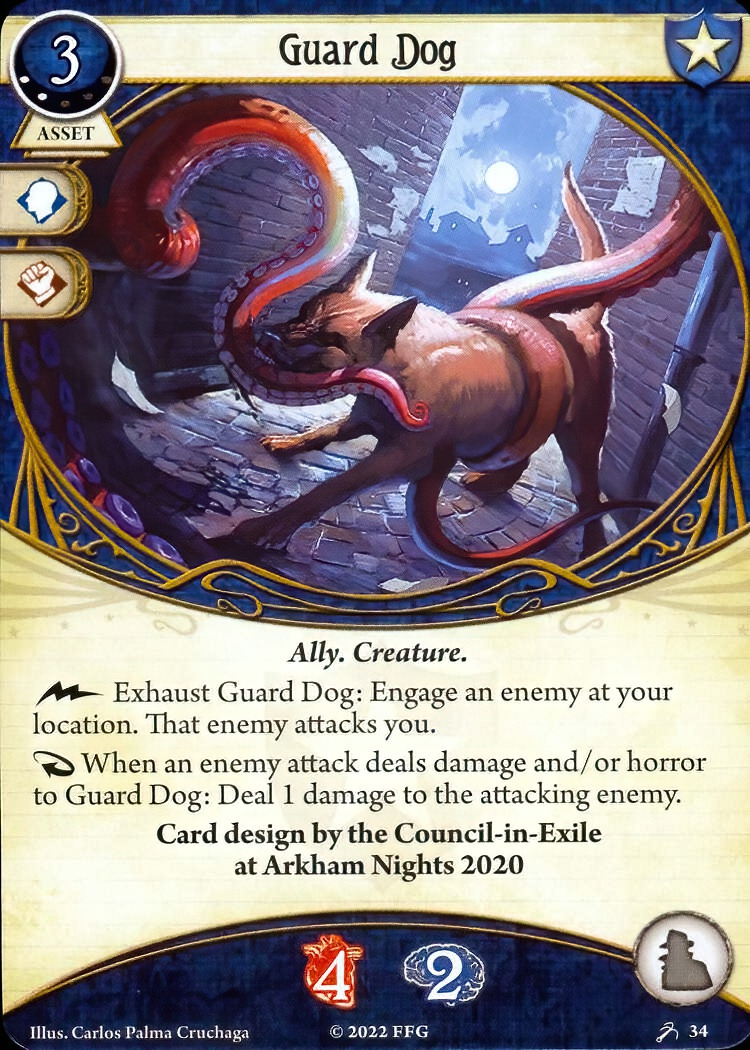
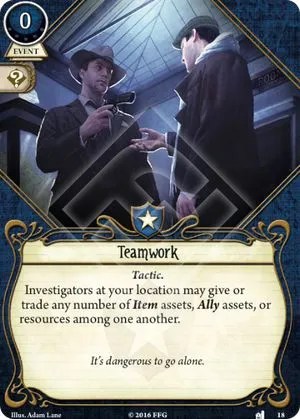


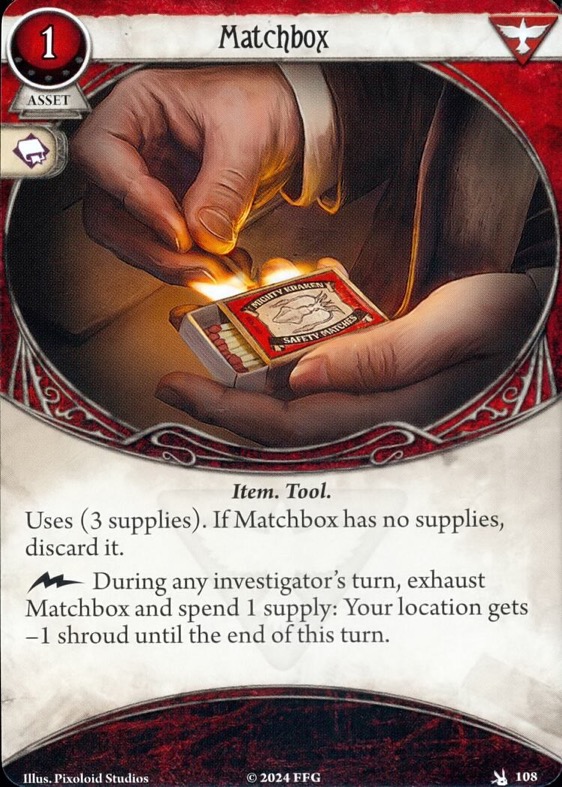
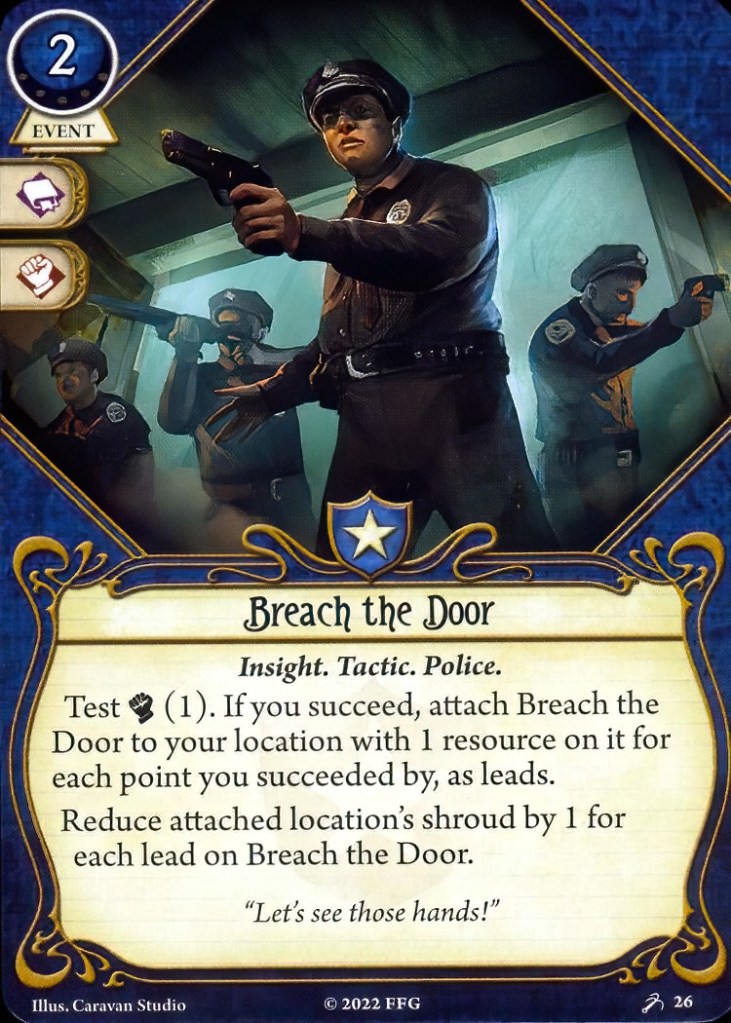



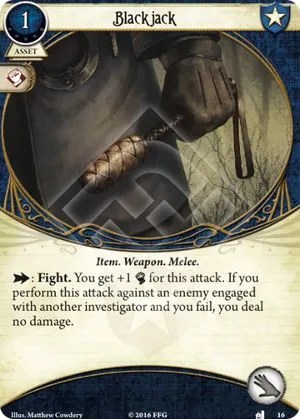
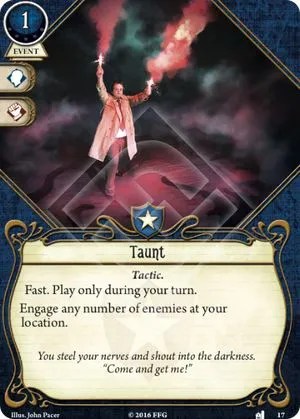


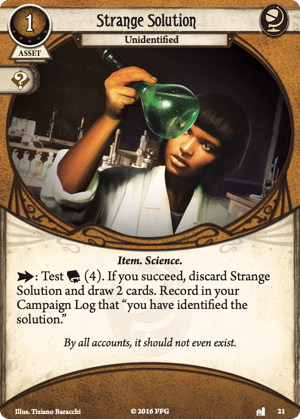
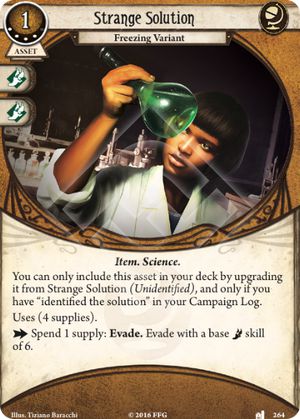

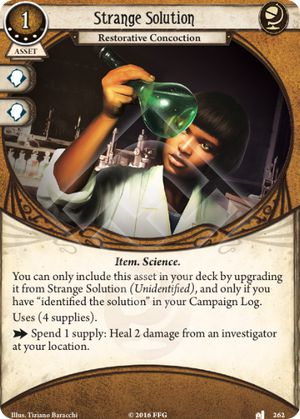
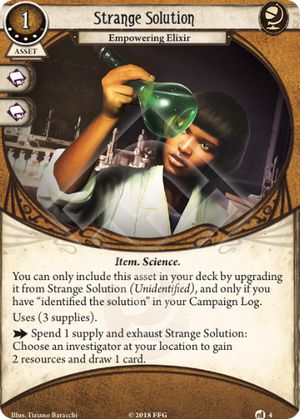
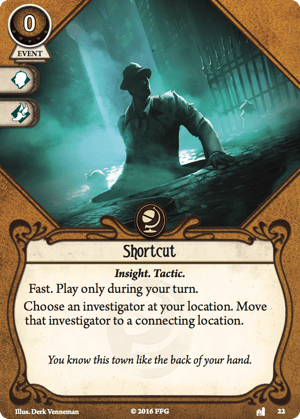
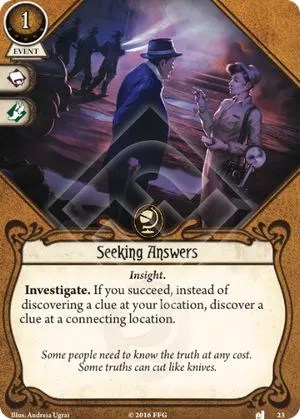


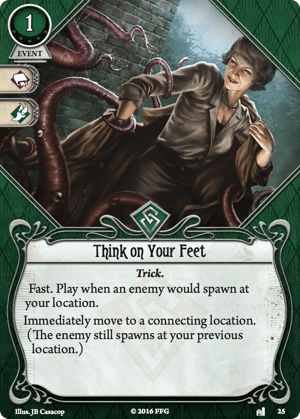
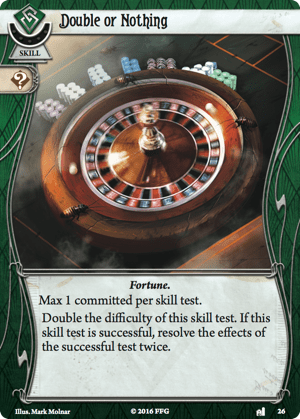
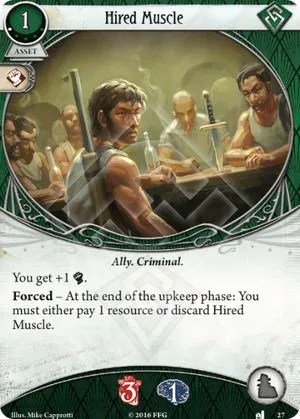

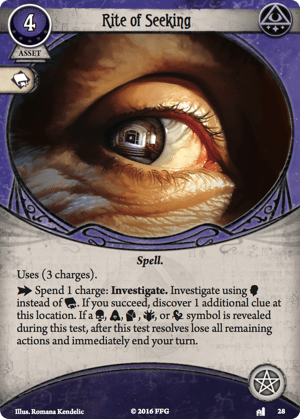
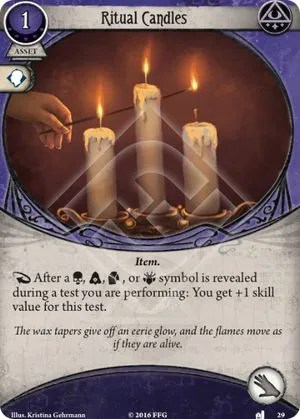
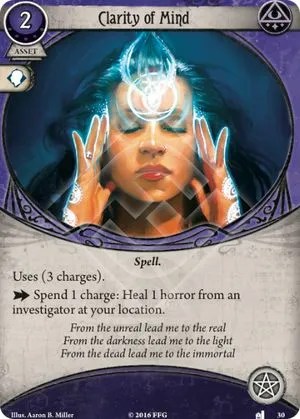


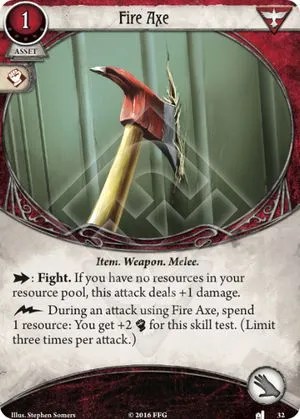
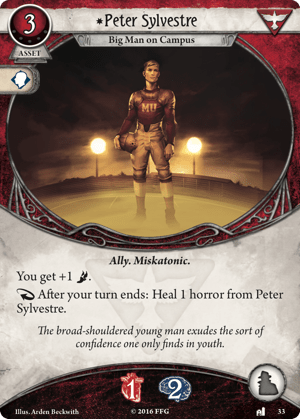
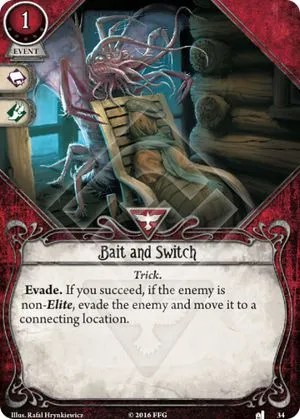
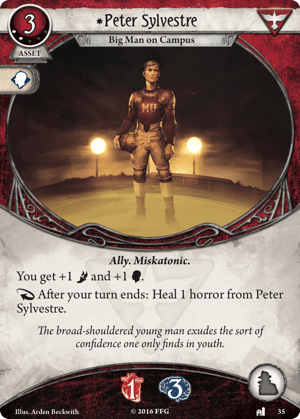




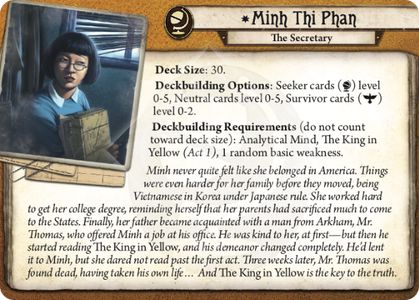
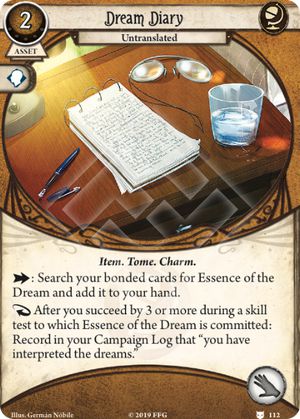
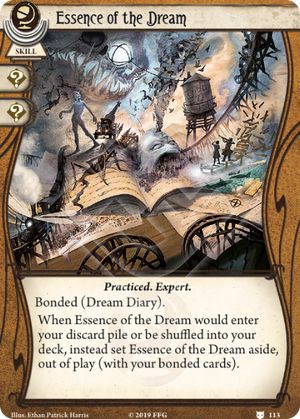
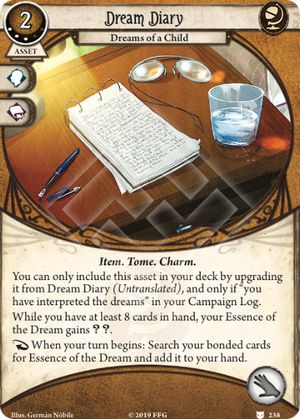
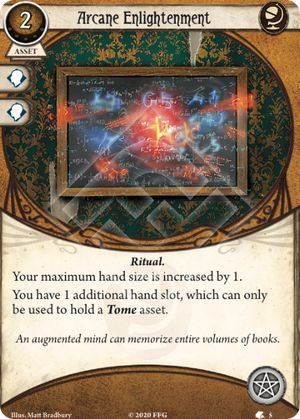
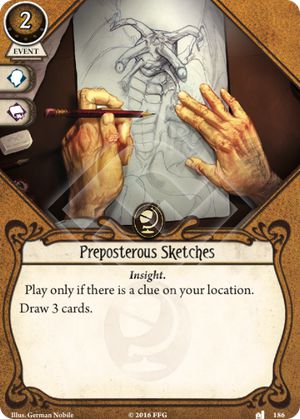
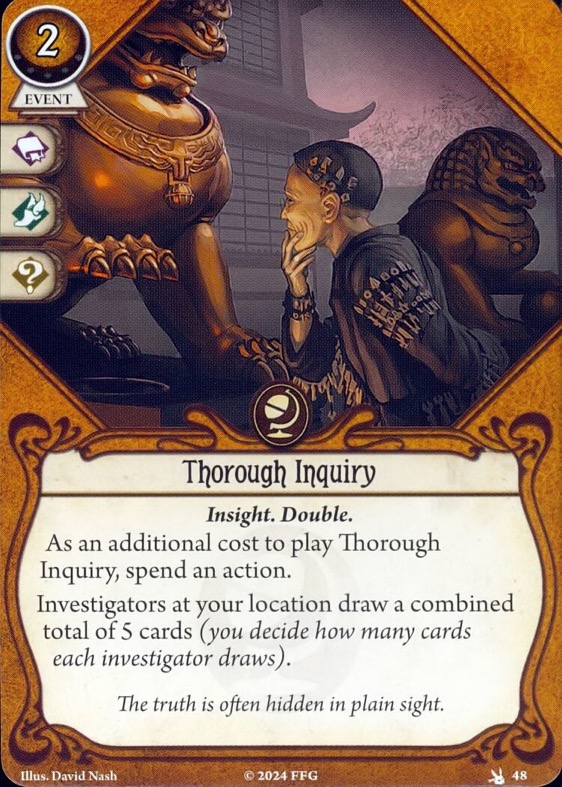
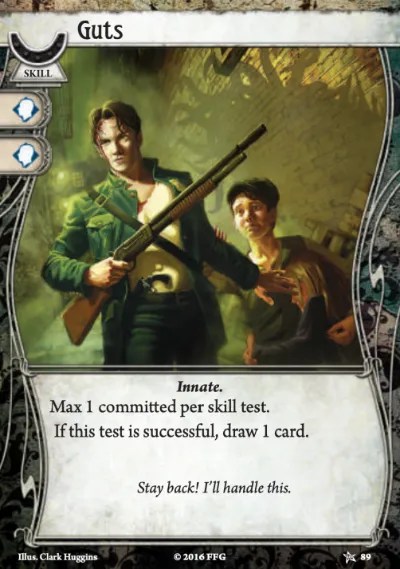
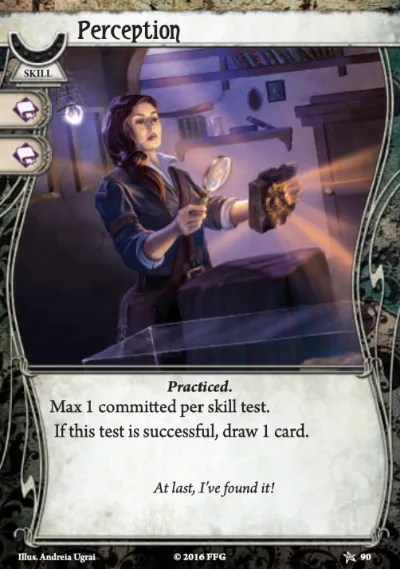

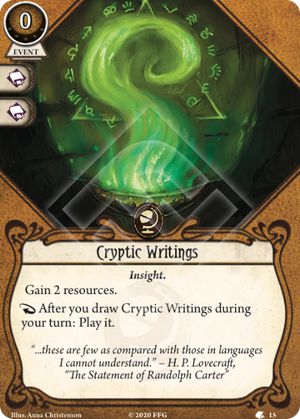


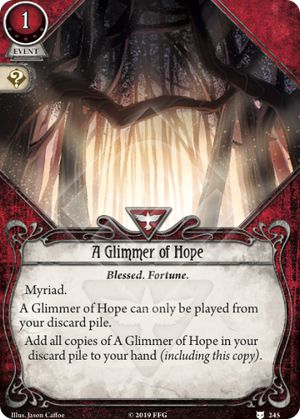
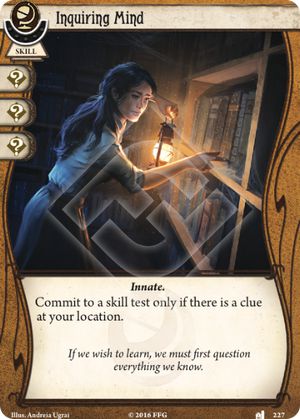
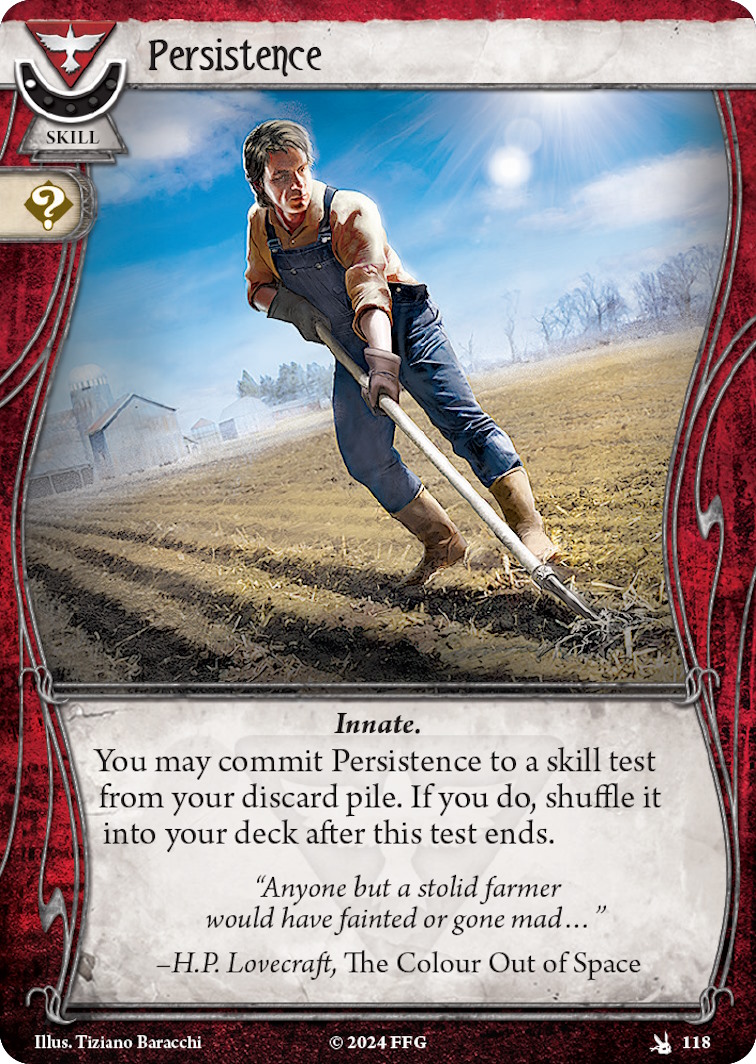
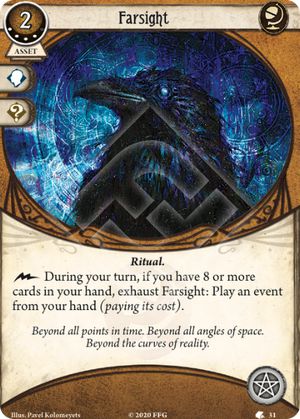

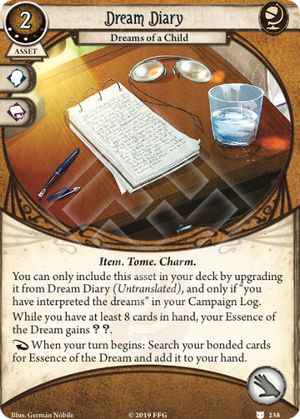
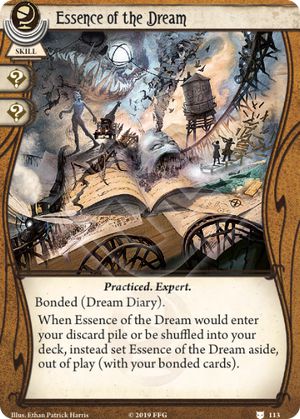
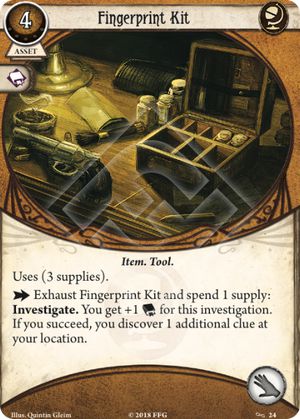

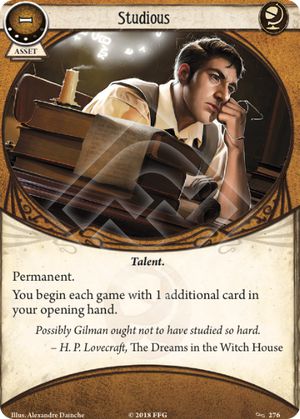
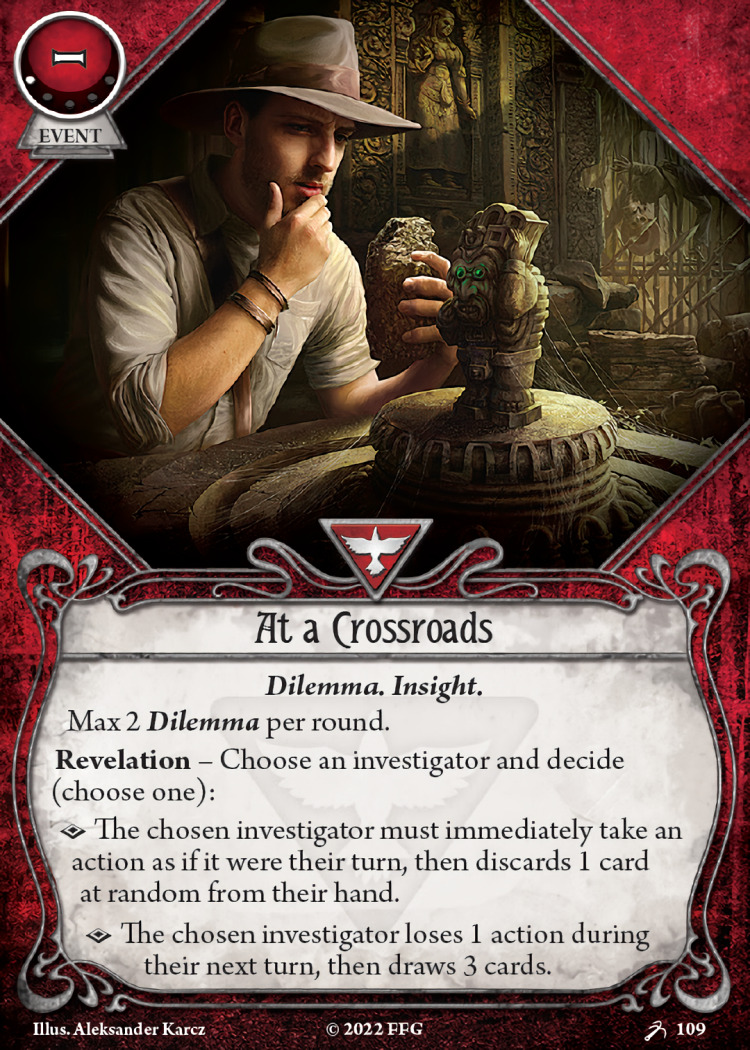



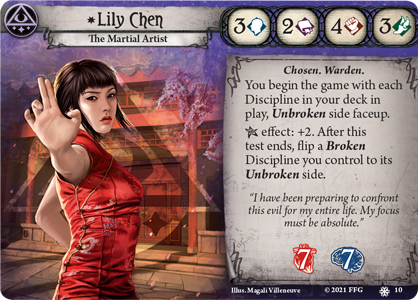

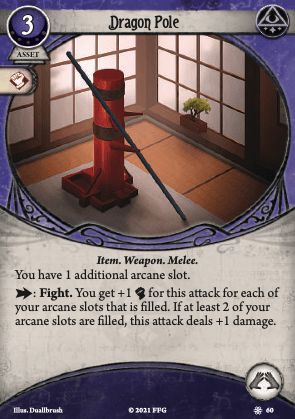


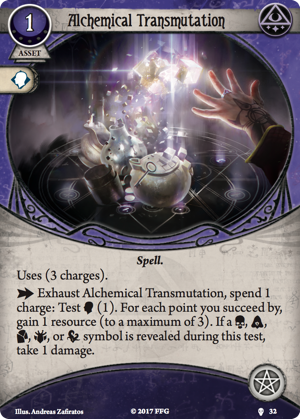
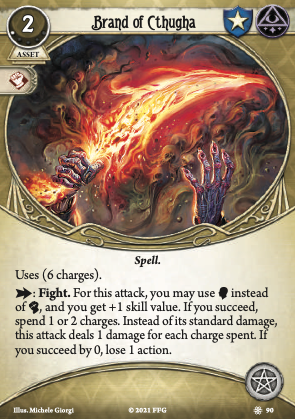


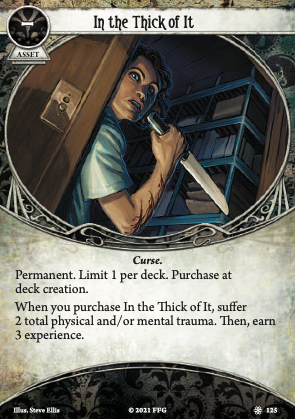


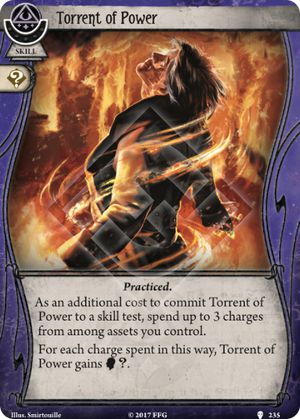


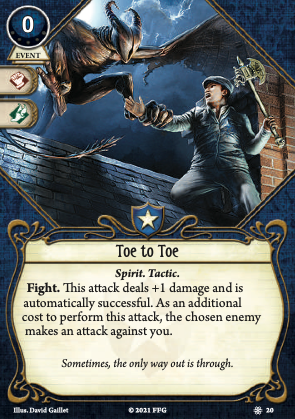
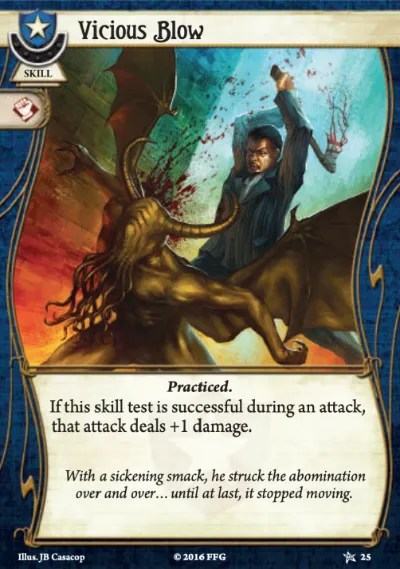
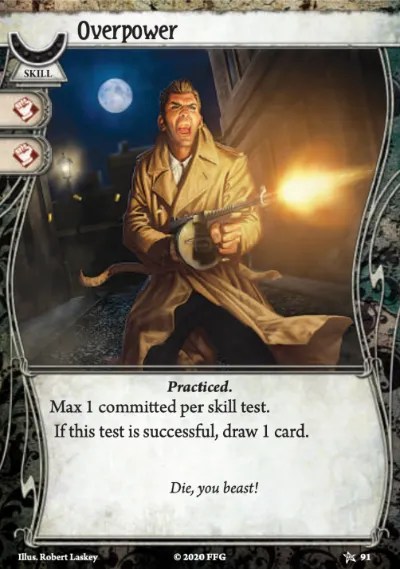


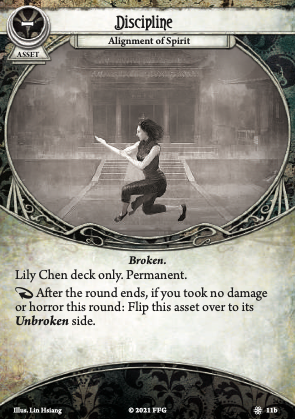

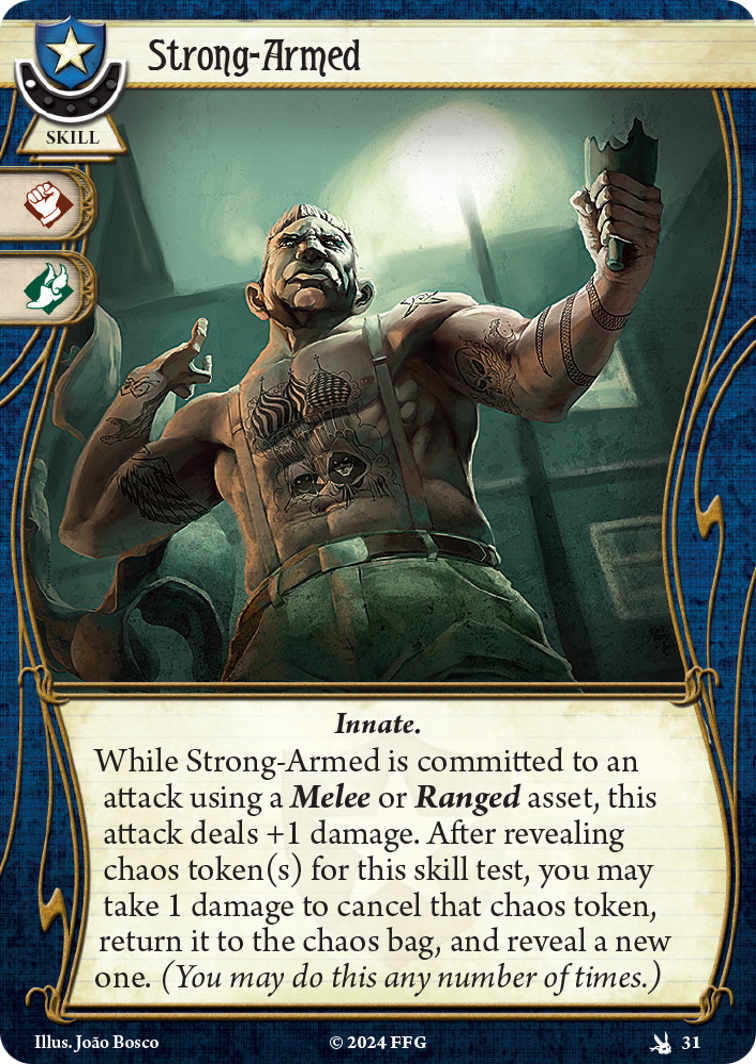
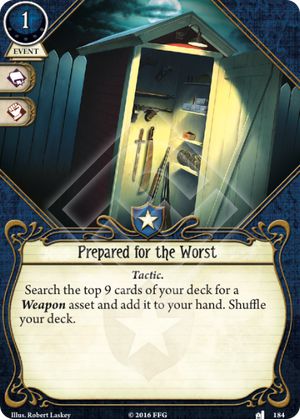
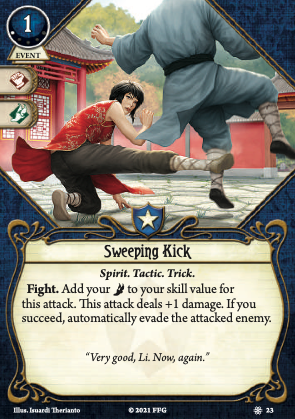

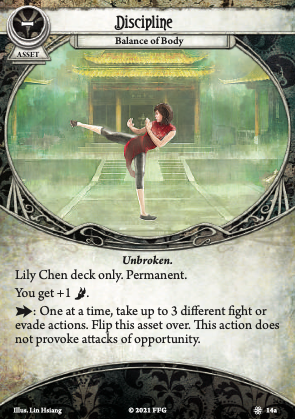
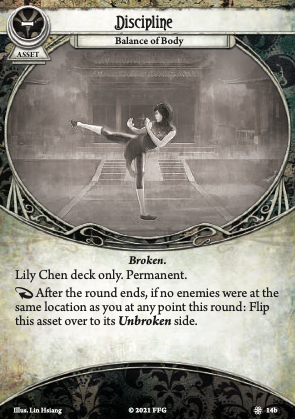
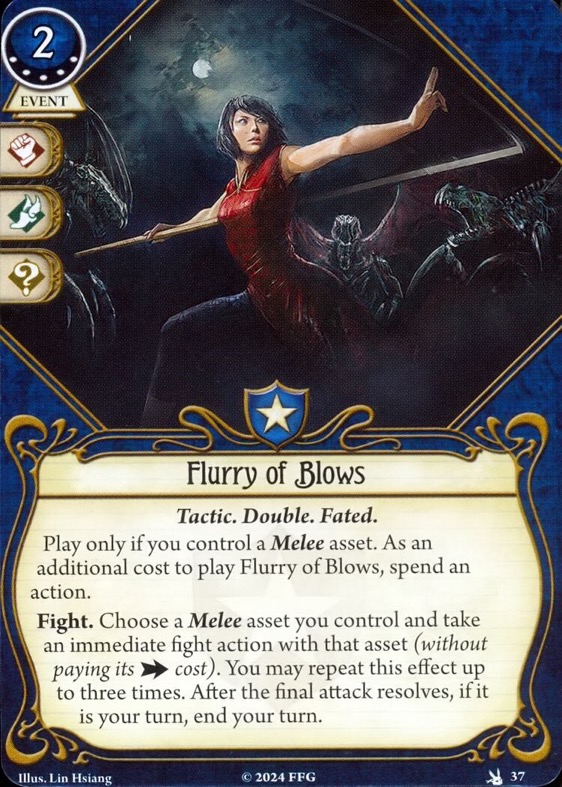
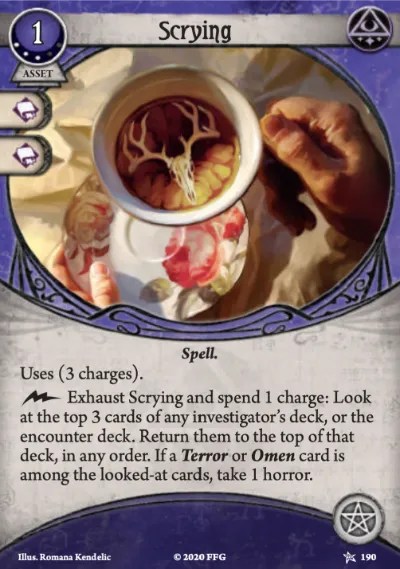
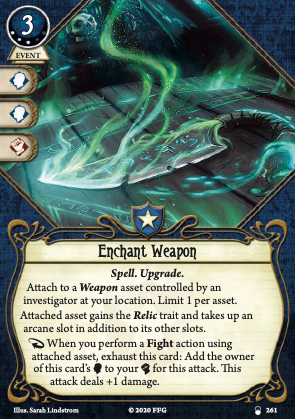
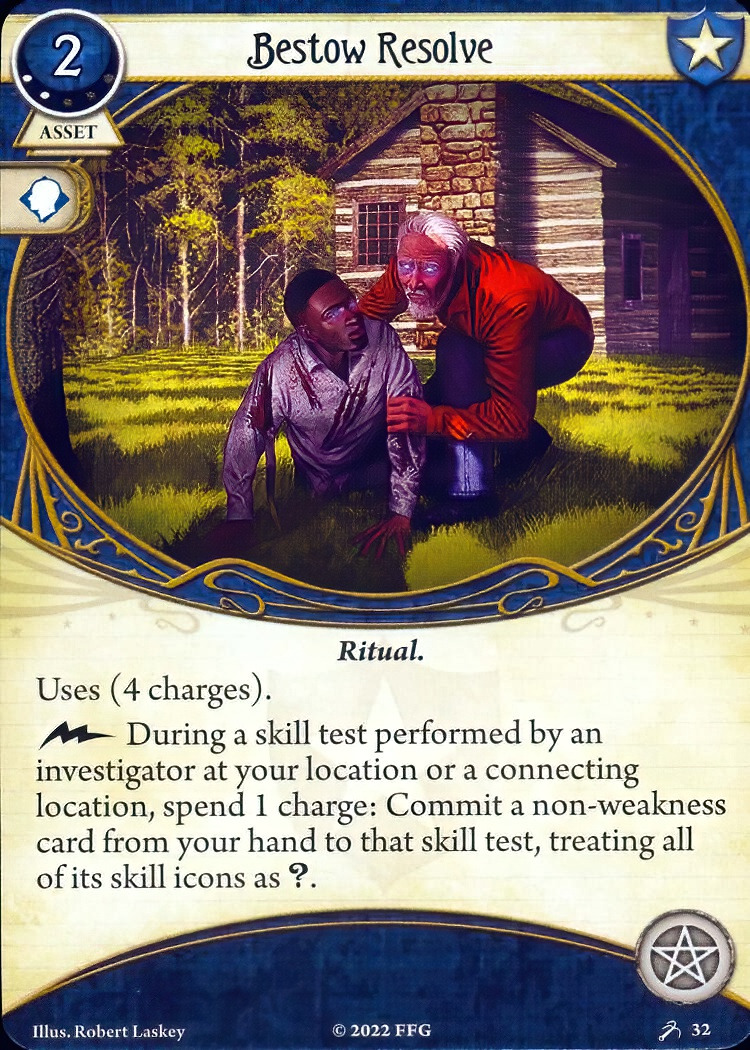
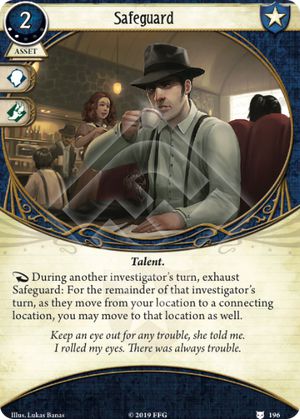


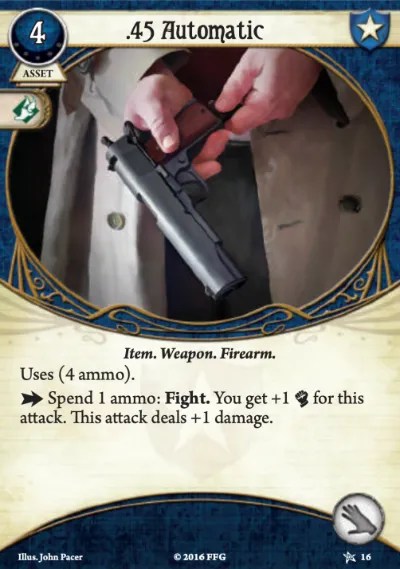
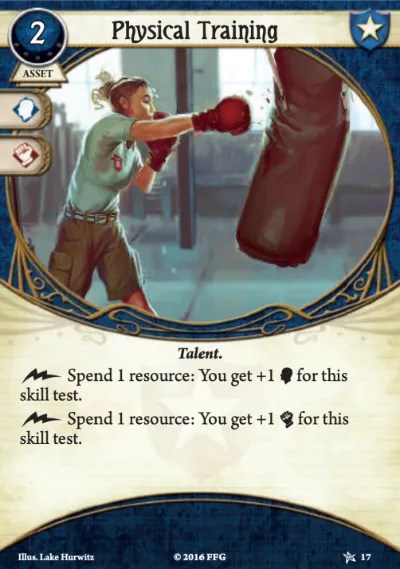

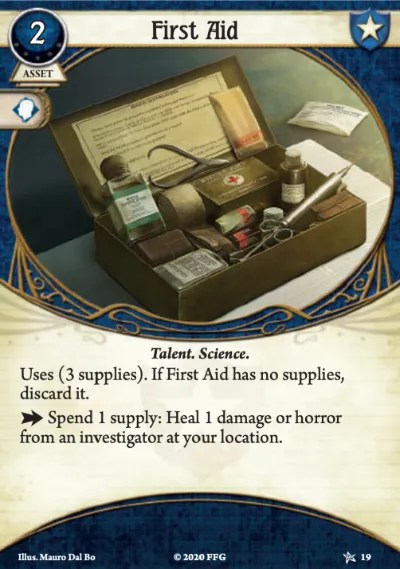
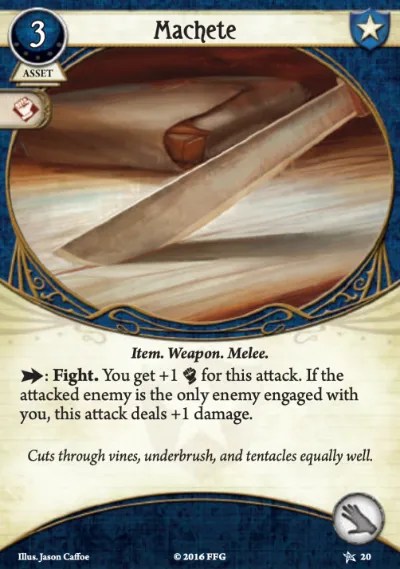
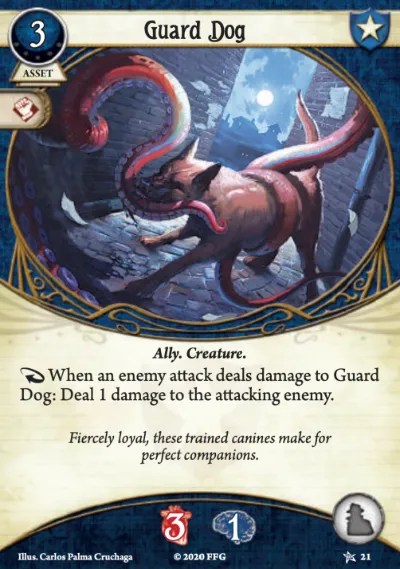
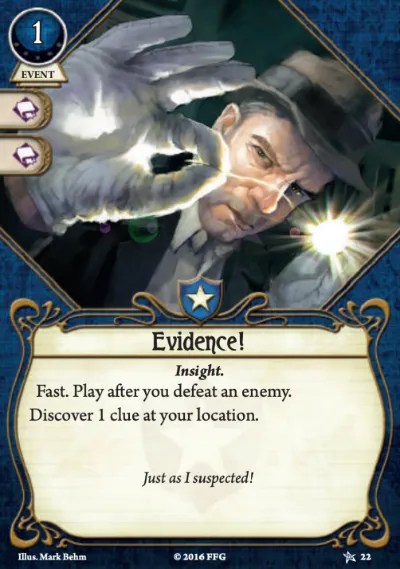
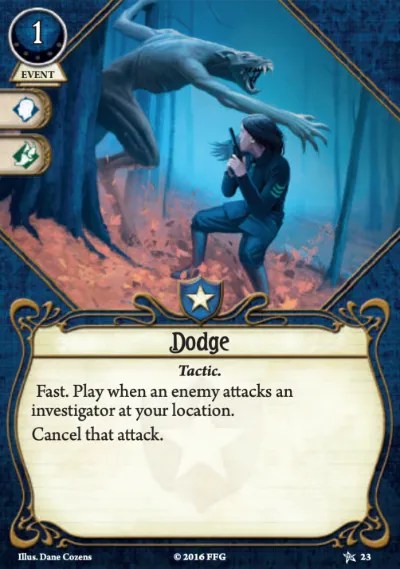
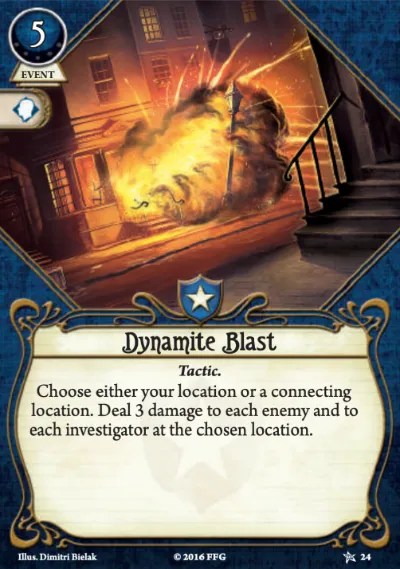

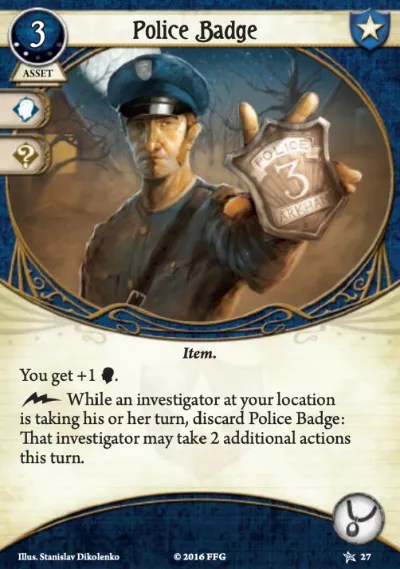

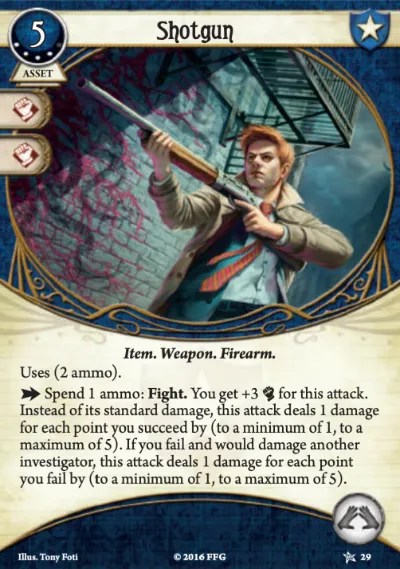
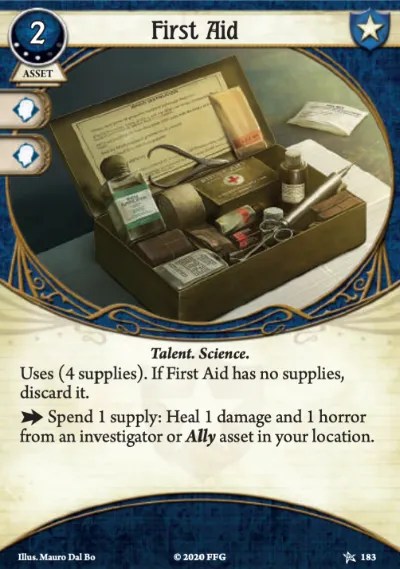
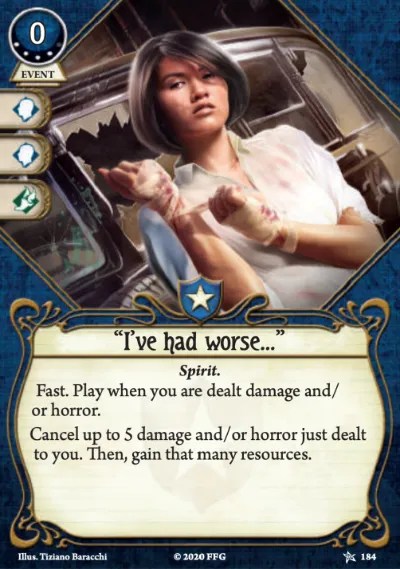

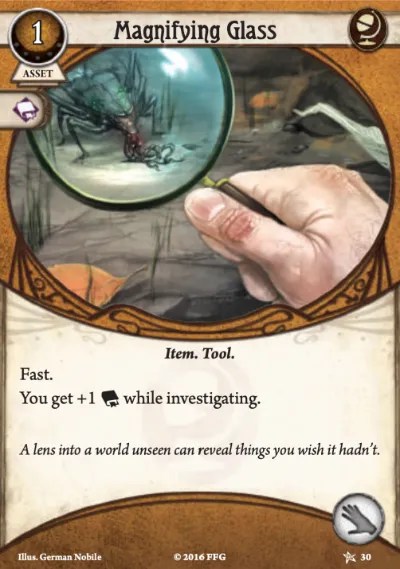
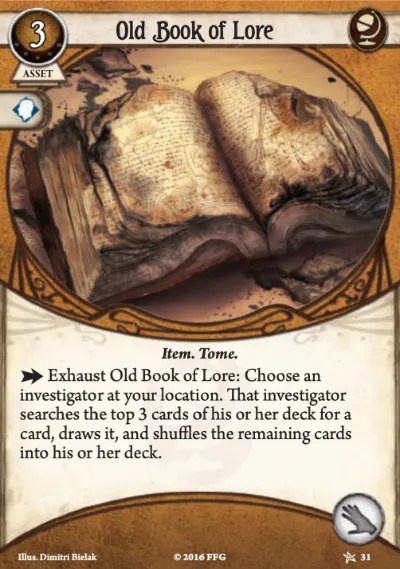
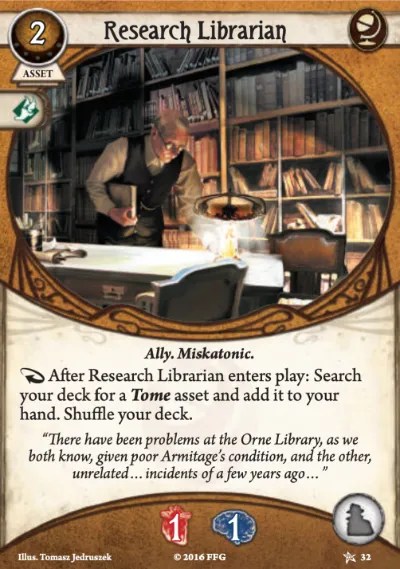


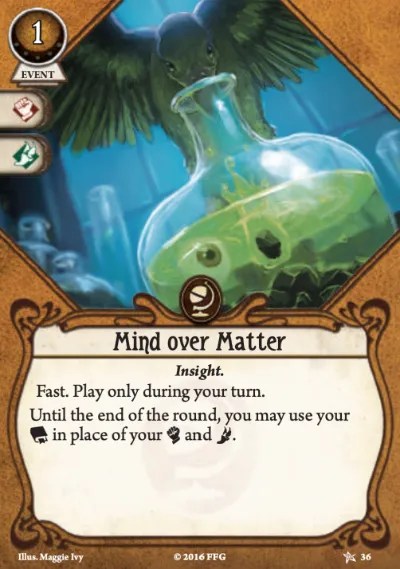
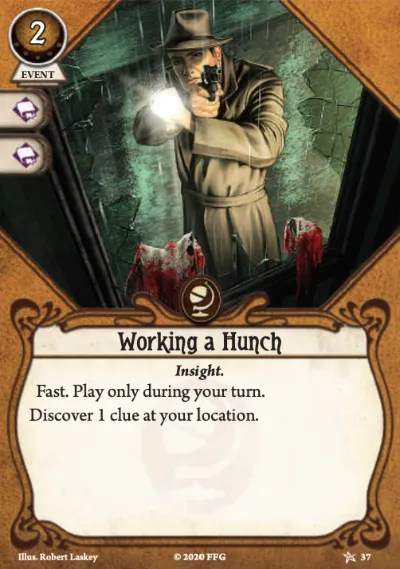
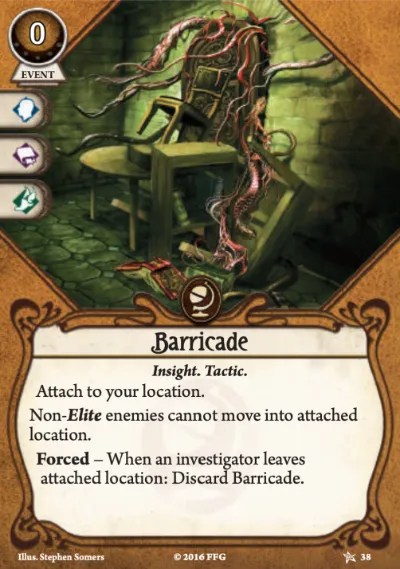
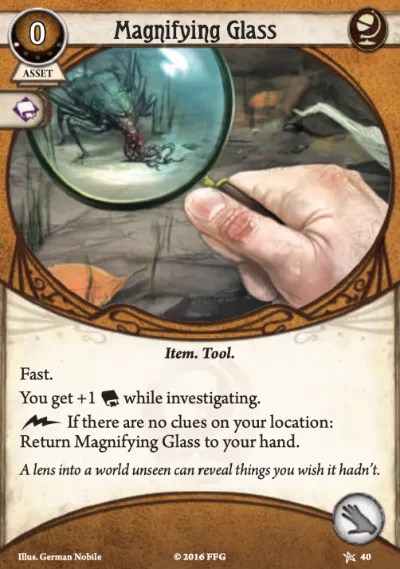
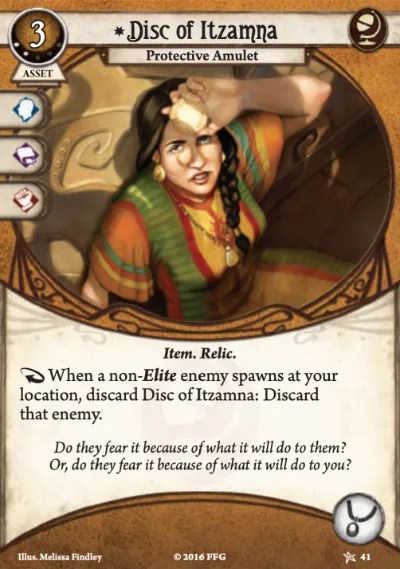
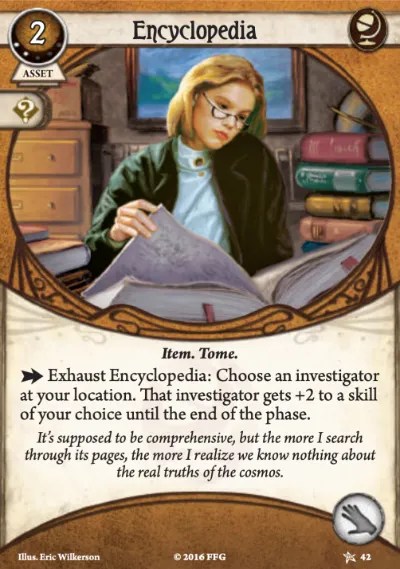
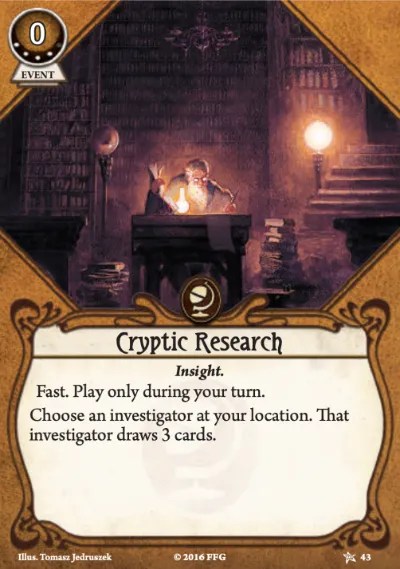
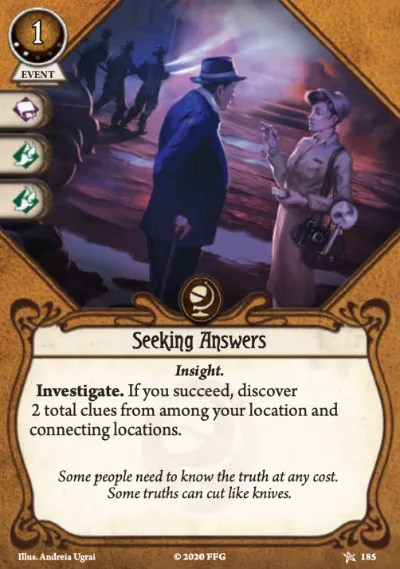
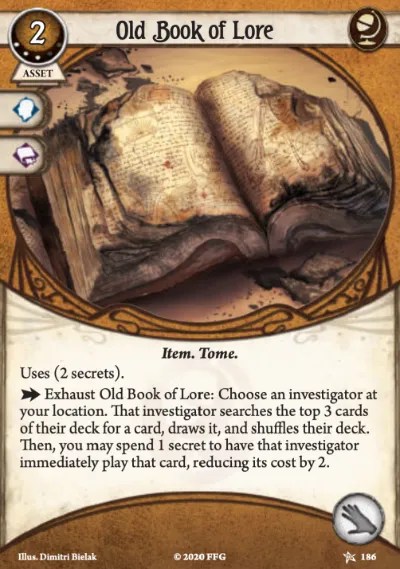

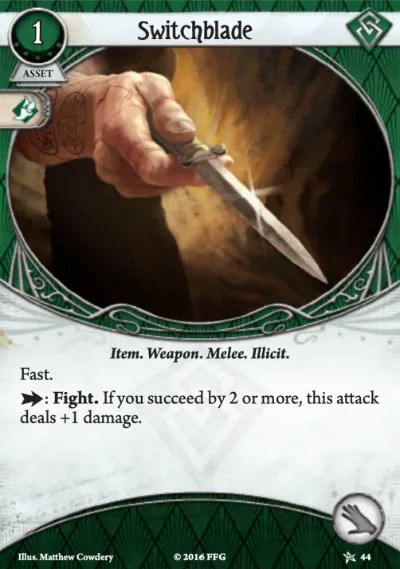
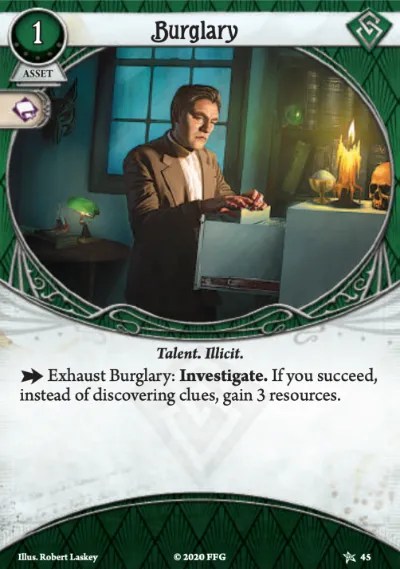
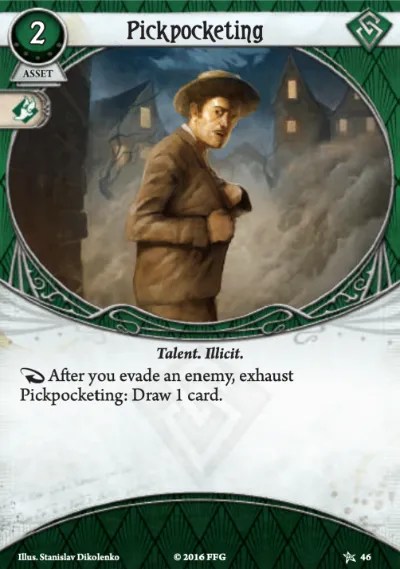
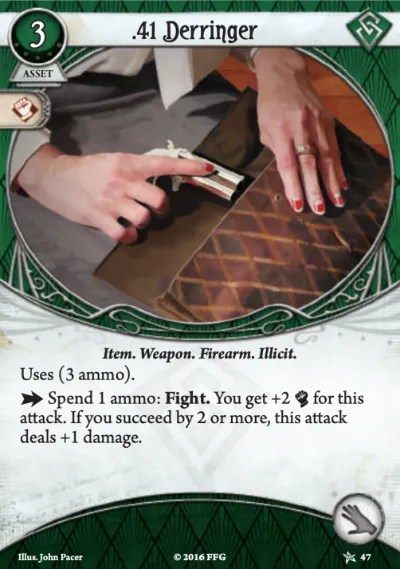
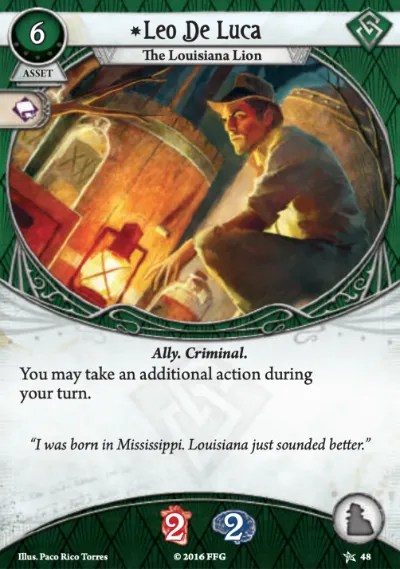

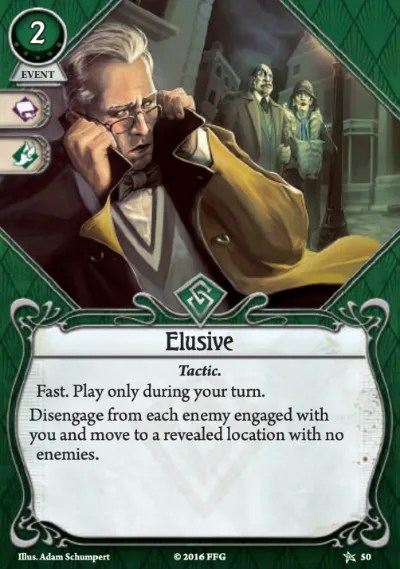


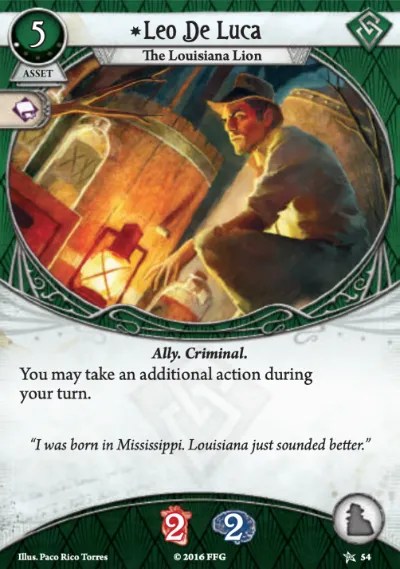
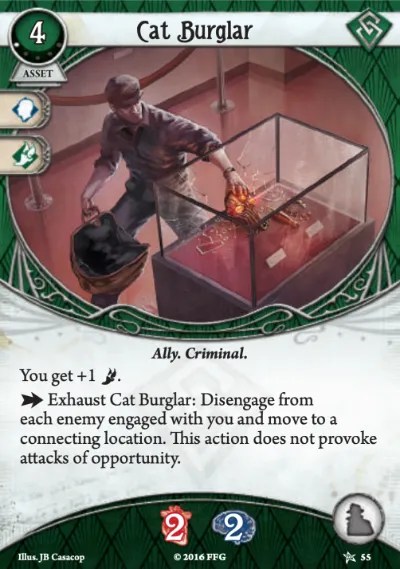


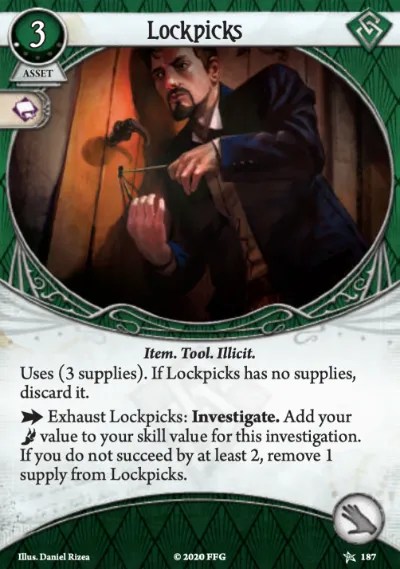
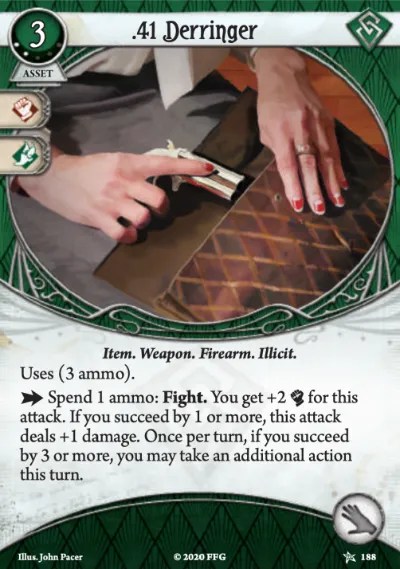

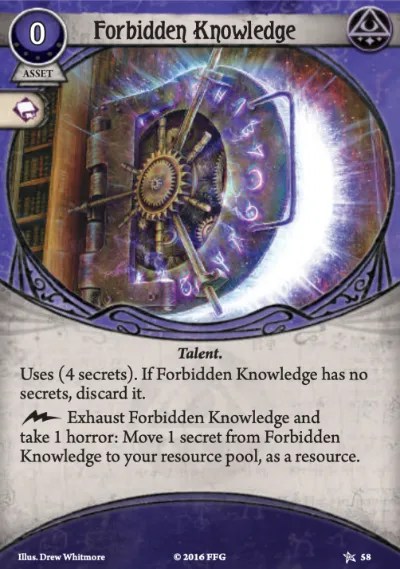
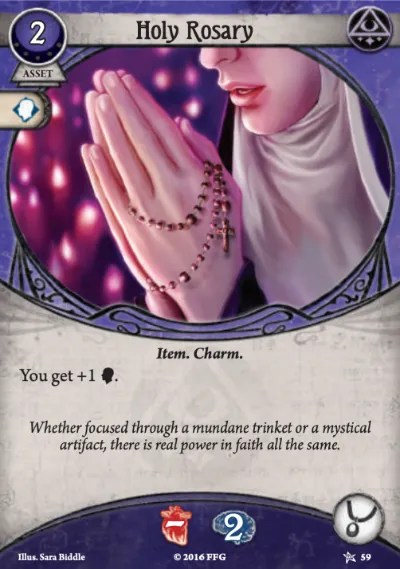
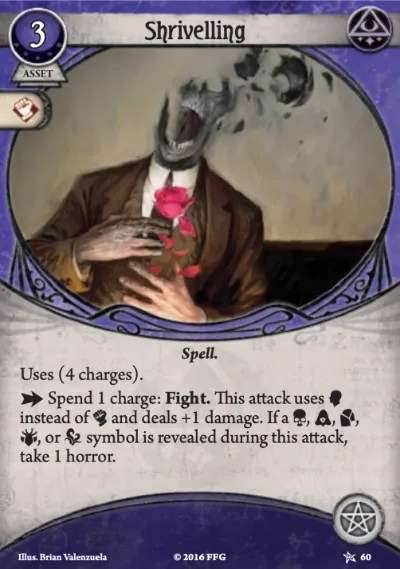
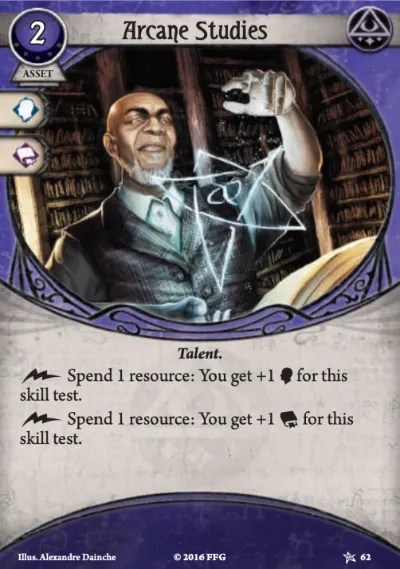
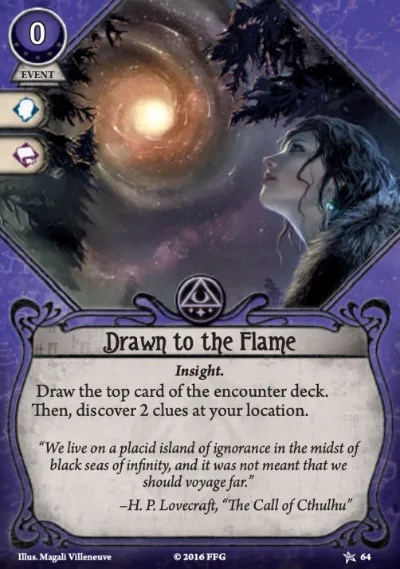
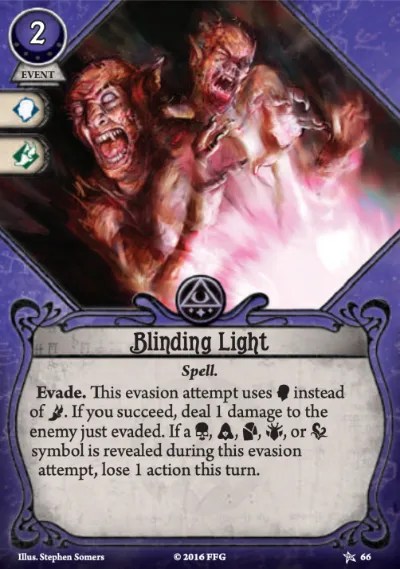

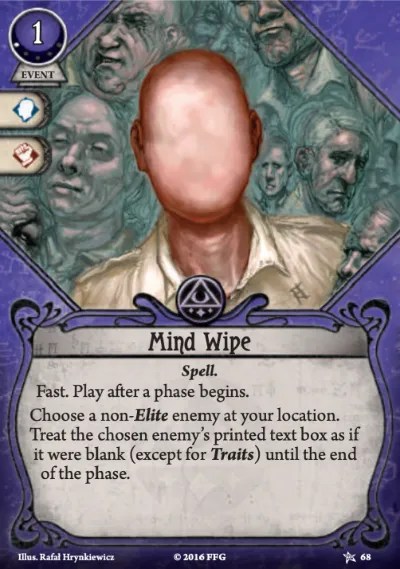
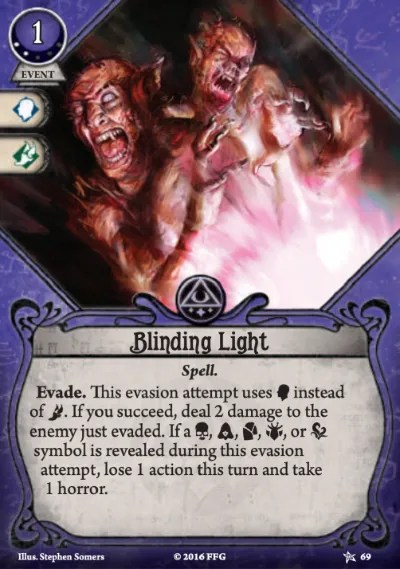
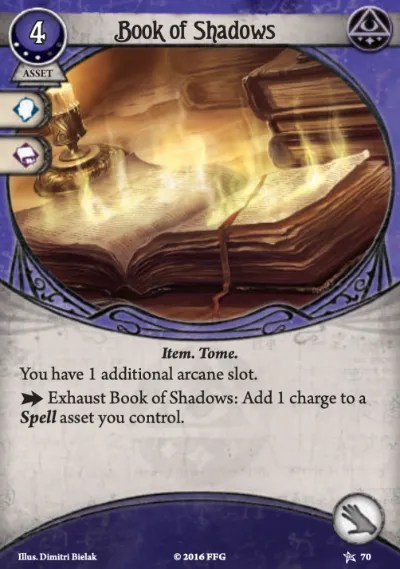
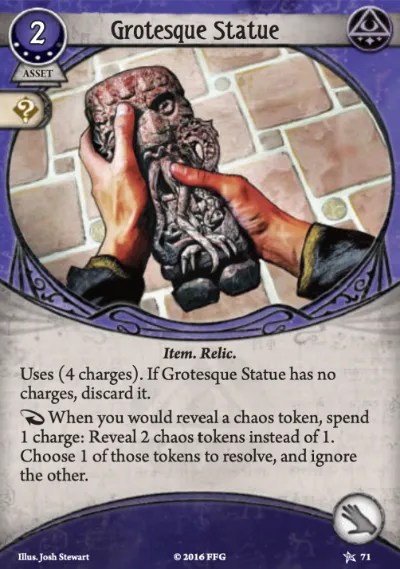


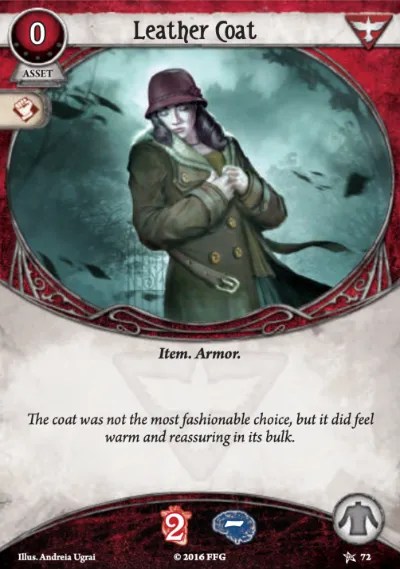
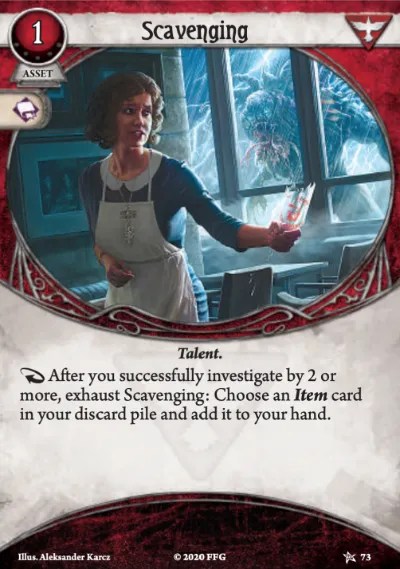


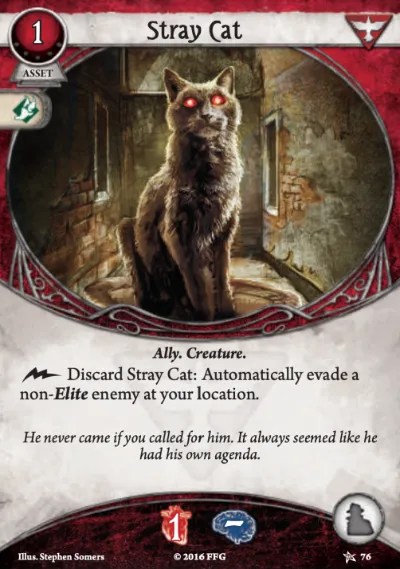
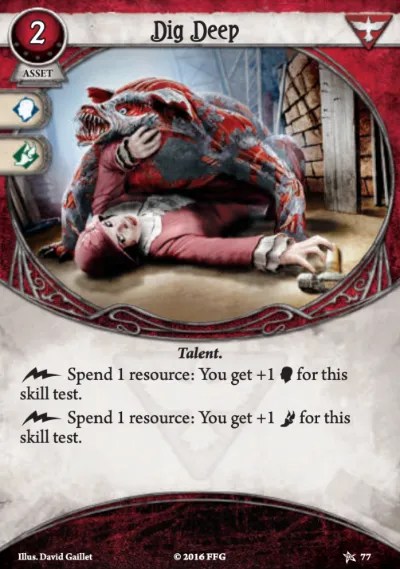

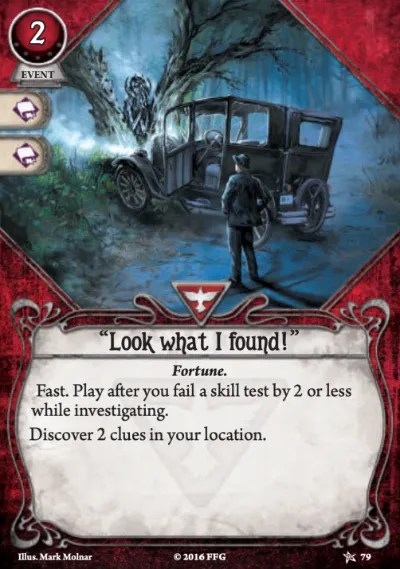
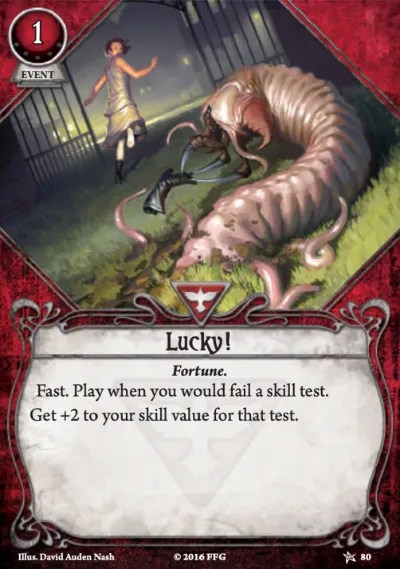
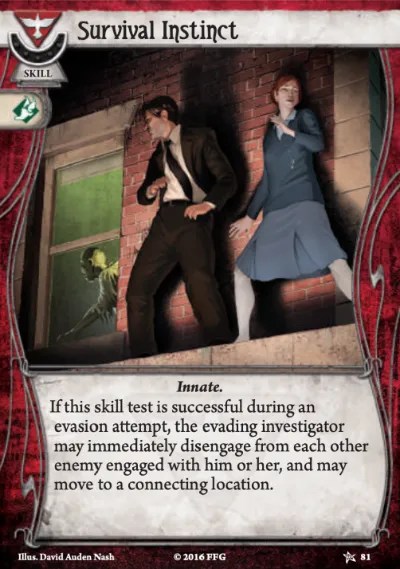
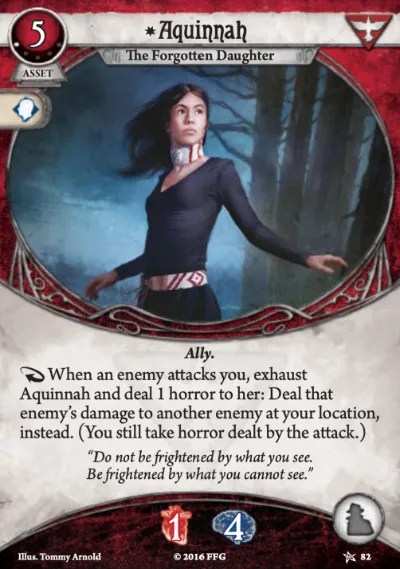
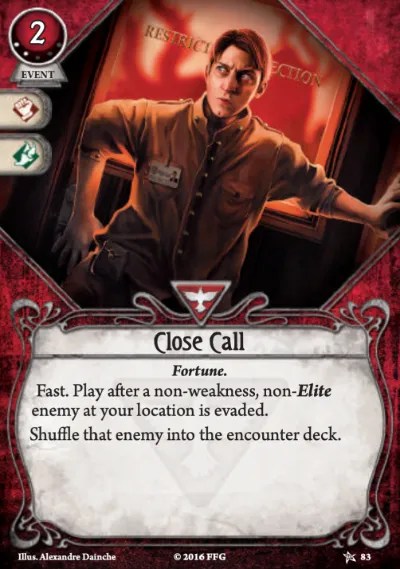
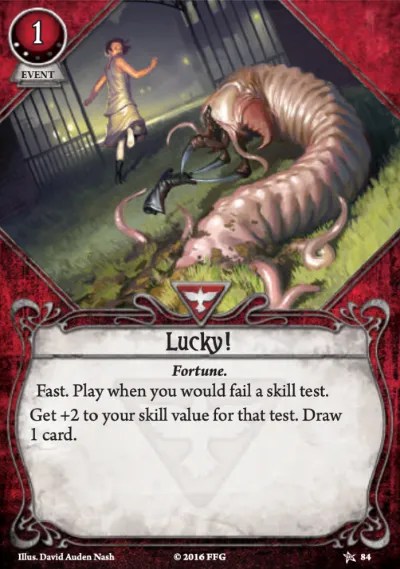
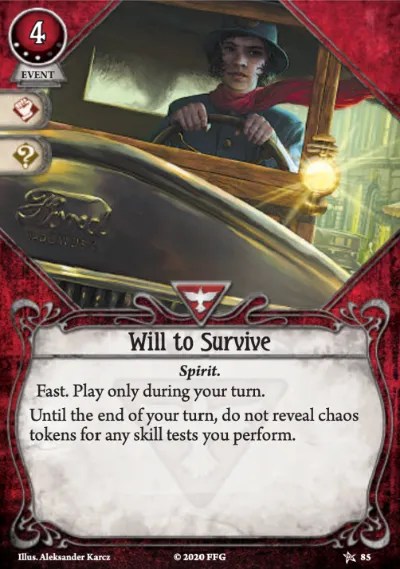
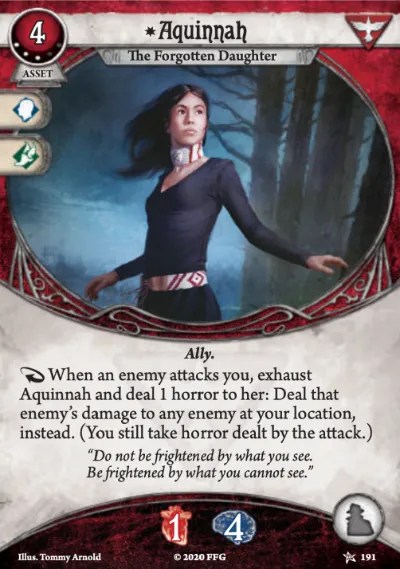
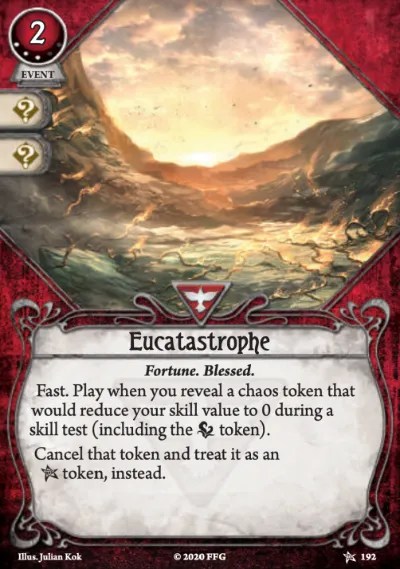

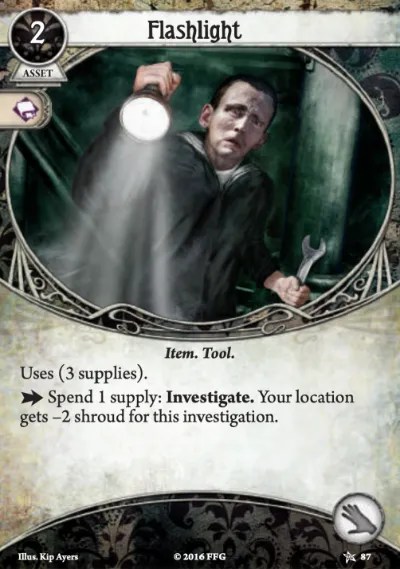
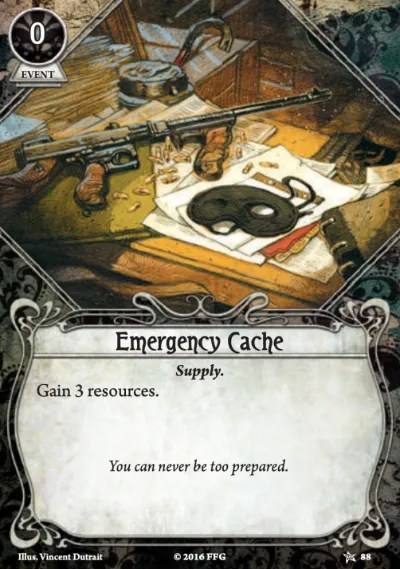
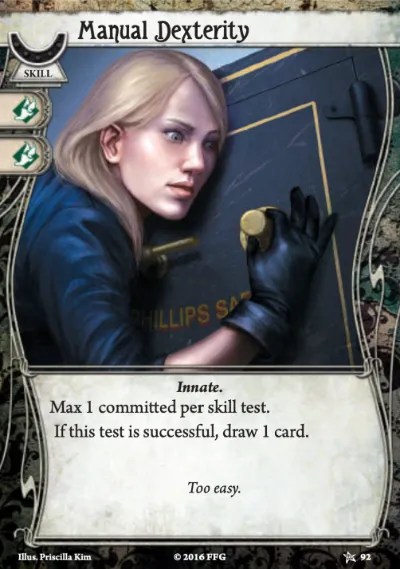

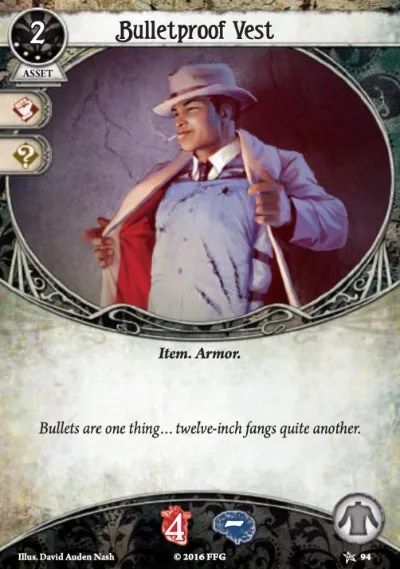

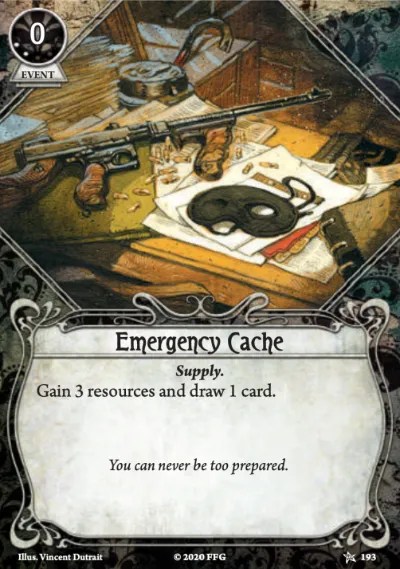
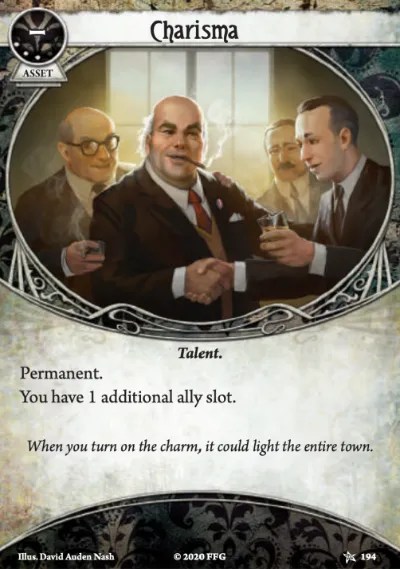

 Working a Hunch